A Complete Dairy Farm Feasibility Study Guide: Navigating 2026 Costs, Revenues, and Risks
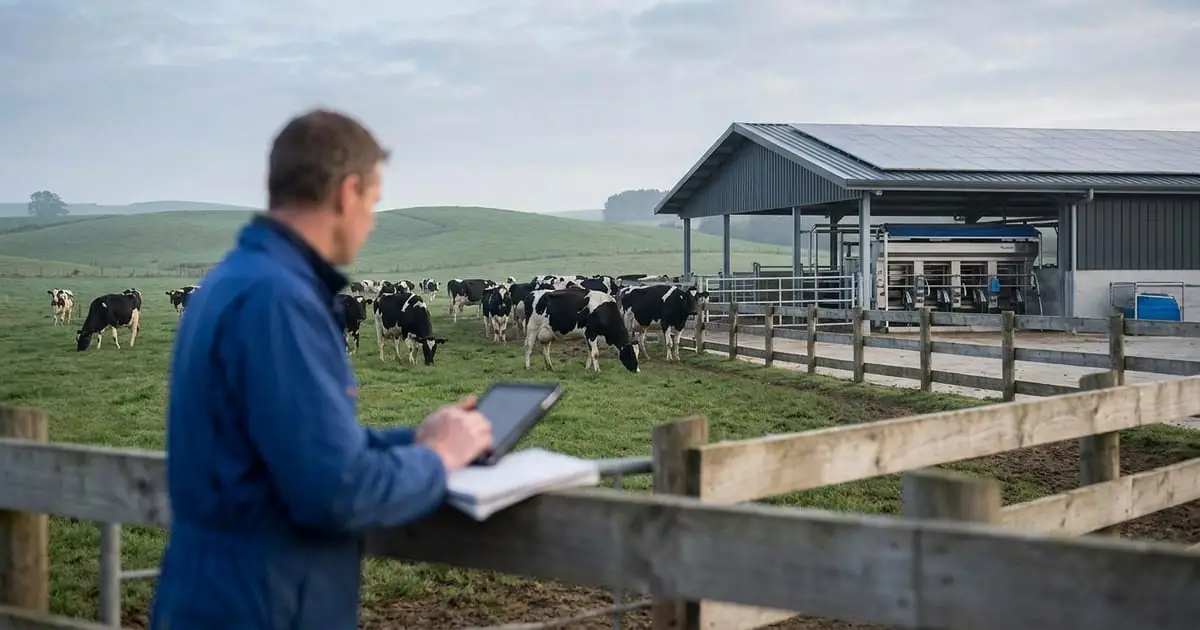
The dairy industry, a bedrock of agricultural economies, is undergoing a profound transformation. For founders, business owners, consultants, and investors contemplating a venture in this sector, a rigorous dairy farm feasibility study is not merely a formality—it is an absolute necessity.
The landscape of 2026 presents both enduring opportunities and significant challenges, demanding meticulous planning and a deep understanding of market dynamics, operational intricacies, and financial realities. This guide will help you assess the overall dairy business feasibility for your venture.
Why a Dairy Farm Feasibility Study is Non-Negotiable in 2026
The Evolving Landscape of U.S. Dairy
The U.S. dairy industry is characterized by a paradox: rising production amidst a shrinking number of farms. U.S. milk production is projected to climb to 234.1 billion pounds in 2026, a testament to remarkable productivity gains.
Yet, the number of licensed U.S. dairy herds has plummeted, decreasing by 63% from 66,825 in 2004 to 24,811 in 2024. Projections indicate a further decline to approximately 15,000 by 2026. This consolidation signifies an industry where economies of scale and efficiency are paramount for successful dairy farming feasibility.
This trend is driven by persistent margin pressures. In 2024, the average total costs of production were approximately $23.56 per hundredweight (cwt), while the average milk price received was $21.63/cwt. This indicates negative economic returns for many producers (farmdoc daily, University of Illinois).
The average dairy farm covered its total economic costs in only 4 out of 25 years between 2000 and 2024. This stark reality underscores why a robust dairy farm feasibility study is more critical than ever, especially for assessing overall dairy business feasibility and ensuring long-term success.
The Imperative of Rigorous Planning for Dairy Startup Feasibility
Entering or expanding in the dairy sector without a comprehensive dairy farm feasibility study is akin to navigating a complex financial market without a strategy. Such a study provides a detailed framework for evaluating every facet of a dairy venture.
It covers everything from market demand and revenue projections to capital expenditure, operational costs, regulatory compliance, and risk mitigation. It allows stakeholders to understand the true financial viability and operational challenges before committing substantial capital, making it essential for any dairy startup feasibility assessment.
Our team at SimpleFeasibility, with backgrounds in corporate finance, venture investment, and small business advisory, recognizes the complexity inherent in agricultural ventures. We have developed this guide to provide a framework for evaluating a dairy farming feasibility venture, incorporating 2026 projections and expert insights to help you make informed decisions in this dynamic industry.
Deconstructing the Dairy Farm Business Model: Revenue & Market Dynamics
Understanding Milk Pricing Mechanisms (2026 Projections)
Dairy farm revenues are inextricably linked to milk prices, which are notoriously volatile. The USDA projects the 2026 all-milk price at $18.25 to $18.75 per hundredweight (cwt), a notable decrease of $2.40 from 2025's $21.15.
Specifically, Class III milk (used for cheese) is projected around $17.05/cwt (down 7.3%), and Class IV milk (used for butter and nonfat dry milk) at $14.40/cwt (down 17%) for 2026. These projections highlight the ongoing margin squeeze facing producers, making a detailed milk production feasibility analysis crucial.
Understanding these pricing mechanisms is crucial. Milk is priced based on its components (butterfat, protein, other solids) and its end-use class. Farmers often receive a blend price, but the underlying class prices dictate profitability. Genetic advancements are increasingly allowing for 'richer milk' components, offering a pathway to potentially higher revenues as processors seek specific fat and protein levels for various dairy products.
Beyond Raw Milk: Value-Added Opportunities
While selling raw milk to cooperatives or processors remains the primary revenue stream for many, the modern dairy farm must explore value-added opportunities to enhance profitability and mitigate price volatility. This can include on-farm processing into products like artisan cheeses, yogurts, ice cream, or specialty milk (e.g., grass-fed, organic, A2 milk).
Direct-to-consumer sales, farmer's markets, or local retail partnerships can capture higher margins by cutting out intermediaries. The U.S. dairy industry is structurally evolving beyond just a milk business to include components and beef, supported by high-tech processing.
Furthermore, U.S. dairy exports are a bright spot, projected to hit $9.2 billion annually, tightening domestic supplies and offering a crucial outlet for excess production. Consumer demand for protein remains high, with 70% of Americans actively seeking protein foods, positioning dairy favorably for innovation in high-protein products (International Food Information Council's 2025 Food and Health Survey).
Identifying Your Market & Distribution Channels
A successful dairy farm feasibility study requires a clear market strategy. Who are your target buyers? Will you sell to a large cooperative, a regional processor, or directly to consumers? Each channel has different requirements, pricing structures, and logistical challenges.
For instance, selling to a cooperative might offer stability and less marketing overhead, but typically at lower prices. Direct sales offer higher margins but demand significant investment in marketing, distribution, and regulatory compliance. Consider the evolving consumer preferences.
There's a growing demand for locally sourced, sustainably produced, and transparently marketed products. Aligning your farm's practices and branding with these values can create a competitive advantage, especially for smaller or niche operations. Understanding your market niche and building strong relationships with buyers are fundamental to long-term success and overall dairy business feasibility.
Capital Expenditure (CAPEX) for a Modern Dairy Farm (2026 Projections)
Establishing a modern dairy farm involves substantial upfront capital investment. Our analysis for a 250-active-head dairy startup estimates initial CAPEX at nearly $988,000 in the first year (2026). This figure encompasses a range of essential assets, from land and infrastructure to the dairy herd itself and critical equipment, all vital considerations for dairy startup feasibility.
Land & Infrastructure: Barns, Milking Parlors, and Waste Management
The foundation of any dairy farm is its physical infrastructure. This includes acquiring suitable land, constructing housing for the herd (e.g., freestall barns for adult cows, calf hutches for young stock), and building a functional milking parlor.
Milking systems can range from conventional parlors (parallel, herringbone, rotary) to advanced robotic milking systems, each with different cost and efficiency implications. Beyond animal housing, essential infrastructure includes feed storage facilities (silos, bunkers), water systems, and robust waste management systems (e.g., lagoons, manure solids separators) to comply with environmental regulations.
The cost of these elements varies significantly by region, land prices, and the scale and sophistication of the chosen technologies. These are critical components to detail in any dairy farm feasibility study.
Herd Acquisition & Genetics: The Foundation of Production
The dairy herd itself represents a significant capital outlay. Acquiring high-producing cows is crucial, as milk production per cow averaged 23,530 pounds in 2024, an increase of 549 pounds from 2023 (USDA). In 2025, this averaged 24,391 pounds per cow.
Investing in superior genetics for improved butterfat and protein components offers long-term returns, as these components command higher prices and contribute to the overall value of the milk. The aging national dairy herd and a projected shortage of approximately 700,000 milk replacements present a looming constraint for 2026, potentially impacting acquisition costs and herd quality, and thus the overall milk production feasibility.
Equipment & Technology: Automation for Efficiency
Modern dairy farming increasingly relies on technology to enhance efficiency and reduce labor costs. This includes milking equipment, feed delivery systems, manure handling machinery, and climate control systems for barns.
Robotic milking, for instance, can reduce labor costs by 60% with an 18-month ROI potential in optimized operations (Connecterra blog). Other technologies include automated calf feeders, health monitoring sensors, and precision feeding systems. The choice of technology depends on the farm's scale, labor availability, and desired level of automation.
While these investments add to CAPEX, they can significantly reduce OPEX over time and improve animal welfare and productivity, making them key considerations in a dairy farm feasibility study.
Working Capital & Contingency
Beyond fixed assets, a new dairy farm requires substantial working capital to cover initial operating expenses before revenues stabilize. This includes feed, labor, veterinary care, and utility costs for the first few months.
A minimum cash buffer of $273,000 is crucial for initial operations and unforeseen expenses, providing a safety net against market fluctuations or unexpected challenges during the ramp-up phase. This working capital is a vital part of ensuring dairy startup feasibility.
Operational Expenditure (OPEX) Breakdown: Managing Daily Costs in 2026
While CAPEX sets up the farm, OPEX dictates its daily viability. Managing operational costs efficiently is paramount, especially given the tight margins projected for 2026. In 2024, cash costs (feed plus non-feed operating) alone were around $17.43/cwt (farmdoc daily, University of Illinois).
Feed Costs: The Largest Variable
Feed is consistently the largest operational expense on a dairy farm, constituting approximately 49% of the total economic cost to produce milk in 2024 (USDA). This includes purchased feed, homegrown forage, and supplements.
Income-over-feed-cost margins are estimated around $11.40/cwt for 2026, demanding highly efficient feed management strategies. Factors like commodity prices, weather patterns, and transportation costs heavily influence feed expenses. Optimizing feed efficiency through precise nutrition, high-quality forage, and minimizing waste is crucial.
Cutting feed quality to save money is often considered the fastest way to destroy profitability by underestimating the colossal energy demands of a dairy cow. Proper access to water, often overlooked, is the most abundant and cheapest nutrient and can dramatically boost milk production, impacting overall milk production feasibility.
Labor & Management: Addressing Workforce Challenges
Labor costs are a critical and rising issue in agriculture, with agricultural labor exceeding $53 billion in 2025. Nonfeed costs per 100 pounds of milk produced averaged $11.92 in 2024, the highest on record (farmdoc daily, University of Illinois).
Workforce volatility, rising minimum wages, and state-specific overtime laws significantly impact dairy operations. The exclusion of year-round dairy positions from H-2A guest worker programs further exacerbates labor shortages. Strategies to mitigate labor costs include investing in automation (as discussed in CAPEX), optimizing workflows, cross-training employees, and providing competitive wages and benefits to attract and retain skilled workers.
Effective management and training programs are essential to maximize labor productivity, a key factor in any dairy farming feasibility assessment.
Utilities, Veterinary & Health: Essential Operating Expenses
Utilities, including electricity for milking parlors, cooling systems, and lighting, along with fuel for machinery, represent ongoing costs. Rising energy prices can significantly impact the bottom line.
Veterinary care, herd health programs, and breeding expenses (e.g., artificial insemination, embryo transfer) are essential for maintaining a healthy and productive herd. Proactive herd health management, including vaccinations, regular health checks, and disease prevention protocols, can reduce costly emergency treatments and improve overall productivity.
The threat of disease outbreaks, such as avian influenza in dairy herds, underscores the importance of robust biosecurity measures and veterinary oversight. These costs must be carefully projected in a dairy farm feasibility study.
Other Operating Costs: Insurance, Maintenance, and Administration
A range of other costs contribute to OPEX. These include property and liability insurance, equipment maintenance and repairs, supplies (bedding, cleaning chemicals), marketing and administrative expenses, and professional fees (accounting, legal).
Regular maintenance of equipment and infrastructure is vital to prevent costly breakdowns and extend asset life. Understanding and meticulously tracking all these operational expenditures is fundamental for accurate financial planning and for identifying areas where efficiencies can be gained.
A detailed dairy farm feasibility study will break down each of these categories with realistic projections, crucial for understanding milk production feasibility.
Key Cost Categories in a Dairy Farm Feasibility Study
A comprehensive dairy farm feasibility study meticulously analyzes both upfront and ongoing expenses. Here's a quick overview:
| Cost Category | Description | Type |
|---|---|---|
| Land & Infrastructure | Acquisition, barns, milking parlors, waste management systems. | CAPEX |
| Herd Acquisition | Purchase of high-producing dairy cows and young stock. | CAPEX |
| Equipment & Technology | Milking systems, feed delivery, manure handling, automation. | CAPEX |
| Working Capital | Initial operating funds for feed, labor, utilities before revenue. | CAPEX (initial) |
| Feed Costs | Purchased feed, homegrown forage, supplements (largest OPEX). | OPEX |
| Labor & Management | Wages, benefits, training for farm employees. | OPEX |
| Utilities & Health | Electricity, fuel, veterinary care, breeding programs, biosecurity. | OPEX |
| Other Operating Costs | Insurance, maintenance, administrative, professional fees. | OPEX |
Financial Projections & Breakeven Analysis: A Worked Example for a 250-Cow Dairy
At the heart of any comprehensive dairy farm feasibility study are robust financial projections. These models translate market insights and cost estimates into actionable financial statements, providing a clear picture of potential profitability and cash flow.
Our team consistently emphasizes the importance of realistic, rather than optimistic, projections for successful dairy business feasibility.
Building Your Financial Model: Income, Cash Flow, and Balance Sheet
A complete financial model for a dairy farm includes three core statements:
- Income Statement: Projects revenues (milk sales, calf sales, cull cow sales) and expenses (feed, labor, veterinary, utilities, depreciation) to determine net profit or loss over a period.
- Cash Flow Statement: Tracks the actual movement of cash in and out of the business, crucial for assessing liquidity and debt service capacity. This is particularly important for dairy farms due to seasonal cash flow patterns and capital-intensive nature.
- Balance Sheet: Provides a snapshot of assets (land, buildings, herd, equipment), liabilities (loans, accounts payable), and owner's equity at a specific point in time.
These statements should be built with detailed assumptions, clearly outlining milk prices, production per cow, feed costs, labor rates, and other key drivers. This forms the backbone of any reliable dairy startup feasibility assessment.
Realistic Ramp-Up Curves for Production and Sales
For a new or expanding dairy, it's critical to develop realistic ramp-up curves. A herd doesn't reach peak production overnight. Factors like animal maturity, breeding cycles, and the time it takes to optimize new facilities and processes must be accounted for.
Initial milk production will be lower, and sales may take time to establish, impacting early cash flow. This phased approach ensures that financial expectations are grounded in operational realities, crucial for accurate milk production feasibility analysis.
Calculating Breakeven Points (Cows and Cwt)
Breakeven analysis is a powerful tool to understand the minimum performance required for financial viability. It helps determine the point at which total revenues equal total costs.
Worked Example (Illustrative for a 250-cow dairy, 2026 estimates):
- Assumptions: 250 milking cows, average production 24,000 lbs/cow/year (240 cwt/cow/year).
- Total Annual Production: 250 cows * 240 cwt/cow = 60,000 cwt.
- Projected Milk Price (mid-range USDA 2026 all-milk price): $18.50/cwt.
- Total Annual Revenue: 60,000 cwt * $18.50/cwt = $1,110,000.
- Estimated Total Economic Cost of Production (2026 Adjusted): Based on 2024's $23.56/cwt, we project $24.00/cwt for 2026 to account for rising non-feed costs.
- Total Annual Operating Costs (to cover economic costs): 60,000 cwt * $24.00/cwt = $1,440,000.
- Annual Margin Gap (before debt service/depreciation): $1,110,000 (Revenue) - $1,440,000 (Costs) = -$330,000.
This illustrative example highlights the significant margin squeeze in the current environment. A 500-cow dairy could face up to a $250,000 annual margin gap between full cost of production and Class III futures, meaning a 250-cow dairy could face a proportional or even larger gap if not managed exceptionally well.
Based on this example:
- Breakeven Milk Price: To cover total economic costs of $24.00/cwt, the farm would need to receive at least $24.00/cwt for its milk.
- Breakeven Production (at $18.50/cwt): To cover $1,440,000 in costs at a milk price of $18.50/cwt, the farm would need to produce $1,440,000 / $18.50/cwt = 77,838 cwt. This would require approximately 324 cows (77,838 cwt / 240 cwt/cow) at current production levels, significantly more than the initial 250 cows.
This analysis underscores the intense pressure on dairy farms to achieve high efficiency and potentially diversify revenue streams to close this margin gap, a critical finding for any dairy farming feasibility assessment.
Sensitivity Analysis: Stress Testing Your Assumptions
Given the volatility of milk prices and feed costs, a robust financial model must include sensitivity analysis. This involves testing how changes in key variables (e.g., a 10% drop in milk price, a 15% increase in feed costs, or a 5% decrease in production per cow) impact the farm's profitability and cash flow.
This stress testing helps identify critical vulnerabilities and informs risk mitigation strategies. For instance, understanding the impact of milk price fluctuations is essential, as the all-milk price is projected to average $20.50 per cwt in 2026, but this can change rapidly. This is a crucial step in validating the dairy farm feasibility study.
Navigating the Regulatory Labyrinth: Licenses, Permits, and Compliance
Operating a dairy farm involves navigating a complex web of federal, state, and local regulations. A thorough dairy farm feasibility study must account for these requirements, as non-compliance can lead to significant penalties, operational disruptions, and reputational damage.
Federal Programs & Safety Nets: DMC and Farm Bill
The U.S. government provides critical safety nets for dairy producers. The Dairy Margin Coverage (DMC) program, administered by the Farm Service Agency (FSA), is essential for protecting against fluctuations in milk prices and feed costs.
It was enhanced in 2025, extending through 2031, increasing Tier 1 coverage to 6 million pounds of milk, and offering a discount for multi-year enrollment. Participation in DMC is a key risk mitigation strategy. The broader Farm Bill provides the legislative framework for these programs.
While the 2018 Farm Bill expired in 2023, it was extended through September 30, 2025, underscoring ongoing policy uncertainty. The Dairy Forward Pricing Program (DFPP), offering price risk management, has also been reauthorized through September 30, 2026. Understanding these programs is vital for dairy business feasibility.
Environmental Stewardship & Permits: Water, Air, and Waste Management
Dairy farms are subject to stringent environmental regulations designed to protect natural resources. Key areas of compliance include:
- Clean Water Act: Regulates discharges into U.S. waters. Concentrated Animal Feeding Operations (CAFOs) often require National Pollutant Discharge Elimination System (NPDES) permits.
- Clean Air Act: Addresses air emissions, including ammonia and greenhouse gases.
- Waste Management: Strict rules govern the storage, handling, and application of manure to prevent nutrient runoff and groundwater contamination. Manure management plans are often mandatory.
Required water supply plans for licensed dairy farms are also a growing concern in some regions, particularly those facing water scarcity. Demonstrating a commitment to environmental stewardship and obtaining all necessary permits is not just a legal obligation but also a critical component of public trust and long-term sustainability for dairy farming feasibility.
Labor Laws & Workforce Management: H-2A and Overtime
Managing a dairy workforce requires adherence to a range of labor laws. As agricultural labor costs continue to rise, with dairy wages around 30% of total agricultural labor costs, understanding these regulations is vital.
Key challenges include: H-2A Program: While beneficial for seasonal agricultural work, H-2A programs currently exclude year-round dairy positions, limiting access to foreign labor for many dairy farms. Minimum Wage & Overtime: State-specific overtime laws and minimum wage increases significantly impact operational costs. Compliance with meal and rest period requirements is also crucial.
Proposed agricultural labor standards boards are also a point of concern, potentially introducing further regulatory complexities. Effective human resource management, competitive compensation, and a clear understanding of labor laws are essential to avoid legal issues and maintain a stable workforce, impacting dairy startup feasibility.
Trade & Market Access Regulations
International trade policies and agreements can significantly impact milk prices and export opportunities. Tariffs, quotas, and global demand fluctuations all play a role. For farms considering value-added products, specific food safety regulations (e.g., FDA, state health departments) for processing, packaging, and labeling must be meticulously followed to ensure market access and consumer safety.
Identifying and Mitigating Key Risks in Dairy Farming
Every business venture carries inherent risks, and dairy farming is no exception. A thorough dairy farm feasibility study must identify these potential pitfalls and outline concrete strategies for mitigation. Ignoring risks is not an option; preparing for them is a mark of sound business planning.
Market Volatility & Price Swings
Milk price and feed cost volatility are primary risks. The "income-over-feed-cost margins" are a key metric, estimated around $11.40/cwt for 2026, highlighting the tight financial environment.
Factors like global supply and demand, commodity market speculation, and geopolitical events can cause rapid and unpredictable price swings. A sudden drop in milk prices or a spike in feed costs can quickly erode profitability, posing a significant threat to dairy business feasibility.
Mitigation Strategies:
- DMC Enrollment: Participate in the Dairy Margin Coverage program to protect against adverse margin conditions.
- Forward Contracts/Hedging: Utilize futures and options markets or forward contracts to lock in milk prices or feed costs.
- Diversification: Explore value-added products or other farm enterprises (e.g., beef from dairy calves) to create multiple revenue streams.
Disease & Herd Health Threats
Disease outbreaks pose significant economic and health risks. Recent events like avian influenza in dairy herds and the potential threat of New World screwworm (NWS) in regions like Texas underscore the constant vigilance required.
A widespread disease can decimate a herd, leading to production losses, veterinary expenses, and potential trade restrictions. This directly impacts milk production feasibility.
Mitigation Strategies:
- Robust Biosecurity Protocols: Implement strict measures to prevent disease introduction and spread (e.g., visitor logs, sanitation, isolation of new animals).
- Comprehensive Herd Health Program: Work with veterinarians for regular health checks, vaccinations, and prompt treatment of sick animals.
- Insurance: Explore livestock insurance options to cover losses from disease.
Climate Change & Resource Scarcity
Climate change impacts, including increased frequency of extreme weather events (droughts, floods, heatwaves), water scarcity, and heat stress on cows, are growing concerns. Heat stress can significantly reduce milk production and reproductive efficiency.
Water scarcity can impact feed crop production and direct access for the herd. These environmental factors are critical to consider for long-term dairy farming feasibility.
Mitigation Strategies:
- Resilient Infrastructure: Invest in cooling systems for barns (fans, misters), adequate shade, and reliable water sources.
- Water Optimization: Implement water-efficient practices for irrigation and cleaning.
- Crop Diversification: Plant drought-resistant feed crops or diversify feed sources.
Labor Availability & Costs
As noted, labor availability and rising costs are persistent challenges. Workforce volatility, the exclusion of year-round dairy positions from H-2A programs, and increasing state-level labor regulations create operational and financial strain.
Mitigation Strategies:
- Automation: Invest in robotic milking, automated feeding, and other technologies to reduce reliance on manual labor.
- Competitive Compensation & Training: Offer attractive wages, benefits, and professional development to retain skilled employees.
- Succession Planning: Develop plans for management and key personnel transitions.
Policy & Trade Uncertainty
Changes in federal Milk Marketing Orders, trade policies, and food assistance programs can create price instability and affect market access. The ongoing debate around the Farm Bill highlights the uncertainty of future policy support.
Mitigation Strategies:
- Stay Informed: Monitor policy developments and engage with industry associations.
- Advocacy: Support organizations that advocate for favorable dairy policies.
- Market Diversification: Reduce reliance on a single market or product type.
What Investors and Lenders Look For in a Dairy Farm Feasibility Study
Securing financing is often a critical step for any new or expanding dairy operation. Investors and lenders scrutinize a dairy farm feasibility study not just for its content, but for its depth, realism, and the underlying commitment it demonstrates.
They seek confidence that their investment or loan will be secure and generate a return, making a robust study essential for dairy startup feasibility.
Robust and Realistic Financial Projections
This is arguably the most critical component. Lenders and investors demand detailed, conservative, and transparent financial models. This includes multi-year projections for income statements, cash flow statements, and balance sheets.
They will meticulously examine your assumptions for milk prices, feed costs, production levels, and operating expenses. A clear understanding of debt service capacity and a demonstrated ability to generate positive cash flow are paramount. They will also look for evidence of sufficient equity contribution from the founders, typically 20-30% of total project cost.
Experienced Management Team and Succession Plan
Even the best business plan can fail without competent leadership. Investors look for a strong management team with proven experience in dairy operations, animal husbandry, financial management, and marketing.
If the farm is a family business, a clear and well-articulated succession plan demonstrates long-term viability and stability, especially given the aging national dairy herd and potential management transitions. This is key for assessing overall dairy business feasibility.
Comprehensive Risk Mitigation Strategies
As discussed, dairy farming is inherently risky. Lenders and investors want to see that you have thoroughly identified potential risks (market, operational, environmental, regulatory) and developed concrete, actionable mitigation plans.
This includes participation in programs like DMC, appropriate insurance coverage, biosecurity protocols, and investments in technology that reduce labor or improve efficiency. A strong risk section is a hallmark of a credible dairy farm feasibility study.
Clear Market Strategy and Value Proposition
Beyond producing milk, investors want to understand your market. Who are your customers? How will you reach them? What is your competitive advantage? A well-defined market strategy, including potential for value-added products, direct-to-consumer sales, or niche market penetration, demonstrates foresight and adaptability.
They want to see how you will differentiate your operation in a competitive market, which is crucial for dairy farming feasibility.
Commitment to Sustainability and Modernization
Increasingly, investors value businesses that demonstrate a commitment to sustainability practices and the adoption of modern, efficient technologies. This includes responsible waste management, water conservation, reduced greenhouse gas emissions, and animal welfare practices.
Modernization through automation (e.g., robotic milking) and data-driven management signals a forward-thinking approach that can enhance efficiency and long-term resilience, positively impacting the perceived dairy business feasibility.
Expert Outlook and Future Trends in Dairy Farming
The U.S. dairy industry is dynamic, continually evolving in response to economic pressures, technological advancements, and shifting consumer preferences. For those undertaking a dairy farm feasibility study, understanding these trends is crucial for long-term strategic planning.
The Evolving Dairy Business: Beyond Milk
The expert outlook for 2026 is one of cautious optimism, with the U.S. dairy industry structurally evolving beyond just a milk business. It's becoming a sophisticated enterprise that leverages components (butterfat, protein) for various products and integrates beef production from dairy calves.
This diversification, supported by high-tech processing, allows farms to capture value from multiple streams. Genetic advancements continue to drive permanent gains in butterfat and protein components, offering more tools to enhance these levels and meet specific market demands, improving overall milk production feasibility.
Technology as a Game Changer: Automation and AI
Technology is not just an option; it's a necessity for survival and growth. Automation, such as robotic milking systems, automated feeding, and advanced parlor systems, is key for improving efficiency, reducing labor costs, and enhancing animal welfare.
AI integration is also emerging, from predictive analytics for herd health and nutrition to optimizing processing and product development. These technologies allow for more precise management, leading to increased cow productivity and more sustainable operations, a vital aspect of modern dairy farming feasibility.
Sustainability and Consumer Values: A Growing Imperative
Consumers are increasingly driven by 'considered consumption,' seeking products with multifunctional benefits that align with social and environmental values. The U.S. dairy industry is actively responding, accounting for about 2% of U.S. greenhouse gas emissions and committing to ambitious 2050 goals, including achieving carbon neutrality, optimizing water use, and improving water quality.
Farms that can demonstrate strong sustainability practices and transparently communicate their environmental stewardship will gain a competitive edge and appeal to a growing segment of environmentally conscious consumers, enhancing their dairy business feasibility.
Challenges and Strategies for Small Farms
Small dairy farms face significant hurdles due to market pressures from larger, more efficient operations, high input costs (feed, energy, labor), and expensive regulatory upgrades. While the number of dairy farms decreases, the U.S. dairy herd is projected to reach 9.555 million head in 2026, leading to increased milk production, confirming a 'more milk, fewer farms' trend.
For smaller operations, diversification, cooperation (e.g., forming producer cooperatives), and focusing on niche markets (e.g., organic, specialty cheese, direct-to-consumer) are identified as key strategies for survival and viability. Community support and strong local branding can also play a crucial role in improving dairy startup feasibility for smaller ventures.
Ready to Launch Your Dairy Venture with Confidence?
Don't leave your investment to chance. A meticulously crafted dairy farm feasibility study is your blueprint for success in the dynamic 2026 dairy market.
Our expert team at SimpleFeasibility specializes in comprehensive analyses, providing you with the insights needed to navigate costs, maximize revenues, and mitigate risks.
Get Your Custom Dairy Farm Feasibility Study Today!
Frequently Asked Questions (FAQ) about Dairy Farm Feasibility
Is dairy farming profitable in 2026?
Profitability in dairy farming for 2026 is projected to be challenging due to tight margins and high input costs. USDA projects the 2026 all-milk price at $18.25 to $18.75 per hundredweight (cwt), while average total costs of production were approximately $23.56/cwt in 2024. This indicates that many farms may face negative economic returns. Exceptional management, efficiency, and potentially value-added strategies are crucial for viability, making a thorough dairy farm feasibility study essential to assess your specific outlook. Historically, the average farm covered total economic costs in only 4 out of 25 years (2000-2024).
What is the biggest cost in dairy farming?
Feed costs typically constitute the largest operational expenditure in dairy farming, accounting for approximately 49% of the total economic cost to produce milk in 2024 (USDA). Efficient feed management, including precise nutrition and high-quality forage, is paramount to controlling this significant variable and is a major focus of any milk production feasibility analysis.
How many cows do I need for a profitable dairy farm?
There's no single answer, as profitability depends on many factors beyond just herd size. While economies of scale generally favor larger operations (e.g., in 2021, farms with fewer than 50 cows had total costs of $42.71/cwt, compared to $19.14/cwt for farms with 2,000 or more cows), profitability ultimately hinges on efficiency, production per cow, value-added products, and market access. Smaller farms can be viable through diversification, direct-to-consumer sales, or niche markets, as detailed in a comprehensive dairy business feasibility assessment.
Are small dairy farms viable?
Yes, small dairy farms can be viable, but they face significant challenges due to market pressures and high input costs. Their viability often relies on strategic diversification (e.g., on-farm processing into cheese or yogurt), direct-to-consumer sales, serving niche markets (e.g., organic, grass-fed), strong community support, and potentially forming cooperatives to gain scale and market access. A detailed dairy startup feasibility study can help identify these niche opportunities.
What are the main environmental concerns for dairy farms?
Key environmental concerns include water quality (nutrient runoff from manure), waste management, and greenhouse gas emissions (methane from enteric fermentation and manure). However, the U.S. dairy industry is actively engaged in sustainable practices, using approximately 21% less land, 30.5% less water, and 20% less fuel in 2017 compared to 2007. Farms are closely monitored for compliance with environmental regulations, and the industry is committed to achieving carbon neutrality by 2050. These aspects are thoroughly examined in a dairy farming feasibility assessment.
Is dairy farming technologically advanced?
Yes, the dairy industry has progressed significantly in technological adoption. Modern dairy farms utilize advanced parlor systems, automated milking installations (including robotic milkers), computerized feeding systems, health monitoring sensors, and even AI for herd health management, productivity optimization, and environmental monitoring. These technologies aim to improve efficiency, animal welfare, and sustainability, and are crucial for modern dairy farm feasibility.
A comprehensive dairy farm feasibility study is the cornerstone of a successful venture in this dynamic industry. It provides the clarity, detailed analysis, and risk assessment necessary to navigate the complexities of 2026 and beyond. By meticulously planning and understanding every facet of the operation, from market dynamics to financial projections and regulatory compliance, stakeholders can position themselves for resilience and long-term success.
Sources & References
- USDA (United States Department of Agriculture) - Various reports and projections on milk production, prices, and costs.
- farmdoc daily (University of Illinois) - "Dairy Farm Returns and Costs of Production, 2000-2024" and other dairy market analyses.
- Cattlytics - Industry insights and projections.
- Rabobank - Dairy market outlooks and reports.
- Cornell CALS (College of Agriculture and Life Sciences) / Cornell Cooperative Extension / PRO-DAIRY - Dairy management and economic resources.
- International Food Information Council's 2025 Food and Health Survey - Consumer demand for protein.
- Connecterra blog - Data on robotic milking ROI.
- NMPF (National Milk Producers Federation) - Information on DMC program and policy advocacy.
- Federal Register - Details on regulatory changes and program extensions.
- Ag Proud - Articles on dairy industry trends and challenges.
About the Author
The SimpleFeasibility Editorial Team comprises professionals with extensive backgrounds in corporate finance, venture investment, and small business advisory. Our articles are peer-reviewed for technical accuracy, ensuring that our guidance is both practical and authoritative for founders, consultants, and investors worldwide.