A Complete Manufacturing Feasibility Study Guide for 2026: From Concept to Capital

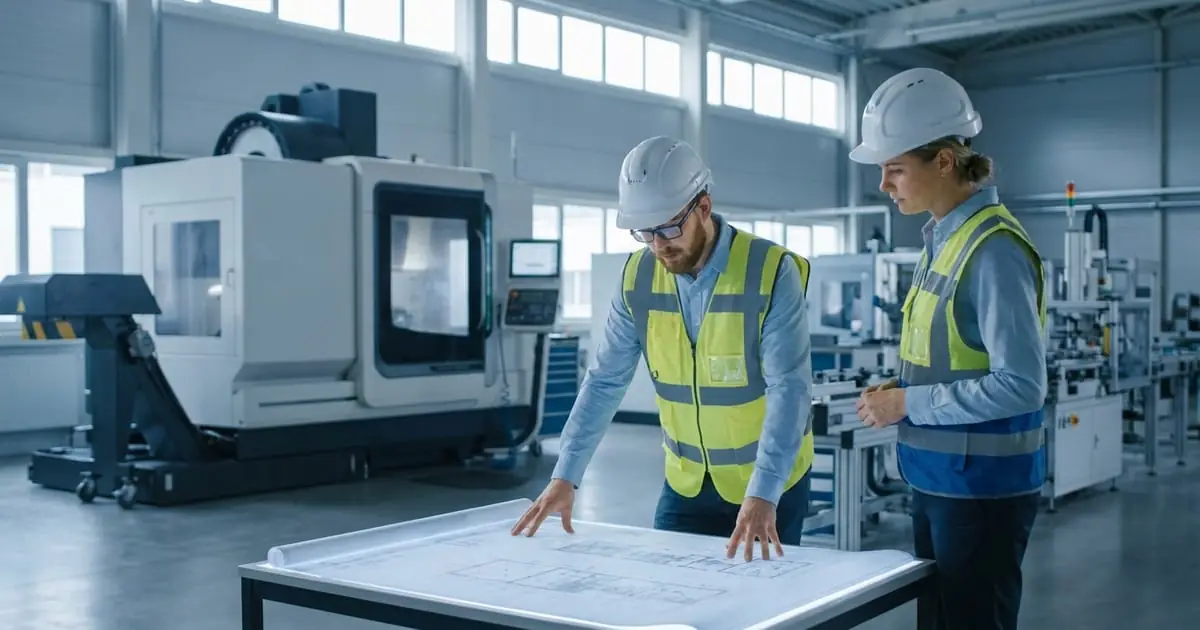
Image: A comprehensive manufacturing feasibility study is your blueprint for success.
Why a Manufacturing Feasibility Study is Non-Negotiable for 2026 Success
The manufacturing sector is a powerhouse, contributing over $2.35 trillion to the U.S. economy, with every dollar spent generating an additional $2.79 [1]. This robust environment, however, also presents significant challenges. These include everything from supply chain volatility to rapid technological shifts. Navigating these complexities without a clear roadmap is a recipe for disaster. A thorough **manufacturing feasibility study** helps mitigate these risks. Consider the data: A 2023 industry report by the National Association of Manufacturers indicated that projects initiated without a formal feasibility study were over 50% more likely to exceed budget or fail to meet operational targets [2]. Furthermore, McKinsey reported in 2020 that nearly 40% of product launches fail to meet their targets due to weak early-stage validation, including insufficient feasibility analysis [3]. These statistics underscore a critical truth: a **manufacturing feasibility study** is a multi-disciplinary diagnostic tool. It transforms uncertainty into managed risk and provides an objective, data-driven foundation for decision-making. This rigorous analysis is essential for any aspiring manufacturing business.Key Benefits of a Manufacturing Feasibility Study
- Reduces Risk: Identifies potential pitfalls early, saving significant capital and time.
- Secures Funding: Provides objective data that bankers and investors demand.
- Optimizes Resources: Ensures efficient allocation of capital, labor, and technology.
- Validates Assumptions: Replaces gut feelings with data-driven insights.
- Informs Decision-Making: Offers a clear "go/no-go" recommendation based on comprehensive analysis.
- Enhances Strategic Planning: Lays the groundwork for a robust business plan and operational strategy.
Deconstructing the Manufacturing Feasibility Study: A Strategic Imperative
A **manufacturing feasibility study** is a systematic evaluation of a proposed project's viability. Its core purpose is to determine if a manufacturing project can be successful and should proceed. This objective foundation for decision-making reduces reliance on emotional investment or gut feelings. This process ensures that all assumptions are rigorously tested against real-world data. It's an indispensable step for any new manufacturing business.Defining the Core Purpose of a Feasibility Study
The study systematically evaluates a project from initial market analysis through to final reporting. This ensures informed, data-driven decisions that significantly increase the chances of success. It is the most effective way to reduce investment risks, optimize resource allocation, and validate assumptions for your **production feasibility**. Increasingly, as organizations adopt AI-enhanced decision-making, feasibility studies play a new role. They validate assumptions using simulations, synthetic market tests, and predictive modeling, adding speed without sacrificing rigor in the **factory feasibility** assessment.Key Areas of Evaluation in a Manufacturing Feasibility Study
A truly robust **manufacturing feasibility study** delves into several critical domains. These interconnected pillars collectively paint a holistic picture of the project's potential and pitfalls. Understanding these components is vital for a complete **manufacturing feasibility** assessment. Key components include: * **Market Feasibility:** Is there sufficient demand for the product? Who are the competitors? Can the market sustain the proposed production? * **Technical Feasibility:** Can the product actually be manufactured with available technology and resources? Are the production processes viable? * **Economic/Financial Feasibility:** Will the project be profitable? What are the costs and potential returns? Is the investment justified? * **Legal & Regulatory Feasibility:** Does the project comply with all relevant laws, permits, and certifications? What are the compliance risks? * **Operational/Scheduling Feasibility:** Can the necessary workforce, supply chain, and management systems be put in place? Is the operational plan realistic? * **Environmental & Sustainability Feasibility:** What are the environmental impacts, and how can sustainability be integrated? Is the project environmentally responsible? * **Risk Analysis & Mitigation:** What are the potential challenges, and how can they be addressed? What are the contingency plans? For instance, in the pharmaceutical industry, a **manufacturing feasibility study** is regarded as an essential step of drug development or product transfer. The FDA's 2011 guidance on process characterization emphasizes the need for such studies to establish control strategies and eliminate risks before submission or Process Performance Qualification (PPQ) batches [4]. This highlights the critical role of **production feasibility** in highly regulated sectors.The Pillars of a Robust Manufacturing Feasibility Study: A Deep Dive into Key Components
Each component of a **manufacturing feasibility study** is a critical lens through which the project's viability is assessed. Neglecting any one of these pillars can lead to unforeseen challenges and, ultimately, project failure. This comprehensive approach ensures a thorough **manufacturing business feasibility** analysis.Market Feasibility: Understanding Demand and Competition
Market feasibility determines if there is a sufficient and sustainable demand for the product or service a manufacturing plant intends to produce. This pillar goes beyond anecdotal evidence or optimistic projections. It requires concrete market research to avoid overestimating demand or underestimating competitive pressures. Key considerations for this aspect of a **manufacturing feasibility study** include: * **Target Market Analysis:** Who are the potential customers? What are their needs, buying habits, and willingness to pay? * **Market Size and Growth:** Quantifying the total addressable market and projecting its growth trajectory. * **Competitive Landscape:** Identifying direct and indirect competitors, analyzing their strengths, weaknesses, pricing strategies, and market share. * **Distribution Channels:** How will the product reach the customer? What are the logistical challenges and costs? * **SWOT Analysis:** Identifying the project's Strengths, Weaknesses, Opportunities, and Threats within the market context. Relying on assumptions instead of proper market research is a common pitfall. Businesses often overestimate demand or underestimate costs without concrete market facts, leading to unrealistic financial projections and venture collapse. A strong market analysis is foundational for any **manufacturing business feasibility** assessment.Technical Feasibility: Production Processes and Technology
Technical feasibility confirms if a proposal can be executed with proposed resources, technology, and processes. Its failure can halt a project regardless of financial promise. This section assesses whether the necessary technology, equipment, and expertise are available and practical to implement for successful **production feasibility**. Elements of technical feasibility in a **manufacturing feasibility study** include: * **Process Assessment:** Detailed analysis of the manufacturing processes required, from raw material intake to finished product output. This includes identifying specific machinery, tooling, and automation needs. * **Technology Evaluation:** Assessing the suitability and availability of current and future technologies. For example, a 2026 American Manufacturing Survey found that 69% of manufacturers plan to invest in physical assets like advanced machinery or robotics in 2026 [5]. * **Capacity and Production Volume:** Ensuring equipment capacities are synchronized, efficiency estimates account for downtime and waste, and scalability planning allows for future growth. Unchecked **manufacturing feasibility** uncertainties can lead to project delays, increased costs, and late time to market. * **Raw Material Availability and Quality:** Confirming a reliable supply of necessary inputs that meet quality standards. * **Infrastructure Requirements:** Evaluating site suitability, power, water, waste management, and connectivity. * **Design for Manufacturability (DFM) & Design for Assembly (DFA):** Incorporating these principles early to optimize product design for efficient and cost-effective production. Prototyping is a key method for assessing **manufacturing feasibility** and resolving uncertainties.Operational Feasibility: Supply Chain, Workforce, and Management
Operational feasibility assesses whether the proposed manufacturing project can be successfully integrated into the existing organizational structure or if a new structure needs to be established. It examines the human, logistical, and managerial resources required for smooth **factory feasibility**. Key areas for this pillar of a **manufacturing feasibility study** include: * **Supply Chain Management:** Evaluating the entire supply chain, from sourcing raw materials to delivering finished goods. This includes assessing supplier reliability, logistics, warehousing, and potential vulnerabilities. Manufacturing planning is the single most cited supply chain challenge of 2026, identified by 62% of leaders [6]. * **Workforce Planning:** Identifying the required skill sets, labor availability, and training needs. The skilled labor shortage is the biggest challenge for 79% of manufacturers heading into 2026 [7]. * **Organizational Structure and Management:** Defining roles, responsibilities, and the management team's experience and capabilities. * **Quality Control Systems:** Establishing processes to ensure product quality and adherence to standards. * **Maintenance and Support:** Planning for equipment maintenance, IT support, and other operational necessities. Operational readiness assesses human resources, processes, regulatory adherence, and workforce skill requirements, all critical for successful **manufacturing business feasibility**.Legal & Regulatory Feasibility: Compliance and Permits
Manufacturing projects are heavily regulated, and legal feasibility ensures compliance with all relevant legal and regulatory requirements. Ignoring local laws, licensing requirements, and compliance regulations can lead to shutdowns, delays, or significant fines. This is a crucial part of any **manufacturing feasibility study**. This pillar covers: * **Environmental Permits:** Compliance with EPA regulations, emissions standards, and waste disposal requirements. * **Workplace Safety Standards:** Adherence to OSHA regulations for employee health and safety. * **Product Certifications:** Obtaining necessary certifications (e.g., UL, CE, ISO) for product marketability and safety. * **Intellectual Property:** Protecting patents, trademarks, and copyrights, and ensuring the project doesn't infringe on existing IP. * **Local Zoning and Building Codes:** Compliance with municipal and regional regulations for construction and operation. * **International Trade Regulations:** For products intended for export or using imported materials, understanding tariffs, customs, and trade agreements. Nearly half of manufacturers surveyed in early 2025 reported that complex, inconsistent, and rapidly changing tariffs make long-term planning difficult [8]. Overlooking a single permit can delay a project by months, leading to significant cost increases. A thorough legal review is essential for **factory feasibility**.Environmental & Sustainability Feasibility: Modern Imperatives
In modern manufacturing, sustainability is no longer a niche concern but a business imperative, often equating to profitability. This pillar assesses the environmental impact of the proposed project and its alignment with sustainable practices. This is an increasingly important aspect of a **manufacturing feasibility study**. Considerations include: * **Resource Efficiency:** Minimizing water, energy, and raw material consumption. * **Waste Reduction and Recycling:** Implementing strategies for waste minimization, reuse, and recycling. * **Emissions Control:** Adhering to air and water quality standards, and exploring options for reducing greenhouse gas emissions. * **Circular Economy Principles:** Assessing opportunities to design products for longevity, repairability, and recyclability. * **Stakeholder Expectations:** Meeting the growing demands from consumers, investors, and regulators for environmentally responsible operations. Many manufacturing environments, especially in food and beverage, pharma, and consumer packaged goods, are clean and high-tech, actively pursuing sustainability goals. Integrating these aspects into your **production feasibility** analysis demonstrates foresight.Risk Assessment & Mitigation: Identifying and Planning for Challenges
A thorough **manufacturing feasibility study** includes a comprehensive risk assessment, identifying potential problems that could impact the project and developing strategies to mitigate them. This proactive approach is vital for long-term success. Key aspects include: * **Identification of Risks:** Categorizing risks across all feasibility areas (market, technical, financial, operational, legal, environmental). Examples include supply chain disruptions, technological obsolescence, labor shortages, market shifts, and regulatory changes. * **Risk Analysis:** Quantifying the likelihood and potential impact of each identified risk. * **Mitigation Strategies:** Developing concrete plans to reduce the probability or impact of risks. This could involve diversifying suppliers, investing in advanced automation, cross-training employees, or securing robust insurance. * **Contingency Planning:** Establishing fallback plans for critical risks that cannot be fully mitigated. * **Scenario Planning:** Modeling different outcomes (best-case, worst-case, most likely) to understand the project's resilience. Unchecked uncertainties lead to delays, increased costs, and late time to market. Designing for manufacturability (DFM), design for assembly (DFA), and prototyping are key methods for assessing **manufacturing feasibility** and resolving uncertainties early in the process.Financial Feasibility: Projecting Costs, Revenue, and Profitability for 2026
Financial feasibility is arguably the most critical component of a **manufacturing feasibility study**, as it determines if the project will be economically viable and generate an acceptable return on investment. This section requires meticulous attention to detail and realistic projections for your **manufacturing business feasibility**.Capital Expenditure (CAPEX) Ranges in 2026 Dollars
Capital expenditure refers to the funds used to acquire, upgrade, and maintain physical assets such as property, plant, and equipment. For a new manufacturing facility, these costs are substantial and must be accurately projected. Typical CAPEX components for a **factory feasibility** assessment include: * **Land Acquisition:** Cost of purchasing the site. * **Building Construction/Renovation:** Industrial construction costs for manufacturing facilities range from $100 to $200 per square foot, depending on power, crane, and process requirements [9]. A 4% to 6% annual escalation trend in industrial construction costs has persisted since 2020, though the rate of increase is moderating [9]. * **Machinery and Equipment:** Purchase and installation of production machinery, robotics, and automation systems. A 2026 American Manufacturing Survey found that 69% of manufacturers plan to invest in advanced machinery/robotics in 2026 [5]. Furthermore, 95% of manufacturing and supply chain leaders surveyed in 2026 consider AI a requirement for competitiveness [10]. * **Infrastructure:** Utilities (power, water, gas), waste treatment, IT infrastructure. * **Initial Working Capital:** Funds needed to cover initial operational expenses before revenue streams stabilize (e.g., raw material inventory, initial payroll). Underestimating initial, running, or growth sustenance costs is a primary reason for business failures. Proper cost analysis is essential to prevent future financial shocks in your **manufacturing feasibility study**.Operating Expenditure (OPEX) Ranges in 2026 Dollars
Operating expenditures are the ongoing costs of running the manufacturing plant. These are recurring costs that directly impact the project's profitability. Common OPEX components for **production feasibility** include: * **Labor Costs:** Wages, salaries, benefits for production workers, supervisors, and administrative staff. The skilled labor shortage is a significant challenge, impacting labor costs. * **Raw Materials:** Costs of inputs required for production. * **Utilities:** Electricity, water, natural gas, internet. * **Maintenance and Repairs:** Ongoing upkeep of machinery and facilities. * **Insurance:** Property, liability, and worker's compensation insurance. * **Taxes:** Property taxes, business taxes (excluding income tax). * **Administrative and Overhead:** Office supplies, marketing, professional services.Revenue Model and Pricing Strategy
Developing a robust revenue model involves understanding how the manufacturing plant will generate income. This requires careful consideration of: * **Target Market and Sales Volume:** Realistic projections of how many units can be sold based on market feasibility. * **Competitive Landscape:** Analyzing competitor pricing and market positioning. * **Value Proposition:** What unique benefits does the product offer that justify its price? * **Pricing Strategies:** * **Cost-plus pricing:** Adding a markup to the total cost of production. * **Value-based pricing:** Setting prices based on the perceived value to the customer. * **Competitive pricing:** Aligning prices with those of key competitors. * **Market penetration pricing:** Initially low prices to gain market share.Breakeven Analysis with Realistic Ramp Curves
Breakeven analysis identifies the sales volume (in units or revenue) needed to cover all fixed and variable costs. This is a critical metric for understanding the project's financial risk and operational efficiency. A realistic breakeven analysis must incorporate: * **Fixed Costs:** Costs that do not change with production volume (e.g., rent, insurance, salaries of administrative staff). * **Variable Costs:** Costs that vary directly with production volume (e.g., raw materials, direct labor, utilities tied to production). * **Selling Price Per Unit:** The revenue generated from each unit sold. * **Ramp-up Curves:** Acknowledging that a new manufacturing plant will not immediately operate at full capacity or achieve maximum sales. Production and sales will typically ramp up over several months or even years. This allows for more realistic financial projections in your **manufacturing feasibility study**.Worked Financial Example: A Mid-Sized Manufacturing Plant
Let's illustrate these financial concepts with a simplified scenario for a new, mid-sized custom industrial components plant. This example demonstrates the practical application of a **manufacturing feasibility study**. **Scenario:** A 20,000 sq ft facility producing specialized components for various industries.
Image: Detailed financial projections are a cornerstone of any robust manufacturing feasibility study.
| Financial Component | Details | Estimated Value (2026 USD) |
|---|---|---|
| 1. Capital Expenditure (CAPEX) Estimation | ||
| Land & Building | 20,000 sq ft @ $150/sq ft average | $3,000,000 |
| Machinery & Automation | Including installation, advanced machinery | $1,500,000 |
| Initial Working Capital | Inventory, initial payroll, cash buffer | $500,000 |
| Total Estimated CAPEX | ~$5,000,000 | |
| 2. Annual Operating Expenditure (OPEX) Estimation | ||
| Direct Labor | Skilled technicians, supervisors | $1,200,000 |
| Raw Materials | Variable costs | $1,000,000 |
| Utilities | Electricity, water, gas | $250,000 |
| Maintenance & Repairs | $150,000 | |
| Insurance & Taxes | Property, business | $100,000 |
| Administrative & Overhead | $300,000 | |
| Total Estimated Annual OPEX | ~$3,000,000 | |
| 3. Revenue Model (at Full Capacity) | ||
| Estimated Production Capacity | 20,000 units per year | |
| Average Selling Price per Unit | $200 | |
| Full Capacity Annual Revenue | 20,000 units * $200/unit | $4,000,000 |
| 4. Breakeven Analysis | ||
| Assumed Fixed Costs | (Simplified for example) | $1,120,770 |
| Variable Costs per Unit | ($1M Raw Materials + $1.2M Direct Labor) / 20K units | $110 |
| Contribution Margin per Unit | $200 - $110 | $90 |
| Breakeven Units | Fixed Costs / Contribution Margin | ~12,453 units |
| 5. Simplified Payback Period (Ignoring Time Value of Money & Ramp-up) | ||
| Annual Net Profit (at full capacity, before tax) | $4,000,000 (Revenue) - $3,000,000 (OPEX) | $1,000,000 |
| Payback Period | Total CAPEX / Annual Net Profit | 5 years |
Navigating the Complex Manufacturing Regulatory and Licensing Landscape
The regulatory environment for manufacturing is intricate and constantly evolving. A thorough **manufacturing feasibility study** must account for all legal and licensing requirements to prevent costly delays, fines, or even project termination. This ensures the **factory feasibility** is sound from a legal perspective.Essential Permits and Certifications for Manufacturing
Manufacturing projects are heavily regulated, requiring a multitude of permits and certifications at federal, state, and local levels. These can include: * **Environmental Permits:** From the Environmental Protection Agency (EPA) for air emissions, water discharge, and hazardous waste management. * **Workplace Safety Standards:** Compliance with Occupational Safety and Health Administration (OSHA) regulations for employee health and safety. * **Product Certifications:** Depending on the product, certifications like UL (Underwriters Laboratories), CE (Conformité Européenne), or industry-specific standards (e.g., ISO 13485 for medical devices, AS9100 for aerospace). * **Building Permits:** Local permits for construction, electrical, plumbing, and fire safety. * **Business Licenses:** General operating licenses from state and local authorities. * **International Trade Regulations:** For businesses involved in import/export, compliance with customs regulations, tariffs, and trade agreements. Overlooking a single permit can delay a project by months, leading to significant cost increases. Legal feasibility analysis ensures compliance with all relevant legal and regulatory requirements, including necessary permits, licenses, and intellectual property laws, which is vital for any **manufacturing business feasibility** assessment.Impact of Non-Compliance in Manufacturing
The consequences of non-compliance can be severe: * **Fines and Penalties:** Regulatory bodies can impose substantial monetary penalties. * **Project Delays:** Permits can be revoked or withheld, halting construction or operations. * **Legal Action:** Lawsuits from affected parties or regulatory agencies. * **Reputational Damage:** Negative publicity can erode public trust and customer loyalty. * **Facility Shutdowns:** In extreme cases, non-compliant facilities may be forced to cease operations.Leveraging Government Incentives and Support for Manufacturing Feasibility
Fortunately, governments at all levels recognize the economic importance of manufacturing and offer various incentives and support programs. A comprehensive **manufacturing feasibility study** should identify and factor in these opportunities. * **Federal Programs:** Initiatives like the CHIPS and Science Act and the Inflation Reduction Act (IRA) offer significant funding and tax credits for domestic manufacturing, particularly in critical sectors like semiconductors, clean energy, and advanced batteries. The Department of Energy, for instance, offers Battery Materials Processing Grants to expand domestic capabilities in battery manufacturing [11]. * **State-Level Incentives:** States actively compete for manufacturing investments, offering: * Job and investment tax credits. * Workforce training grants and programs. * Property tax abatements. * Specialized inventory or sales tax breaks. * Some state programs provide refundable credits or grants that generate cash even with low tax liability. * In 2023, incentives for manufacturing projects in the US averaged $75,000 per employee [12]. * **Specific Programs:** * The U.S. Department of Agriculture (USDA) requires a **manufacturing feasibility study** by a qualified independent consultant for new businesses seeking guaranteed loans, evaluating economic, market, technical, financial, and management feasibility [13]. * The Export-Import Bank of the United States (Ex-Im Bank) has a program to support the construction of manufacturing facilities in the US focused on exportable products (since April 2022) [14]. * Small to medium-sized manufacturers receiving a qualified energy assessment can apply for grants up to $300,000 for energy efficiency improvements [15]. These incentives can significantly improve a project's financial viability and competitive position, making a strong case for **production feasibility**.Identifying and Mitigating Key Operational Risks in Manufacturing
The manufacturing landscape is constantly evolving, presenting a unique set of operational risks. A robust **manufacturing feasibility study** must anticipate these challenges and propose concrete mitigation strategies. This proactive approach is crucial for ensuring long-term **factory feasibility**.Skilled Labor Shortage and Workforce Challenges in Manufacturing
The skilled labor shortage is the biggest challenge for 79% of manufacturers heading into 2026 [7]. This isn't just about finding enough workers; it's about finding workers with the specialized skills needed for modern, high-tech manufacturing. * **Mitigation:** Investing in workforce development programs, apprenticeships, partnerships with vocational schools, and internal training. Automation and AI integration can also offset some labor needs and enhance the productivity of existing staff. Addressing this is key for **manufacturing business feasibility**.Supply Chain Volatility and Disruptions
Recent global events have highlighted the fragility of global supply chains. Manufacturing planning is the single most cited supply chain challenge of 2026, identified by 62% of leaders [6]. * **Mitigation:** Diversifying suppliers, nearshoring or reshoring critical components, implementing robust inventory management systems, and leveraging predictive analytics and AI to anticipate disruptions. This strengthens the **production feasibility** of your project.Technological Obsolescence and AI Integration in Manufacturing
The pace of technological change is accelerating. What is cutting-edge today could be obsolete tomorrow. In 2026, 95% of manufacturing and supply chain leaders surveyed consider AI a requirement for competitiveness, with 97% stating AI is already embedded across core manufacturing and supply chain workflows [10]. * **Mitigation:** Continuous investment in R&D, adopting flexible manufacturing systems, integrating AI and automation strategically, and ensuring the workforce is trained on new technologies. Nearly nine in ten manufacturing leaders expect AI to make operations more productive, with 59% anticipating improvements of 50% or more [10]. Modern manufacturing involves more experts and technology, shifting away from the "assembly line" misconception. A forward-looking **manufacturing feasibility study** accounts for this.Market Volatility and Competitive Pressures
Consumer preferences can shift rapidly, and new competitors can emerge unexpectedly. Global economic conditions, trade policies, and geopolitical events can all impact market demand. * **Mitigation:** Continuous market research, product innovation, building strong customer relationships, and developing agile production capabilities to adapt to changing demand. Diversifying product lines or markets can also reduce reliance on a single revenue stream, enhancing overall **manufacturing feasibility**.Quality Control and Product Integrity
Maintaining consistent product quality is paramount for brand reputation and customer satisfaction. Defects can lead to costly recalls, warranty claims, and loss of trust. * **Mitigation:** Implementing stringent quality management systems (e.g., ISO 9001), investing in advanced inspection technologies, robust process control, and continuous improvement methodologies. This is a critical operational aspect for any successful **manufacturing business feasibility** plan.What Bankers and Investors Demand from a Manufacturing Feasibility Study: The Financial Stakeholder's Perspective
Securing funding for a new manufacturing venture, whether through debt or equity, hinges on presenting a compelling and meticulously researched case. Bankers and investors scrutinize a **manufacturing feasibility study** to assess risk, potential returns, and the overall viability of the project. This is where a strong **production feasibility** report truly shines.Comprehensive Financial Projections
Investors and lenders require detailed and realistic financial forecasts. This includes: * **Capital Expenditure (CAPEX):** A clear breakdown of all initial investment costs. * **Operating Expenditure (OPEX):** Detailed projections of recurring costs. * **Revenue Projections:** Realistic sales forecasts, often with conservative, moderate, and aggressive scenarios. * **Cash Flow Statements:** Crucial for understanding liquidity and the ability to service debt. * **Profit & Loss Statements:** Demonstrating profitability over time. * **Key Financial Metrics:** Return on Investment (ROI), Internal Rate of Return (IRR), Net Present Value (NPV), and payback period. The USDA, for instance, requires a **manufacturing feasibility study** by a qualified independent consultant for new businesses seeking guaranteed loans, specifically evaluating economic, market, technical, financial, and management feasibility [13].Market Validation and Competitive Advantage
Financial stakeholders need to be convinced that there is a genuine, sustainable market for the product. This means: * **Clear Demand:** Evidence from market research, customer surveys, and industry reports. * **Target Market Identification:** A well-defined customer segment. * **Sustainable Competitive Advantage:** What makes this manufacturing plant unique? Is it proprietary technology, cost efficiency, superior quality, or a unique distribution model? * **Realistic Market Share:** Projections that acknowledge existing competition.Management Team and Operational Readiness
Investors often back the team as much as the idea. They look for: * **Experienced Management:** A team with relevant industry experience, a track record of success, and complementary skills. * **Clear Organizational Structure:** Defined roles and responsibilities. * **Operational Plan:** A well-thought-out strategy for production, supply chain, and quality control. * **Workforce Plan:** How the skilled labor challenge will be addressed.Risk Mitigation and Contingency Planning
No project is without risk. Investors want to see that these risks have been thoroughly identified, analyzed, and that robust plans are in place to mitigate them. This is a core component of any credible **manufacturing feasibility study**. * **Risk Register:** A comprehensive list of potential risks, their likelihood, impact, and mitigation strategies. * **Contingency Plans:** What happens if a key supplier fails, or market demand drops? What are the backup plans? * **Insurance:** Adequate coverage for various operational and financial risks.Scalability and Sustainability in Manufacturing Feasibility
For equity investors, the potential for growth is critical. For all stakeholders, long-term viability is key. * **Scalability:** Can the operation grow efficiently to meet increasing demand? Is the infrastructure flexible? * **Sustainability Practices:** Increasingly, investors look for evidence of sustainable practices and environmental responsibility. This includes energy efficiency, waste reduction, and ethical sourcing. Manufacturing is not inherently unsustainable; in fact, sustainability often equates to profitability through efficiency gains. A well-done **manufacturing feasibility study** reduces uncertainty, supports informed choices, catches issues early, and provides a decision grounded in facts. The most effective feasibility studies present findings in a crisp, story-driven format, turning abstract analysis into concrete narratives that align teams and reassure financial partners.Common Pitfalls to Avoid in Your Manufacturing Feasibility Study
While a **manufacturing feasibility study** is a powerful tool, its effectiveness can be undermined by common mistakes. Being aware of these pitfalls is the first step toward avoiding them and ensuring a robust **manufacturing business feasibility** assessment.Skipping the Study Entirely
Rushing through a feasibility study or skipping it to save time and cost is a significant mistake that often leads to project failure, increased costs, and missed opportunities. The cost of not doing a **manufacturing feasibility study** and failing is far higher than the cost of doing one and deciding not to proceed. Projects initiated without formal feasibility studies are over 50% more likely to exceed budget or fail to meet operational targets [2].Internal Bias and Lack of Objectivity
Conducting a study entirely in-house can lead to bias. Designers, engineers, and CEOs can be overly attached to their ideas, leading to a skewed assessment. Independent professionals should conduct **manufacturing feasibility studies** for an unbiased evaluation, bringing a fresh perspective and rigorous methodology. This ensures true **production feasibility** is determined.Limiting the Scope to Technical Issues
While technical feasibility is crucial, neglecting market, financial, legal, operational, and environmental factors can lead to project failure. A comprehensive **manufacturing feasibility study** must be multi-disciplinary, addressing all key components outlined earlier. Focusing solely on whether something *can* be built, rather than whether it *should* be built, is a common error in assessing **factory feasibility**.Relying on Assumptions Over Research
Businesses often overestimate demand or underestimate costs without concrete market facts, leading to unrealistic financial projections and venture collapse. A **manufacturing feasibility study** must be grounded in primary and secondary research, not wishful thinking. Every critical assumption should be validated with data.Underestimating Costs and Overestimating Revenue
Financial mistakes are a primary reason for business failures. Underestimating initial capital expenditure, ongoing operating costs, or growth sustenance costs, while simultaneously overestimating sales volume and pricing, creates a dangerously optimistic financial model. Proper, conservative cost analysis is essential to prevent future financial shocks in your **manufacturing feasibility study**.Ignoring Legal and Regulatory Checks
Forgetting legal and regulatory checks can lead to severe consequences. Ignoring local laws, licensing requirements, and compliance regulations can lead to shutdowns, delays, or fines. This includes environmental permits, workplace safety standards, and product certifications. Early engagement with regulatory bodies is critical for any **manufacturing business feasibility** project.Conclusion: Your Blueprint for Manufacturing Success in a Dynamic Landscape
In the complex and rapidly evolving world of manufacturing, a comprehensive **manufacturing feasibility study** is not merely a bureaucratic exercise; it is the cornerstone of successful project development. It transforms uncertainty into strategic advantage, providing a data-driven blueprint that significantly reduces investment risks and optimizes resource allocation for your new venture. From meticulously analyzing market demand and technical viability to scrutinizing financial projections and navigating the intricate regulatory landscape, a thorough **manufacturing feasibility study** empowers stakeholders to make informed, objective decisions. It identifies potential pitfalls before they become costly failures and highlights opportunities for innovation and competitive advantage. At SimpleFeasibility, we understand the critical role this process plays. By embracing the rigor of a detailed **manufacturing feasibility study**, founders, business owners, consultants, and investors can secure funding, build resilient operations, and pave the way for profitable, sustainable manufacturing success in 2026 and beyond.Ready to Validate Your Manufacturing Vision?
Don't leave your manufacturing project's success to chance. Partner with SimpleFeasibility for an expert, objective, and comprehensive **manufacturing feasibility study**. Our team is ready to help you turn your concept into a viable, profitable reality.
Contact SimpleFeasibility Today!
FAQ: Your Manufacturing Feasibility Study Questions Answered
What is the primary purpose of a manufacturing feasibility study?
The primary purpose of a **manufacturing feasibility study** is to objectively determine if a proposed manufacturing project is viable and should proceed. It reduces risk, optimizes resource allocation, and provides a data-driven foundation for informed decision-making for your new production facility.
How long does a typical manufacturing feasibility study take?
The duration of a **manufacturing feasibility study** varies significantly based on the project's complexity, scale, and the availability of data. Generally, a detailed study can range from 1 to 3 months, though larger or more innovative projects may require more time for a thorough **production feasibility** assessment.
Who should conduct a manufacturing feasibility study?
Ideally, an independent, qualified consultant or a multi-disciplinary team should conduct the **manufacturing feasibility study**. This ensures objectivity, leverages diverse expertise (e.g., market research, engineering, finance, legal), and provides an unbiased evaluation, avoiding internal biases common in a **manufacturing business feasibility** assessment.
What happens if a manufacturing feasibility study shows the project isn't viable?
If a **manufacturing feasibility study** concludes that a project is not viable, it saves significant capital, time, and resources by preventing investment in a failing venture. The cost of a thorough study is always far less than the cost of launching an unsuccessful project, making it a valuable investment in **factory feasibility**.
Can a manufacturing feasibility study help secure funding?
Absolutely. A comprehensive **manufacturing feasibility study** is often a prerequisite for securing loans from banks and investments from venture capitalists or private equity firms. It demonstrates due diligence, a clear understanding of the market and risks, and a credible path to profitability, significantly increasing a project's attractiveness to funders for its **manufacturing business feasibility**.
How often should a manufacturing feasibility study be updated?
For long-term projects or in industries experiencing rapid market shifts or technological advancements, periodic reviews or updates (e.g., every 3-5 years, or whenever significant external changes occur) are advisable to ensure the **manufacturing feasibility study** remains relevant and accurate. This ensures ongoing **production feasibility**.
About the Author
The SimpleFeasibility Editorial Team comprises experts with extensive backgrounds in corporate finance, venture investment, and small business advisory. Our articles are peer-reviewed for technical accuracy, ensuring that the insights provided are both practical and authoritative for founders, consultants, and investors worldwide, particularly in the realm of **manufacturing feasibility**.
Sources & References
- National Association of Manufacturers. (2020-2021). *Manufacturing's Contribution to the U.S. Economy*.
- National Association of Manufacturers. (2023). *Industry Report: Project Success Rates*.
- McKinsey & Company. (2020). *Why new products fail*.
- U.S. Food and Drug Administration (FDA). (2011). *Guidance for Industry: Process Validation: General Principles and Practices*.
- American Manufacturing Survey. (2026). *Investment in Advanced Machinery and Robotics*.
- American Manufacturing Survey. (2026). *Supply Chain Challenges*.
- American Manufacturing Survey. (2026). *Skilled Labor Shortage*.
- Manufacturing Leadership Council. (2025). *Survey on Tariffs and Long-Term Planning*.
- Deloitte Insights. (2020 onwards). *Industrial Construction Costs and Trends*.
- Fictiv and MISUMI. (2026). *11th Annual State of Manufacturing & Supply Chain Report*.
- U.S. Department of Energy. *Battery Materials Processing Grants Program*.
- Reshoring Initiative. (2023). *Manufacturing Incentives Analysis*.
- U.S. Department of Agriculture (USDA). *Business and Industry (B&I) Loan Guarantee Program*.
- Export-Import Bank of the United States (Ex-Im Bank). (2022). *Make More in America Initiative*.
- U.S. Department of Energy. *Small Manufacturer's Retooling Program*.