A Complete Guide to Waste Management Feasibility Studies: From Concept to Capital
The global landscape of waste management is undergoing a profound transformation. What was once seen primarily as a disposal challenge is now recognized as a complex ecosystem ripe with opportunities for resource recovery, technological innovation, and sustainable economic growth.
For founders, business owners, consultants, and investors looking to enter or expand within this dynamic sector, a comprehensive waste management feasibility study is not merely a recommendation—it is a critical first step.
This guide, crafted by the SimpleFeasibility Editorial Team with backgrounds in corporate finance, venture investment, and small business advisory, provides a deep dive into the essential components of a robust waste management feasibility study. It equips you with the knowledge to navigate this evolving industry confidently.
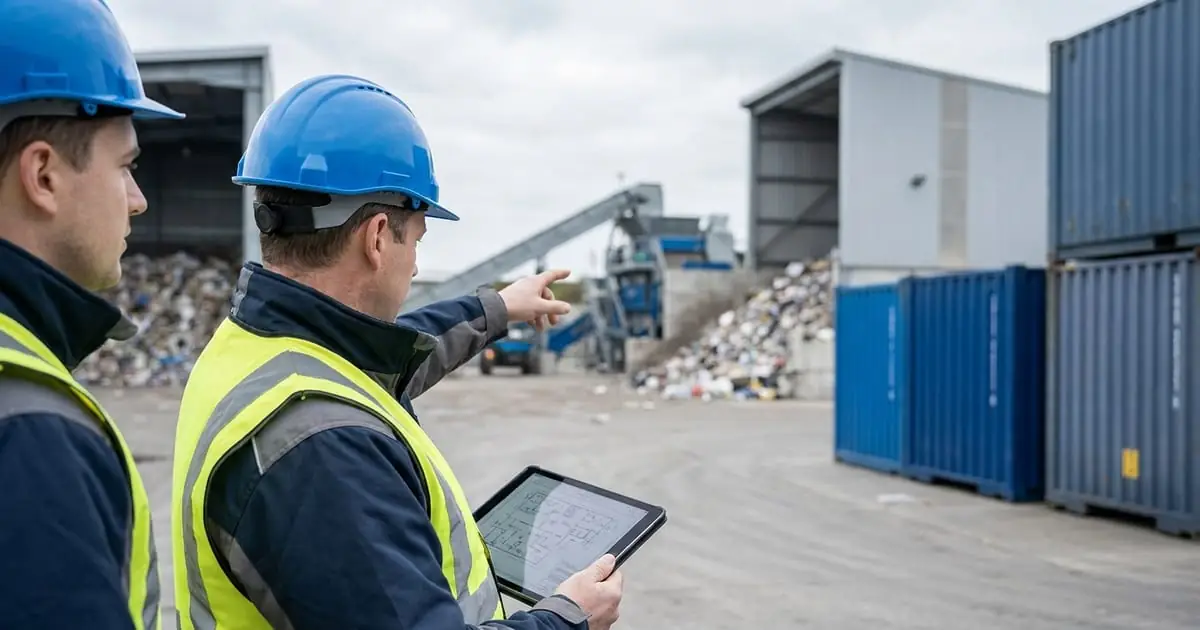
Navigating the Future of Waste: Why a Waste Management Feasibility Study is Your First Step
The decision to invest in a new waste management project, whether it's a recycling facility, a composting operation, or an advanced waste-to-energy plant, involves significant capital, operational complexities, and regulatory hurdles.
Without a thorough understanding of these factors, even the most promising ideas can falter. This is where a detailed waste management feasibility study becomes indispensable.
What is a Waste Management Feasibility Study?
A waste management feasibility study is a comprehensive, systematic analysis of a proposed project's viability. It's a deep dive into whether a project is technically possible, economically justifiable, legally compliant, operationally sound, and achievable within a realistic timeframe.
The study scrutinizes every facet, from the availability of waste streams to the potential for revenue generation. It ensures that all critical questions are answered before significant capital is committed to a waste management business feasibility venture.
Why Conduct a Waste Management Feasibility Study Now?
The urgency for such studies has never been greater. The global waste management market is experiencing exponential growth, driven by increasing urbanization, population growth, and heightened environmental awareness.
Precedence Research, Grand View Research, and Mordor Intelligence collectively project the global waste management market to grow from an estimated USD 1.37-1.52 trillion in 2026 to USD 2.09-2.44 trillion by 2031-2035, representing a Compound Annual Growth Rate (CAGR) of 6.0-6.66%.
This growth signifies immense opportunity but also increased competition and complexity. A well-executed waste management feasibility study mitigates risks, optimizes resource allocation, and, crucially, provides the robust evidence required to secure funding from investors and financial institutions.
For anyone considering a venture in this sector, this guide is your essential roadmap to understanding waste management business feasibility.
The Untapped Potential: Understanding the Waste Management Market
The waste management industry is not just growing; it's transforming. Understanding its current state and future trajectory is paramount for any successful venture, especially when conducting a solid waste feasibility assessment.
Market Size and Growth Projections
The sheer scale of waste generation underscores the market's potential. Globally, urban areas alone could generate as much as 2.2 billion tons of waste annually by 2025 (World Bank).
Other UN estimates place municipal waste generation at 2.1 billion tonnes in 2024, or 2.3 billion tonnes in 2023. Projections indicate that municipal solid waste generation could grow to 3.8 billion tonnes by 2050 (UN, World Bank).
This escalating volume translates into a burgeoning market for effective waste management solutions. The global cost of waste management is projected to exceed $640 billion a year in 2050, a significant jump from US$252 billion in 2020.
Key Trends Shaping the Industry
Several key trends are redefining the waste management landscape, influencing every waste management feasibility study:
- Circular Economy and Resource Recovery: There's a fundamental shift from a linear "take-make-dispose" model to a circular economy, emphasizing reduction, reuse, recycling, and recovery. This means waste is increasingly viewed as a valuable resource, driving innovation in material recovery facilities (MRFs), composting, and waste-to-energy technologies.
- Technological Integration: Technology is at the forefront. The widespread adoption of IoT sensors (e.g., smart bins, projected to reach 2.4 million by 2025) and AI/machine learning (predicted to show a 35.2% CAGR between 2024 and 2031 in waste management) is optimizing collection routes, improving sorting efficiency, and providing crucial data for operational intelligence.
- E-waste Explosion: E-waste is the fastest-growing waste category. In 2022, 62 million tons were generated, an 82% increase over 2010, and this is likely to hit 82 million tons by the end of the decade. This trend creates both significant environmental challenges and specialized recycling opportunities.
- Industrial Waste Focus: Industrial waste constitutes roughly 50% of all waste created globally, presenting a massive, often underserved, segment for specialized waste management services.
Addressing Common Misconceptions in Waste Management
Several pervasive myths can hinder effective waste management planning and impact the outcome of a waste management feasibility study:
- "Eliminating waste is bad for the economy." This is false. Many businesses recognize that waste equates to lost profit, and robust waste management strategies can significantly benefit their bottom line by reducing disposal costs and generating revenue from recovered materials.
- "Landfills solve all our waste problems." Landfills ignore the true cost of waste, miss opportunities to conserve resources, and pose long-term risks of ground, water, and soil pollution. They are a necessary but far from ideal solution.
- "Recycling uses more energy than it saves." While recycling requires energy, the overall savings far outweigh the costs. For example, recycling aluminum saves up to 95% of the energy compared to producing new aluminum from virgin ore. Recyclables save over 700 million tonnes of CO2 emissions every year.
- "Small businesses don't need professional waste management." Small businesses face the same regulatory requirements as larger ones and can benefit proportionally more from optimized waste management, often finding significant cost savings and compliance benefits.
The waste management sector is dynamic and ripe for innovation. A well-executed waste management feasibility study leverages these trends and dispels misconceptions to build a truly viable project.
Anatomy of Success: Essential Elements of Your Waste Management Feasibility Study
A robust waste management feasibility study dissects a project into several core components, each critical for a holistic understanding of its potential. This comprehensive approach ensures all angles of your waste management business feasibility are covered.
Market Analysis and Waste Stream Characterization
This foundational element assesses the demand for your proposed services. It involves:
- Waste Generation Rates and Composition: Understanding the types and quantities of waste generated in your target area (e.g., municipal solid waste, industrial waste, construction and demolition waste, e-waste). This granular data is crucial for sizing your facility and selecting appropriate technologies for solid waste feasibility.
- Existing Infrastructure: Identifying current waste collection, transfer, processing, and disposal facilities, as well as their capacities and limitations.
- Competitive Landscape: Analyzing existing service providers, their strengths, weaknesses, pricing, and market share.
- Demographics and Economic Trends: Projecting future waste generation based on population growth, industrial development, and economic forecasts.
Technical Feasibility and Technology Assessment
This section determines if the project can be built and operated successfully. It includes:
- Site Suitability: Evaluating potential locations based on zoning, accessibility, environmental impact, and proximity to waste sources and end markets.
- Technology Selection: Choosing appropriate technologies (e.g., Material Recovery Facility (MRF), composting, anaerobic digestion, pyrolysis, waste-to-energy) based on waste stream characteristics, desired outputs, and regulatory requirements.
- Infrastructure Requirements: Detailing the necessary buildings, machinery, utilities, and transportation logistics for effective waste collection feasibility.
- Process Flow and Capacity: Designing the operational flow and ensuring the facility can handle projected waste volumes efficiently.
Financial Feasibility and Economic Viability
The heart of any waste management feasibility study, this component projects the financial performance of the project. It covers:
- Capital Expenditure (CAPEX): Initial investment costs for land, construction, equipment, and permits.
- Operational Expenditure (OPEX): Recurring costs such as labor, fuel, utilities, maintenance, and disposal fees.
- Revenue Projections: Estimating income from collection fees, tipping fees, and the sale of recovered materials or energy.
- Profitability Analysis: Calculating key metrics like Return on Investment (ROI), payback period, Net Present Value (NPV), and Internal Rate of Return (IRR).
- Breakeven Analysis: Determining the point at which revenues cover all costs.
Operational & Management Plan
This outlines how the project will run day-to-day, a crucial part of any waste management business feasibility assessment:
- Organizational Structure: Defining roles, responsibilities, and staffing needs.
- Logistics: Planning waste collection routes, transportation, and material handling.
- Maintenance Schedules: Ensuring equipment longevity and operational efficiency.
- Safety Protocols: Implementing comprehensive health and safety programs for employees and the public.
- Quality Control: Establishing procedures for sorting, processing, and output material quality.
Environmental, Social, and Governance (ESG) Impact
Increasingly vital, this assesses the broader impact of the project, especially for waste-to-energy feasibility:
- Environmental Impact Assessment (EIA): Identifying potential impacts on air, water, soil, and biodiversity, and proposing mitigation measures.
- Social Equity Considerations: Evaluating the project's impact on local communities, including job creation, public health, and access to services.
- Community Engagement: Planning for stakeholder consultations and addressing local concerns.
- Governance: Ensuring transparent and ethical management practices.
Legal & Regulatory Compliance
Navigating the complex web of laws and regulations is non-negotiable for any waste management feasibility study:
- Permits and Licenses: Identifying and securing all necessary operating permits, environmental permits, and transportation licenses.
- Adherence to Regulations: Ensuring compliance with local, national, and international waste management laws, including those related to hazardous waste, emissions, and waste diversion targets.
Each element of the waste management feasibility study is interconnected, contributing to a holistic picture of the project's potential for success and sustainability.
The Bottom Line: Capital and Operational Expenditures (2026 Dollars) for Waste Management Projects
Understanding the financial outlay for a waste management project is paramount. While costs vary significantly based on scale, location, and technology, we can provide realistic ranges for typical expenditures in 2026 dollars, essential for any waste management business feasibility analysis.
Understanding Capital Expenditure (CAPEX) Ranges
CAPEX represents the initial investment required to establish your waste management operation.
Typical CAPEX Ranges for Waste Management Projects
| Category | Estimated Range (USD) |
|---|---|
| Land/Site Acquisition & Preparation | $500,000 - $5,000,000+ |
| Facility Construction (MRF, transfer station, etc.) | $2,000,000 - $20,000,000+ |
| Equipment (fleet, compactors, balers, sorters) | $500,000 - $10,000,000+ |
| Permitting, Engineering & Design | $100,000 - $1,000,000+ |
| Initial Technology Integration (IoT, AI) | $50,000 - $500,000 |
Total CAPEX for a typical small-to-medium scale waste management project can easily range from $3,000,000 to $20,000,000+ before operations even begin.
Estimating Operational Expenditure (OPEX) Ranges
OPEX covers the ongoing costs of running your waste management facility. These are annual figures.
Typical Annual OPEX Ranges for Waste Management Projects
| Category | Estimated Annual Range (USD) |
|---|---|
| Labor Costs | $500,000 - $5,000,000 |
| Fuel & Vehicle Maintenance | $200,000 - $2,000,000 |
| Disposal/Tipping Fees (for residuals) | $200,000 - $4,000,000+ |
| Utilities (electricity, water) | $50,000 - $500,000 |
| Insurance, Compliance & Regulatory Fees | $20,000 - $200,000 |
| Technology Subscriptions & Maintenance | $10,000 - $100,000 |
Annual OPEX for a small-to-medium operation can range from $1,000,000 to $10,000,000+, emphasizing the need for robust financial planning in your waste management feasibility study.
Strategies for Cost Optimization in Waste Management
Controlling costs is crucial for profitability. A thorough waste management feasibility study will identify these strategies:
- Optimized Routes: Leveraging AI and IoT for real-time fleet tracking and route optimization can significantly reduce fuel consumption and labor hours, improving waste collection feasibility.
- Preventive Maintenance: Implementing rigorous preventive maintenance schedules for vehicles and processing equipment minimizes costly breakdowns and extends asset lifespans.
- Energy Efficiency: Investing in energy-efficient machinery, LED lighting, and potentially on-site renewable energy sources (e.g., solar panels) can reduce utility bills.
- Waste Diversion: Maximizing resource recovery reduces the volume of waste sent to landfills, directly lowering tipping fees and enhancing solid waste feasibility.
It is critical to remember that these are broad ranges. A detailed waste management feasibility study will provide precise, localized cost estimates tailored to your specific project.
Monetizing Waste: Designing Your Revenue Streams and Pricing Strategies
The waste management industry is increasingly moving beyond simple disposal fees to embrace diverse revenue models, particularly those aligned with resource recovery and the circular economy. This is a vital section of any waste management feasibility study.
Key Revenue Models in Waste Management
Historically, revenue primarily stemmed from collecting and disposing of waste. Today, opportunities are far broader:
- Collection Fees: Charges for picking up waste from residential, commercial, or industrial clients. These can be flat fees, per-volume, or per-weight, directly impacting waste collection feasibility.
- Tipping Fees: Fees charged to haulers or generators for accepting waste at a transfer station, MRF, or landfill. This is a common revenue stream for processing facilities.
- Sale of Recovered Materials: This is a major and growing revenue stream. It includes:
- Recyclables: Baled paper, plastics (PET, HDPE), metals (aluminum, steel), and glass sold to manufacturers.
- Compost: Organic material processed into nutrient-rich soil amendments.
- Biogas/Renewable Natural Gas: Produced from anaerobic digestion of organic waste, sold as energy, often a key component of waste-to-energy feasibility.
- Refuse-Derived Fuel (RDF) / Solid Recovered Fuel (SRF): Processed non-recyclable waste used as fuel in cement kilns or power plants.
Effective Pricing Strategies for Waste Management Services
The chosen pricing strategy must be competitive, cover costs, and reflect value:
- Per-Volume/Per-Weight Pricing: Common for commercial and industrial clients, where charges are based on the amount of waste collected. This incentivizes waste reduction.
- Subscription/Contract-Based Pricing: Standard for residential and long-term commercial clients, offering predictable monthly or annual fees for service.
- Tiered Pricing: Different service levels (e.g., frequency of collection, types of waste accepted) are offered at varying price points.
- Dynamic Pricing for Recyclables: For commodity sales, prices often fluctuate with global market demand. Long-term contracts with buyers can help stabilize revenue, but some exposure to market dynamics is common.
Value-Added Services and Diversification
The shift towards resource recovery and circular economy principles drives new revenue opportunities, enhancing the overall waste management business feasibility:
- Carbon Credits: Projects that significantly reduce greenhouse gas emissions (e.g., methane capture from landfills, composting instead of landfilling) can generate carbon credits, which can be sold on voluntary or compliance markets.
- Extended Producer Responsibility (EPR) Participation Fees: In regions with EPR schemes, producers pay fees to manage the end-of-life of their products. Waste management companies can participate in these schemes, receiving payments for collecting and processing these materials.
- Consulting/Auditing Services: Offering waste optimization audits, sustainability reporting, and compliance consulting to businesses looking to improve their waste practices.
- Material Brokerage: Acting as an intermediary to connect waste generators with specific material processors, earning a commission.
Advanced technologies, particularly AI and IoT, play a crucial role in optimizing sorting and increasing the value of recovered materials. For example, AI-powered optical sorters can achieve higher purity rates for plastics, commanding better prices. A well-designed waste management feasibility study will identify and quantify these diverse revenue streams, building a robust financial model.
Charting Profitability: Breakeven Analysis with Realistic Ramp Curves for Your Waste Management Project
Understanding when your waste management project will become profitable is a cornerstone of its financial viability. This requires a clear breakeven analysis combined with realistic projections for operational ramp-up, a key element of any waste management feasibility study.
Understanding Breakeven Analysis for Waste Projects
Breakeven analysis identifies the point at which your total revenues equal your total costs (both fixed and variable). At this point, your project is neither making a profit nor incurring a loss.
For a waste management project, understanding this threshold is crucial for financial planning and investor confidence. The basic formula is:
Breakeven Point (Units) = Fixed Costs / (Revenue Per Unit - Variable Cost Per Unit)
- Fixed Costs: Expenses that do not change with the volume of waste processed (e.g., rent, insurance, loan repayments, administrative salaries).
- Variable Costs: Expenses that fluctuate directly with the volume of waste processed (e.g., fuel for collection, tipping fees for residuals, some labor costs, processing chemicals).
- Revenue Per Unit: The average income generated per unit of waste handled (e.g., per ton of waste collected or processed).
Developing Realistic Ramp-Up Curves for Waste Management Operations
It's unrealistic to expect a new waste management facility to operate at full capacity and achieve maximum profitability from day one. A "ramp-up curve" models the gradual increase in operational capacity, waste volume acquisition, and market penetration over time.
Typical ramp-up timelines for waste management projects include:
- Initial Operational Capacity & Customer Acquisition (6-18 months): This phase involves hiring and training staff, fine-tuning equipment, establishing collection routes, and securing initial contracts with waste generators. Revenues will be lower, and costs relatively high.
- Scaling Operations & Market Penetration (2-5 years): As efficiency improves and market presence grows, waste volumes increase, leading to better economies of scale. Profitability typically begins to stabilize during this period.
- Full Capacity & Consistent Profitability (3-7 years+): The project reaches its designed operational capacity and achieves consistent, predictable profitability, assuming market conditions remain favorable.
A detailed waste management feasibility study will present these ramp-up curves, showing projected waste volumes, revenue growth, and cost efficiencies over several years.
Factors Influencing Your Path to Profitability
Several critical factors can accelerate or delay your journey to profitability in waste management:
- Initial CAPEX: Higher upfront investment means more fixed costs to cover, pushing the breakeven point further out.
- Competitive Landscape: Intense competition can make customer acquisition slower and force lower pricing, impacting revenue per unit.
- Regulatory Changes: New mandates (e.g., waste diversion targets) can create opportunities, while stricter environmental controls can increase operational costs.
- Operational Efficiency: Well-managed logistics, efficient sorting, and preventive maintenance directly impact variable costs and overall throughput, especially for solid waste feasibility.
- Market Acceptance: The willingness of residents and businesses to adopt new collection services or participate in recycling programs can influence waste volumes.
- Commodity Prices: For projects relying on the sale of recyclables, fluctuations in global commodity markets can significantly impact revenue.
Conservative projections and scenario planning are essential. A robust waste management feasibility study will include sensitivity analyses, showing how changes in key variables (e.g., tipping fees, commodity prices, waste volume) impact the breakeven point and overall profitability.
Anticipating Challenges: Industry-Specific Risks and Mitigation Strategies for Waste Management Projects
Every business venture carries risks, and waste management is no exception. A thorough waste management feasibility study not only identifies these risks but also outlines robust mitigation strategies to ensure waste management business feasibility.
Logistical and Waste Collection Risks
Waste collection and transportation are complex operations fraught with potential issues.
- Route Inefficiencies: Suboptimal routes lead to increased fuel consumption, longer hours, and higher labor costs.
- Mitigation: Implement IoT-enabled fleet tracking and AI-powered route optimization software. Regularly review and adjust routes based on real-time data to improve waste collection efficiency.
- Vehicle Breakdowns: Mechanical failures can disrupt service, incur repair costs, and lead to missed collections.
- Mitigation: Establish a robust preventive maintenance schedule for the entire fleet. Maintain a reserve fleet for emergencies.
- Traffic Congestion: Urban traffic can significantly impact collection times and fuel usage.
- Mitigation: Optimize routes to avoid peak traffic hours where possible. Utilize smaller, more agile vehicles for dense urban areas.
Processing and Technology Risks
The operational core of a waste management facility involves specialized machinery and processes.
- Equipment Failure: Malfunctions in balers, sorters, or compactors can halt operations and cause significant downtime.
- Mitigation: Invest in high-quality, durable equipment. Implement redundancy for critical machinery. Establish comprehensive maintenance contracts with suppliers.
- High Contamination Rates: Incoming waste streams with high levels of non-target materials reduce the quality and value of recovered recyclables.
- Mitigation: Implement stringent quality control at the point of collection. Educate waste generators on proper sorting. Utilize advanced sorting technologies (e.g., AI/ML optical sorters).
- Inefficient Sorting: Manual or outdated sorting processes can lead to lower recovery rates and lower-value outputs.
- Mitigation: Invest in automated and semi-automated sorting technologies. Provide continuous training for sorting staff.
Market and Commodity Price Volatility
The value of recovered materials is subject to market forces, a critical consideration for solid waste feasibility.
- Fluctuations in Commodity Prices: The prices for recyclables (e.g., plastics, paper, metals) can be highly volatile, impacting revenue streams.
- Mitigation: Diversify revenue streams (e.g., collection fees, tipping fees, sale of multiple material types). Secure long-term contracts with buyers at stable prices where possible. Explore market hedging strategies if feasible.
Environmental, Health, and Safety (EHS) Risks
Waste management operations carry inherent EHS risks, especially for waste-to-energy feasibility projects.
- Accidents, Spills, Emissions: Workplace accidents, hazardous material spills, and air/water emissions pose risks to employees, the environment, and public health.
- Mitigation: Implement strict safety protocols and comprehensive employee training programs (e.g., OSHA standards). Develop robust environmental management systems. Adhere rigorously to all permits and environmental regulations.
- Public Health Concerns: Odors, pests, and potential vectors for disease can impact nearby communities.
- Mitigation: Implement effective odor control measures, pest management programs, and regular facility cleaning. Maintain transparent communication with local residents.
Regulatory and Workforce Challenges
The external environment presents ongoing challenges for waste management businesses.
- Non-compliance & Sudden Policy Changes: Failure to comply with regulations can result in fines, operational shutdowns, and reputational damage. New policies can impact operational methods or costs.
- Mitigation: Proactive engagement with regulators. Retain expert legal counsel specializing in environmental and waste law. Continuously monitor legislative updates and adapt business practices accordingly.
- Labor Shortages & High Turnover: The industry can face difficulties attracting and retaining skilled labor, particularly for physically demanding roles.
- Mitigation: Offer competitive compensation and benefits. Invest in comprehensive training and career development programs. Implement automation where feasible to reduce reliance on manual labor.
Expert insights confirm that challenges like inadequate funding, lack of disposal infrastructure, and weak enforcement of regulations persist, especially in developing regions. A comprehensive waste management feasibility study addresses these head-on, providing a credible path forward.
Navigating the Red Tape: Compliance and Permitting Requirements for a Waste Management Feasibility Study
The regulatory landscape for waste management is one of the most complex and dynamic across industries. Success hinges on a deep understanding and proactive approach to compliance and permitting, a critical part of any waste management feasibility study.
Understanding the Multi-Layered Regulatory Landscape
Waste management projects operate under a multi-layered framework of laws and regulations, spanning from local municipal ordinances to international treaties.
- Local (Municipal/County): Zoning laws, land-use permits, local waste collection mandates, and specific operational requirements (e.g., hours of operation, noise limits).
- State/Provincial: Environmental protection acts, waste diversion targets, licensing for haulers and facilities, hazardous waste management rules, and water/air quality standards.
- National: Federal environmental laws (e.g., U.S. EPA's Resource Conservation and Recovery Act (RCRA) in the U.S., Environmental Protection Act in Canada), transportation regulations, and national waste strategies.
- International: Regulations governing transboundary movement of waste (e.g., Basel Convention), and international standards for environmental management (e.g., ISO 14001).
Key Permits and Licenses for Waste Operations
A typical waste management project will require a suite of permits and licenses, which can take months or even years to secure:
- Operating Permits: General business licenses and specific permits for waste handling, processing, or disposal facilities.
- Environmental Permits:
- Air Emissions Permits: For facilities that might release pollutants into the atmosphere (e.g., waste-to-energy plants, composting facilities).
- Wastewater Discharge Permits: For facilities discharging process water or stormwater into municipal sewers or natural water bodies.
- Hazardous Waste Storage/Treatment Permits: For facilities handling, storing, or treating hazardous materials.
- Land-Use Permits: Zoning approvals and conditional use permits from local authorities.
- Transportation Licenses: Permits for operating waste collection vehicles and transporting specific types of waste (e.g., hazardous waste manifests).
- Construction Permits: Standard building permits for facility construction.
The Impact of Evolving Global Regulations on Waste Management Feasibility
Regulatory mandates are tightening globally, pushing for greater accountability and sustainability.
- EU's Revised Waste Shipment Regulation (WSR) 2024: This regulation provides a stricter regime for the transboundary movement of wastes, expanding coverage to include non-hazardous waste for processing and disciplining exports to non-OECD members. This impacts international trade in recyclables and waste.
- England's Mandatory Separation: Starting March 31, 2025, businesses in England will be required to separate waste into dry recyclables and commercial food waste. Smaller businesses (10 or fewer employees) have until March 31, 2027. This mirrors Wales' goal of zero waste by 2050 and creates new opportunities for specialized collection and processing.
- California's SB 54: Mandates manufacturers and distributors to use solely recyclable or compostable packaging by 2032, driving demand for packaging innovation and recycling infrastructure.
- Extended Producer Responsibility (EPR) for Packaging: Packaging EPR will shift greater responsibility onto producers, requiring clear labels indicating recyclability and the Recycle Now logo on all packaging (except plastic films and flexible packaging) starting April 2027. This creates new funding mechanisms for recycling.
- U.S. EPA's Solid Waste Infrastructure for Recycling Grant Program: Funded by the Infrastructure Investment and Jobs Act, this program provides $275 million (allocated $55 million/year from FY 2022-2026) to improve post-consumer materials management and recycling infrastructure, indicating government support for the sector.
These evolving regulations highlight the need for continuous monitoring and expert guidance. A waste management feasibility study must include a detailed regulatory review, often requiring consultation with environmental lawyers and permitting specialists, to ensure full compliance and identify potential opportunities from policy shifts.
Securing Capital: What Bankers and Investors Look For in Waste Management Projects
Attracting the necessary capital for a waste management project requires presenting a compelling case that addresses the key concerns of bankers and investors. They seek projects that are not only financially sound but also well-managed, strategically positioned, and increasingly, environmentally and socially responsible. This is where a robust waste management feasibility study shines.
Robust Financial Projections and Return on Investment (ROI)
This is the bedrock. Investors scrutinize the numbers to ensure a healthy return on their capital.
- Detailed 5-10 Year Projections: Comprehensive Profit & Loss statements, cash flow projections, and balance sheets are essential. These must be realistic, defensible, and based on conservative assumptions.
- Key Financial Metrics: Clear calculations of ROI, payback period, Internal Rate of Return (IRR), and Net Present Value (NPV). Investors look for projects with attractive IRR (often 15%+ for venture capital, lower for debt financing) and a reasonable payback period.
- Healthy Profit Margins: Evidence that the business model can generate sustainable profits after covering all operational and capital costs.
Experienced Management Team and Operational Expertise
A strong team mitigates execution risk for any waste management business feasibility.
- Proven Track Record: Investors want to see a management team with direct experience in waste management, logistics, engineering, or relevant industrial operations.
- Operational Capabilities: The team must demonstrate the ability to efficiently manage complex operations, including waste collection, processing, and compliance.
- Relevant Industry Experience: Expertise in navigating regulatory environments, managing labor, and understanding commodity markets for recyclables.
Clear Market Opportunity and Competitive Advantage
Investors need to be convinced there's a genuine need for the service and that your project can succeed in the marketplace.
- Demonstrated Market Need: A thorough market analysis (as outlined in the waste management feasibility study) showing existing waste volumes, unmet demand, or inefficient current services.
- Clear Customer Base: Identification of target customers (municipalities, commercial businesses, industrial clients) and strategies for securing contracts.
- Defensible Competitive Advantage: What makes your project stand out? This could be proprietary technology, exclusive long-term contracts, a strategically advantageous location, superior service quality, or a unique processing capability.
Comprehensive Risk Mitigation and Exit Strategy
Investors want to understand the potential downsides and how they will be managed.
- Thorough Risk Analysis: A detailed assessment of operational, market, regulatory, financial, and EHS risks, with well-defined, practical mitigation strategies.
- Contingency Planning: What happens if waste volumes are lower than expected, or commodity prices drop significantly?
- Exit Strategy: For equity investors, a clear understanding of how they will realize their return (e.g., acquisition by a larger company, public offering, dividend payouts).
Environmental, Social, and Governance (ESG) Alignment
ESG factors are increasingly critical, particularly in the waste management sector, and are often a focus for waste-to-energy feasibility projects.
- Sustainability Metrics: Projects that demonstrate measurable positive environmental impacts (e.g., CO2 reduction, landfill diversion rates, resource conservation).
- Circular Economy Principles: Alignment with strategies for reducing, reusing, and recycling materials.
- Positive Community Impact: Job creation, community engagement, and addressing local environmental concerns.
- Strong Governance: Transparent reporting, ethical business practices, and adherence to all regulations.
Waste management is increasingly seen as a cornerstone of corporate ESG strategy. Investors are actively looking for projects that create measurable value from diverted, reused, or repurposed waste, aligning with the growing global emphasis on sustainability. A well-articulated waste management feasibility study that meticulously addresses these areas significantly enhances a project's attractiveness to potential funders.
Putting It All Together: A Worked Financial Example for a Small-to-Medium MRF Project
To illustrate the financial components of a waste management feasibility study, let's walk through a simplified example for a hypothetical Material Recovery Facility (MRF). This example is illustrative and real-world projects require detailed, localized data and professional financial modeling.
Project Overview and Scope
Our hypothetical project involves establishing a semi-automated Material Recovery Facility (MRF) designed to process mixed recyclables (paper, plastics, metals, glass) from a mid-sized municipality. The goal is to sort, bale, and prepare these materials for sale to commodity markets, demonstrating solid waste feasibility.
Key Assumptions (2026 Dollars)
- Waste Volume: The MRF is designed to process 75 tons per day (TPD) of incoming mixed recyclables.
- Operating Days: 250 days per year (allowing for maintenance and holidays).
- Tipping Fee: A fee of $65 per ton is charged for incoming recyclables (paid by municipality/haulers).
- Recyclable Recovery Rate: 60% of the input mass is successfully recovered as marketable recyclables. The remaining 40% is residual waste requiring disposal.
- Average Commodity Price (blended): $180 per ton for the mixed, baled recovered materials. This is an average and can fluctuate significantly.
- Ramp-Up Schedule:
- Year 1: 60% of designed capacity utilization.
- Year 2: 85% of designed capacity utilization.
- Year 3+: 95% of designed capacity utilization.
Detailed CAPEX Breakdown for the MRF
These are the estimated initial investment costs:
Estimated MRF Capital Expenditure (CAPEX)
| Category | Estimated Cost (USD) |
|---|---|
| Land/Site Preparation (5 acres) | $1,200,000 |
| MRF Building/Structure (25,000 sq ft) | $3,500,000 |
| Sorting Equipment (conveyors, screens, optical sorters, balers) | $2,500,000 |
| Fleet (2 collection trucks, 1 loader, 1 forklift) | $800,000 |
| Permitting, Engineering & Design, Contingency (10%) | $400,000 |
| Total Estimated CAPEX | $8,400,000 |
Annual OPEX Breakdown (Year 1, 60% capacity)
These are the estimated operating costs for the first year, assuming 60% capacity utilization:
Estimated Annual MRF Operational Expenditure (OPEX) - Year 1
| Category | Estimated Cost (USD) |
|---|---|
| Labor (18 staff) | $900,000 |
| Fuel & Vehicle Maintenance | $250,000 |
| Utilities (electricity, water, heating) | $120,000 |
| Disposal of Residuals (4,500 tons @ $65/ton) | $292,500 |
| Insurance & Administration | $150,000 |
| Total Estimated Annual OPEX (Year 1) | $1,712,500 |
Revenue Projections and Ramp-Up (Annual)
- Year 1 (60% capacity):
- Incoming waste: 11,250 tons
- Tipping Fees: 11,250 tons * $65/ton = $731,250
- Recyclable Sales: (11,250 tons * 0.60 recovery) * $180/ton = $1,215,000
- Total Revenue Year 1: $1,946,250
- Year 2 (85% capacity):
- Incoming waste: 15,937.5 tons
- Tipping Fees: 15,937.5 tons * $65/ton = $1,035,937.50
- Recyclable Sales: (15,937.5 tons * 0.60 recovery) * $180/ton = $1,721,250
- Total Revenue Year 2: $2,757,187.50
- Year 3 (95% capacity):
- Incoming waste: 17,812.5 tons
- Tipping Fees: 17,812.5 tons * $65/ton = $1,157,812.50
- Recyclable Sales: (17,812.5 tons * 0.60 recovery) * $180/ton = $1,924,875
- Total Revenue Year 3: $3,082,687.50
Breakeven Analysis Summary
- Year 1:
- Total Revenue: $1,946,250
- Total OPEX: $1,712,500
- Net Operating Income (before depreciation, interest, taxes): $233,750
In Year 1, the project shows initial operational profitability, but this does not yet account for the significant CAPEX.
- Breakeven Point (in tons processed annually):
- Assuming average revenue per ton = $1,946,250 / 11,250 tons = $172.90
- Assuming average variable cost per ton (Disposal + a portion of Fuel/Maintenance/Labor) = roughly $1,712,500 / 11,250 tons = $152.22
- Fixed Costs (excluding variable portion of OPEX) = ~$1,000,000 (estimate)
- Contribution Margin per ton = $172.90 - $152.22 = $20.68
- Breakeven Point (tons) = $1,000,000 / $20.68 = ~48,356 tons annually.
This illustrates that the project will need to significantly increase its processed volume beyond Year 1 to fully cover its fixed costs and move into substantial profitability, likely achieving breakeven within 3-5 years of operation as capacity utilization increases.
Key Financial Metrics and Sensitivities
A full waste management feasibility study would include a 5-10 year projection, from which metrics like Payback Period, Net Present Value (NPV), and Internal Rate of Return (IRR) would be calculated.
- Payback Period: How long it takes for the cumulative net cash flows to equal the initial CAPEX. For this example, it would likely be 5-7 years, depending on the discount rate.
- NPV & IRR: These would be calculated over the project's lifespan (e.g., 10-15 years) to assess long-term value creation.
Sensitivities:
- A 10% drop in commodity prices (from $180 to $162/ton) would reduce Year 1 revenue by $121,500, significantly impacting profitability.
- A 10% increase in landfill tipping fees for residuals (from $65 to $71.50/ton) would increase Year 1 OPEX by $29,250.
- Achieving higher capacity utilization faster would accelerate profitability.
This worked example demonstrates the detailed financial modeling required within a waste management feasibility study. It highlights that while initial years may show operational profitability, the significant upfront CAPEX means true financial viability is realized over a longer horizon with increasing operational scale and efficiency.
Your Blueprint for Sustainable Growth: Key Takeaways
The journey from a nascent idea to a thriving waste management enterprise is complex, but the rewards—both financial and environmental—are substantial. A comprehensive waste management feasibility study is not merely a bureaucratic hurdle; it is your indispensable blueprint for de-risking investments, optimizing operations, and charting a sustainable path to growth.
The waste management industry is dynamic, growing, and increasingly driven by global waste generation and tightening regulations. From the projected multi-trillion-dollar market to the rapid advancements in AI and IoT, the opportunities for innovation and profitable ventures are immense.
However, capitalizing on this potential demands meticulous planning, accurate data, and a holistic understanding of market, technical, financial, operational, and regulatory landscapes. This includes careful consideration of solid waste feasibility, waste-to-energy feasibility, and waste collection feasibility.
By leveraging the insights and structured approach outlined in this guide, you can transform waste challenges into profitable opportunities. Equip yourself with this knowledge to confidently navigate the complexities and build a resilient, impactful business within the vital waste management sector.
Ready to Launch Your Waste Management Project?
Don't leave your investment to chance. Our expert team specializes in comprehensive waste management feasibility studies, providing the detailed analysis and strategic insights you need for success.
Frequently Asked Questions About Waste Management Feasibility Studies
How long does a typical waste management feasibility study take?
The duration of a waste management feasibility study typically ranges from 3 to 6 months. This timeline can vary significantly based on the project's complexity, the availability of local waste data, the scope of the technology assessment, and the ease of navigating regulatory bodies. Larger, more complex projects or those in data-scarce regions may take longer.
What's the most challenging part of a waste management feasibility study?
Often, the most challenging aspects include accurate data collection on waste generation and composition, especially in developing regions where such data may be sparse or unreliable. Navigating complex and often fragmented regulatory landscapes across different jurisdictions, and securing initial funding or off-take agreements, also present significant hurdles for a waste management business feasibility assessment.
Can small businesses benefit from a waste management feasibility study?
Absolutely. Small businesses face similar regulatory requirements and operational challenges as larger ones, albeit on a smaller scale. A feasibility study helps small businesses optimize their waste management practices, identify cost savings, ensure compliance, and often achieve significant proportional benefits from a well-planned approach, contrary to the misconception that it's only for large enterprises. It's crucial for any waste management business feasibility.
What are the key trends impacting waste management feasibility today?
Key trends include the global shift towards a circular economy and resource recovery, widespread adoption of advanced technologies like AI and IoT for optimization, tightening global regulations pushing for higher recycling rates and producer responsibility (EPR), and the rapid growth of specific waste streams such as e-waste, which demand specialized solutions. These trends directly influence the scope and findings of a modern waste management feasibility study.
Is waste management a profitable industry?
Yes, with proper planning, efficient operations, and a clear understanding of market dynamics, waste management is a growing industry with significant profit potential. Profitability is increasingly driven by resource recovery (selling recyclables, compost, or energy), optimized collection, and value-added services, rather than just landfilling. A strong waste management feasibility study is key to unlocking this profitability.
What role does technology play in modern waste management feasibility?
Technology is crucial. AI and IoT are used for optimizing waste collection routes, improving sorting efficiency in MRFs, monitoring bin fill levels, and providing data for better decision-making and compliance reporting. These advancements enhance operational efficiency, reduce costs, increase material recovery rates, and open new revenue streams, making technology integration a key component of a modern waste management feasibility study, particularly for solid waste feasibility and waste collection feasibility.
About the Author
The SimpleFeasibility Editorial Team comprises seasoned professionals with extensive backgrounds in corporate finance, venture investment, and small business advisory. Our articles are peer-reviewed for technical accuracy, ensuring that our readers receive reliable and actionable insights for their business planning endeavors.
Sources & References
- Precedence Research. (2023). Waste Management Market Trends, Recycling and Circular Economy Growth Forecast 2025 to 2035.
- Grand View Research. (2023). Waste Management Market Size | Industry Report, 2033.
- Mordor Intelligence. (2023). Waste Management Market Size, Growth Trends, 2031 Share.
- World Bank. (2026). What a Waste 3.0: A Global Snapshot of Solid Waste Management to 2050. (Projected data based on existing trends and previous reports).
- UN Environment Programme (UNEP). (2024). Global Waste Outlook 2024: Beyond an age of waste – turning waste into resources.
- Roots Analysis. (2023). Waste Management Market Size, Share, Trends & Insights Report, 2035.
- U.S. Environmental Protection Agency (EPA). (2023). Solid Waste Infrastructure for Recycling Grant Program.
- MarketsandMarkets. (2023). Waste Management Market Size Report 2025.
- Custom Market Insights. (2023). US Waste Management Market Size, Trends, Share 2025 - 2034.
- Fact.MR. (2023). Waste Management Market Share and Growth Statistics 2036.
- European Union. (2024). Revised Waste Shipment Regulation (WSR).
- UK Government. (2023). Simpler recycling for businesses and workplaces in England.
- California Legislative Information. (2022). SB 54: Plastic Pollution Prevention and Packaging Producer Responsibility Act.
- Recycle Now. (2023). Extended Producer Responsibility (EPR) for Packaging.