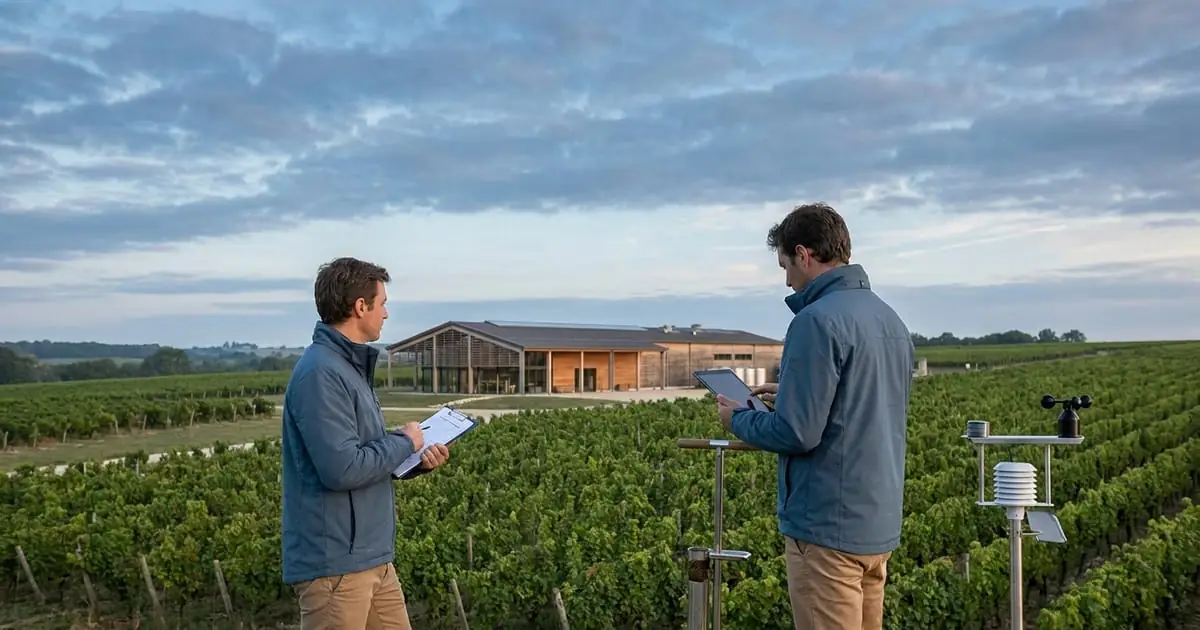
A Complete Vineyard Feasibility Study Guide: Navigating Wine Industry Opportunities and Risks for 2026
Embarking on a vineyard or winery venture is often driven by passion, a love for the land, and the allure of crafting exceptional wines. However, beneath the romanticized image lies a complex, capital-intensive business requiring meticulous planning and a deep understanding of market dynamics. This is precisely where a comprehensive vineyard feasibility study becomes not just beneficial, but non-negotiable.
Our team at SimpleFeasibility, with backgrounds in corporate finance, venture investment, and small business advisory, has observed countless ventures succeed or falter based on the rigor of their initial assessment. For the U.S. wine industry in 2026, navigating opportunities and mitigating risks demands a data-driven, realistic approach that goes far beyond mere enthusiasm.
Introduction: Why a Feasibility Study is Non-Negotiable for Your Vineyard Venture
The Evolving Landscape of the U.S. Wine Market
The U.S. wine market is undergoing a significant "structural reset." While it was valued at USD 78.73 billion in 2025 and is projected to reach USD 188.02 billion by 2034 (CAGR of 4.6% from 2026 to 2034), this growth in value is juxtaposed with declining volume. SipSource industry data reveals U.S. wine sales dropped approximately 6% in 2024, marking the steepest decline in decades.
Furthermore, the U.S. lost nine million wine drinkers since 2023, dropping from 85 million to 76 million adults who consume wine at least every few months. This demographic shift is critical: Millennials now represent 31% of wine drinkers, surpassing Baby Boomers at 26%, while Gen Z's share jumped from 9% to 14% (Wine Market Council's 2025 U.S. Consumer Benchmark Segmentation Survey). These younger consumers exhibit different purchasing habits and preferences, including a strong inclination towards sustainability and premium products.
Challenges also abound, with direct-to-consumer (DTC) shipment values plunging 19% in 2025 compared to the prior year (Sovos ShipCompliant 2025 DTC Wine Shipping Report), and sparkling wine volumes declining 3%. In this volatile environment, a robust vineyard feasibility study is your compass.
Beyond Passion: The Business Imperative
While the romance of winemaking is undeniable, a vineyard and winery operation is, first and foremost, a business. It requires an integrated strategy that considers everything from grape varietal selection to sales channels, financial modeling, and regulatory compliance.
As industry experts often emphasize, starting with the wine itself, without a clear business plan and market understanding, is a common misconception. The venture demands a holistic view, treating the vineyard as an equally valuable component to the winery operations, rather than an afterthought. This means aligning vineyard planting decisions with your sales strategy, not the other way around.
The Core Components of a Robust Vineyard Feasibility Study
A comprehensive vineyard feasibility study acts as a strategic blueprint, systematically evaluating every facet of your proposed venture. It moves beyond assumptions, grounding your aspirations in verifiable data and expert analysis. Our team identifies five essential pillars:
- Market & Competitive Analysis: Understanding who your customers are, what they want, and how your offerings stack up against competitors.
- Technical & Operational Viability: Assessing the practical aspects of land, climate, infrastructure, and winemaking processes.
- Financial Projections & Breakeven: Quantifying the investment, ongoing costs, revenue streams, and expected profitability.
- Legal, Regulatory & Environmental Assessment: Navigating the intricate web of federal, state, and local laws.
- Risk Analysis & Mitigation Strategies: Identifying potential pitfalls and developing plans to overcome them.
Each component is crucial for a holistic evaluation, ensuring an objective assessment that minimizes surprises down the line. We strongly advocate for expert consultation throughout this process, as specialized knowledge can uncover critical insights and prevent costly errors.
Market Analysis & Strategic Positioning: Understanding Your Niche in 2026
The U.S. wine market is not a monolith. Success hinges on a precise understanding of current trends and your ability to carve out a distinct niche. A thorough market analysis within your vineyard feasibility study is paramount.
Current Market Trends & Consumer Shifts
Despite the overall decline in volume, consumer spending on wine exceeded $115 billion in 2025, a 3% rise in market value, indicating a strong trend towards premiumization. Consumers are drinking less, but often opting for higher-quality, higher-priced wines. This shift is particularly pronounced among younger demographics.
Sustainability is a powerful driver: 75% of U.S. wine consumers are more likely to purchase wine produced sustainably, with approximately 60% of Millennial and Gen Z consumers willing to pay a premium for eco-friendly products (Research and Markets, Wine Market Council). The global organic wine market, valued at $11.8 billion in 2025, is projected to reach $32.2 billion by 2034, growing at an 11.8% CAGR.
Conversely, growth in flavored wines (up 12% in 2025) suggests a broader palate among some consumers, while traditional sparkling wines saw a 3% decline. These trends highlight the need for adaptability and a diversified product portfolio.
Identifying Your Target Audience
A common misconception is believing your target market is "everyone who drinks wine." This unfocused approach leads to diluted marketing efforts and unclear brand identity. Instead, a successful venture precisely defines its ideal customer.
Are you targeting affluent collectors, eco-conscious Millennials, or local agri-tourists? Understanding their demographics, psychographics, and purchasing habits is essential. For example, 50% of wine consumers are aged 25-44, making them a crucial demographic to understand and engage.
Competitive Landscape & Differentiation
The U.S. wine industry is highly competitive. Your feasibility study must identify direct and indirect competitors, analyze their strengths and weaknesses, and articulate your unique selling proposition (USP).
Differentiation can come from your terroir, grape varietals, winemaking philosophy, sustainable practices, unique tasting room experience, or a compelling brand story. Simply making good wine is often not enough; you need to offer a distinctive value proposition that resonates with your chosen target market.
Sales Channels & Go-to-Market Strategy
How will your wine reach consumers? Key channels include direct-to-consumer (DTC) via tasting rooms, wine clubs, and e-commerce; wholesale to restaurants and retailers; and potentially export. While DTC shipment values plunged 19% in 2025, it remains a vital channel for profitability and brand building, necessitating a robust and adaptable DTC strategy.
Consider diversified revenue streams beyond wine sales, such as events (weddings, corporate retreats), agri-tourism experiences, and merchandise. These can significantly enhance profitability and provide stability, especially during the initial years of limited wine production.
Capital Expenditures (CAPEX): Initial Investment for Vineyard & Winery (2026 Dollars)
The initial capital outlay for a vineyard and winery is substantial and requires meticulous planning. Underestimating these costs is a common pitfall for new ventures. Here, we provide realistic CAPEX ranges for 2026, explicitly stated in 2026 dollars.
Land Acquisition & Site Preparation
The cost of land is perhaps the most variable component. Vineyard land prices can range dramatically. In emerging regions, you might find land for $10,000-$50,000 per acre. However, in prime, established areas like Napa, prices can soar to $150,000-$400,000+ per acre (BMO Wine Market Report, 2026). Site preparation, including clearing, grading, and soil amendments, adds further costs.
Vineyard Establishment Costs
Once the land is acquired, establishing the vineyard itself is a significant investment. The expense of planting a vineyard per acre typically falls between $25,000 and $40,000 (excluding land). This covers:
- Vine stock (rootstock and scions)
- Trellis systems (posts, wires, anchors)
- Irrigation systems (drip lines, pumps, filters)
- Initial labor for planting and training
- Fencing to protect young vines from wildlife
Winery Infrastructure & Equipment
Building or renovating a production facility, tasting room, and storage areas, along with purchasing specialized equipment, constitutes another major CAPEX item. Startup costs vary significantly by scale:
- Small, Boutique Winery: Generally ranges from $1 million to $3 million.
- Medium-Sized Winery (5,000-10,000 cases/year): Often requires an initial investment of $3 million to $7 million.
Equipment includes fermentation tanks (stainless steel, concrete, or oak), presses, pumps, filters, bottling lines, laboratory equipment, and barrels (oak barrels alone can be a substantial recurring cost). Buildings encompass the production facility, barrel rooms, tasting room, offices, and warehousing.
Ancillary Facilities & Working Capital Buffer
Beyond the core vineyard and winery, consider costs for roads, utilities (water, electricity, septic), landscaping, and administrative facilities. Crucially, a significant working capital buffer is essential for the initial years before profitability is achieved. This is a common misconception, as many new owners underestimate the time and capital required for vines to produce quality fruit and for market penetration to occur.
For a larger perspective, a 50-hectare (approximately 123-acre) vineyard operation in 2026 could require a minimum startup budget exceeding $21 million to cover initial capital expenditures and working capital buffers. This highlights the long-term investment horizon; vineyard ventures are not a quick return.
Operational Expenditures (OPEX): Running Your Vineyard & Winery (2026 Dollars)
Beyond the initial CAPEX, understanding and accurately forecasting operational expenditures (OPEX) is critical for the long-term viability of your vineyard. These are the ongoing costs of doing business, presented here in 2026 dollars.
Viticulture & Vineyard Management Costs
Maintaining a healthy vineyard is a year-round commitment with significant costs:
- Labor: Pruning, canopy management, pest/disease scouting, harvesting. Acknowledge rising labor costs, particularly in regions like California with new overtime rules. Labor is often the single largest vineyard expense.
- Materials: Fertilizers, pest control products, disease treatments, cover crop seeds.
- Utilities: Irrigation water, electricity for pumps.
- Equipment Maintenance: Tractors, sprayers, mowers, and other vineyard machinery require regular servicing and fuel.
Sustainable practices, such as cover cropping, composting, and water conservation, can impact initial OPEX but offer long-term benefits in soil health, water efficiency, and market appeal.
Winemaking & Production Expenses
Once grapes are harvested, the winemaking process incurs its own set of expenses:
- Packaging: Bottles, corks, closures, labels, capsules, and cartons. These costs have been rising, with average shipment bottle prices up 40% since 2019 (Sovos ShipCompliant).
- Ingredients & Additives: Yeast, nutrients, fining agents, chemicals.
- Utilities: Electricity for refrigeration, heating, lighting; water for cleaning.
- Cellar Labor: Winemakers, cellar hands for crushing, pressing, fermentation management, racking, blending, and bottling.
- Barrel Maintenance: Purchase of new barrels, cleaning, and storage.
Sales, Marketing & Distribution
Getting your wine to market requires a dedicated budget:
- Tasting Room & Sales Staff: Salaries, commissions, training.
- Marketing & Advertising: Website development, e-commerce platform fees, social media campaigns, print advertising, public relations.
- Events & Promotions: Wine festivals, trade shows, hosted events, wine club management software.
- Distribution Costs: Shipping, freight, warehousing, and compliance fees for interstate sales. Rising shipping costs are a notable challenge.
Administrative & Overhead Costs
These are the essential costs of running any business:
- Salaries: Management, administrative staff, accounting.
- Professional Services: Legal fees, accounting, consulting (viticulture, winemaking, business strategy).
- Insurance: Property, liability, crop insurance, workers' compensation.
- Taxes & Permits: Property taxes, state and federal permits, licensing fees.
- Office Supplies & Utilities: General office expenses, internet, phone.
Labor, across all these categories, is a significant and rising cost component. Efficient practices and strategic hiring are paramount.
Revenue Model & Pricing Strategy: Maximizing Profitability
Developing a clear revenue model and a well-thought-out pricing strategy is central to any successful vineyard feasibility study. It defines how your venture will generate income and achieve profitability.
Primary Revenue Streams (Wine Sales)
Wine sales typically form the core of a winery's revenue. These can be categorized:
- Direct-to-Consumer (DTC): Sales through your tasting room, wine club, and e-commerce platform. While DTC shipment values plunged 19% in 2025, it remains the most profitable channel due to higher margins. A robust DTC strategy is essential.
- Wholesale: Sales to distributors, restaurants, and retailers. This channel offers broader market reach but at lower per-bottle margins.
- Export: Selling wine to international markets. U.S. wine exports fell 18% in volume and 34% in value in 2025, indicating a challenging but potentially rewarding channel for some.
Diversified Revenue Opportunities
To enhance financial stability and maximize profitability, especially during the long ramp-up phase, diversified revenue streams are highly recommended. These can include:
- Events: Hosting weddings, corporate events, private parties, and public festivals.
- Agri-tourism: Offering vineyard tours, educational workshops, cooking classes, or unique food pairings.
- Merchandise: Selling branded apparel, glassware, or local artisan products.
- Grape Sales: If your vineyard produces more fruit than your winery can process, selling excess grapes to other wineries can generate income. However, be mindful of market dynamics, as 38,000 acres of wine grapes were removed between the 2024 and 2025 harvests due to oversupply and pricing pressures.
Pricing Strategies for Different Tiers
Your pricing strategy must align with your brand positioning, target market, and production costs. Premium wines often retail between $15 and $50 per bottle, but ultra-premium offerings can command significantly more. Average shipment bottle prices rose 11% in 2025, reflecting a market willingness to pay more for perceived quality.
Consider tiered pricing for different wine qualities or exclusivity levels (e.g., general release, reserve wines, wine club exclusives). It's crucial to calculate your cost of goods sold (COGS) accurately to ensure pricing allows for healthy gross margins across all channels.
Forecasting Sales Volume & Value
Forecasting sales volume and value is challenging due to market volatility and consumer shifts. Your projections should be conservative, especially in the initial years. Account for the time it takes for vines to mature and produce quality fruit (typically 3-5 years) and for your brand to gain market traction. Realistic ramp-up curves are vital for credible financial projections.
Breakeven Analysis & Financial Projections: A Worked Example (2026-2031)
The financial heart of any vineyard feasibility study lies in its breakeven analysis and detailed financial projections. This section moves from theoretical costs and revenues to a practical, multi-year financial outlook.
Understanding Breakeven Point
The breakeven point is where your total revenues equal your total costs, meaning you are neither making nor losing money. For a vineyard and winery, reaching operational breakeven can take 3-7 years, with significant returns often tied to the long-term capital appreciation of the land. This is a critical factor to communicate to potential investors and a common misconception among new entrants who expect quicker returns.
Realistic Ramp-Up Curves
One of the most important considerations is the realistic ramp-up curve. Vines take several years to mature and produce fruit suitable for quality winemaking. Your initial winery revenue will be low, primarily from purchased grapes (if applicable) or very small yields from young vines. Financial projections must reflect this gradual increase in production and sales volume.
Projected Income Statement & Cash Flow
A robust feasibility study includes a projected income statement (profit and loss) and cash flow statement for at least five years. These documents detail expected revenues, operating expenses, cost of goods sold, net profit, and, crucially, the movement of cash in and out of the business. Investors scrutinize cash flow as it indicates the business's ability to meet its obligations.
Worked Financial Example: Small Boutique Winery Scenario
Let's consider a hypothetical small boutique winery launching in 2026, based on our earlier cost ranges and market insights:
Scenario: A 10-acre vineyard in an emerging U.S. wine region, with a planned 2,000-case production capacity once fully mature.
Initial Investment (CAPEX - 2026 Dollars):
- Land Acquisition (10 acres @ $30,000/acre): $300,000
- Vineyard Establishment (10 acres @ $35,000/acre): $350,000
- Winery Build-out & Equipment (small scale): $1,500,000
- Working Capital Buffer: $350,000
- Total Initial CAPEX: $2,500,000
Annual Operational Expenses (OPEX - Estimated Average):
- Viticulture: $70,000
- Winemaking & Production: $100,000
- Sales, Marketing & Distribution: $150,000
- Administrative & Overhead: $80,000
- Total Annual OPEX: $400,000
Revenue Projections (2026-2031):
Assuming a cautious ramp-up, with initial sales from purchased grapes or very small yields:
| Year | Capacity Utilization | Estimated Cases Sold | Average Revenue/Case (DTC/Wholesale Mix) | Projected Annual Revenue |
|---|---|---|---|---|
| 2026 (Year 1) | Initial Sales/Events | ~200 | $750 | $150,000 |
| 2027 (Year 2) | 25% | 500 | $750 | $375,000 |
| 2028 (Year 3) | 50% | 1,000 | $750 | $750,000 |
| 2029 (Year 4) | 75% | 1,500 | $750 | $1,125,000 |
| 2030 (Year 5) | 90% | 1,800 | $750 | $1,350,000 |
Note: Average revenue per case is a blended rate reflecting a mix of DTC (higher margin) and wholesale (lower margin) sales.
Breakeven Calculation & Profitability:
Given the annual OPEX of $400,000, this small boutique winery would likely achieve operational breakeven in Year 3 or 4, once revenue consistently exceeds annual operating costs. However, recouping the initial $2.5 million CAPEX would take significantly longer, often relying on the long-term appreciation of the property's value.
Projected Net Profit (Simplified, excluding depreciation, interest, and taxes):
- Year 1 (2026): $150,000 (Revenue) - $400,000 (OPEX) = -$250,000
- Year 2 (2027): $375,000 (Revenue) - $400,000 (OPEX) = -$25,000
- Year 3 (2028): $750,000 (Revenue) - $400,000 (OPEX) = +$350,000 (Operational Breakeven Achieved)
- Year 4 (2029): $1,125,000 (Revenue) - $400,000 (OPEX) = +$725,000
- Year 5 (2030): $1,350,000 (Revenue) - $400,000 (OPEX) = +$950,000
This example illustrates the significant initial losses and the multi-year journey to profitability. A detailed cash flow projection would further highlight funding needs during the deficit years.
Regulatory Landscape & Licensing: Navigating the Legal Maze
The wine industry is one of the most heavily regulated sectors in the U.S., governed by a complex interplay of federal, state, and local laws. A thorough vineyard feasibility study must meticulously map out these requirements.
Federal Regulations (TTB, FDA, USDA)
- Alcohol and Tobacco Tax and Trade Bureau (TTB): The TTB oversees federal wine regulations, including production permits, labeling approvals, advertising standards, taxation (excise taxes), and the establishment of American Viticultural Areas (AVAs). Compliance is non-negotiable for all wineries.
- U.S. Food and Drug Administration (FDA): Under the Food Safety Modernization Act (FSMA), wineries are considered food manufacturing plants and must register with the FDA and comply with FSMA regulations, unless specifically exempt. This includes grape safety and processing standards.
- U.S. Department of Agriculture (USDA): The USDA offers various programs that can benefit vineyards, including the Market Access Program for export promotion, Value-Added Grants, Specialty Crop Block Grants, and Crop Insurance Programs. Federal R&D Tax Credits are also available for innovations in viticulture and winemaking.
It's also important to be aware of potential legislative changes, such as proposed federal legislation (Section 453 in the Fiscal Year 2026 Appropriations Bill) which could impact pesticide warning labels and grant immunity to manufacturers, raising concerns among vineyard owners.
State-Specific Requirements & Incentives
Wine industry regulation is a joint federal and state responsibility, with each state having its own Alcoholic Beverage Control (ABC) board or similar authority. These bodies govern licensing, distribution, sales channels (e.g., DTC shipping laws), and tasting room operations.
- Oregon: Known for strong farmland protection, Oregon allows wineries as non-farm uses in Exclusive Farm Use (EFU) zones, but with regulations (ORS 215.452) limiting 'agri-tourism and other commercial events' to prevent disruption.
- Napa County, California: A landmark zoning ordinance from 1968 established the first Agricultural Preserve in the U.S., designating agriculture as the 'highest and best use' of land. It imposes minimum lot sizes (e.g., 40 acres in Agricultural Preserve) and requires new wineries to use at least 75% Napa County grapes.
- Washington State: Wineries producing over 7,500 cases annually must comply with the Winery General Permit for wastewater management, in effect since 2019.
- California: The State Water Board has tiered regulations (WDRs) for wineries discharging waste. New overtime rules in California are significantly impacting viticulture labor costs.
Many states also offer incentives. Maryland's Winery and Vineyard Economic Development Grant Program offers grants for 25% of 'qualified capital expenses,' and Missouri's Wine and Grape Tax Credit provides a 25% income tax credit for equipment and materials purchases.
Local Zoning & Land Use Ordinances
Beyond state laws, local county and municipal zoning ordinances play a critical role, dictating permissible land uses, building codes, setback requirements, and the scope of tasting room and event operations. These local rules can significantly impact site selection and operational flexibility.
Environmental Compliance
Vineyards and wineries must also adhere to environmental regulations concerning water usage, wastewater discharge, pesticide application, and waste management. Compliance often involves permits and ongoing monitoring to ensure sustainable practices.
Key Operational Risks & Mitigation Strategies for Vineyards
Every business venture carries risks, and the vineyard industry is no exception. A robust vineyard feasibility study not only identifies these risks but also outlines concrete mitigation strategies, offering a balanced and honest view of potential challenges.
Climate Change & Environmental Risks
Climate change poses profound threats: increased frequency of droughts, frost events, extreme heatwaves, and altered growing seasons. A University of British Columbia study highlights the need for drought-resilient varieties and the exploration of new cultivation zones.
Mitigation:
- Site Selection: Choose sites with favorable microclimates and soil types.
- Varietal Choice: Select grape varietals and rootstocks appropriate for projected climate conditions.
- Water Management: Implement efficient irrigation (e.g., drip irrigation, which, contrary to a common misconception, does not inherently lead to inferior wines when properly managed).
- Insurance: Explore specialized crop insurance for frost, hail, and other weather-related events.
Market Volatility & Consumer Demand Shifts
The U.S. wine market is dynamic, with declining overall consumption volume and shifting consumer preferences. Flavored wines grew 12% in 2025, while sparkling wine volumes declined 3%, indicating a fragmented and evolving market.
Mitigation:
- Flexible Marketing: Adapt marketing messages to resonate with target demographics like Millennials and Gen Z.
- Diversified Portfolio: Offer a range of wines, potentially including innovative styles or lower-alcohol options.
- Strong Brand Identity: Build a compelling brand that connects with consumers beyond just the wine itself.
- Premiumization: Focus on producing high-quality, premium wines that command higher prices and appeal to discerning consumers.
Labor Availability & Costs
Labor is a significant and rising operational cost, particularly for viticulture. Availability of skilled vineyard workers can be a challenge, exacerbated by changing regulations (e.g., California overtime rules).
Mitigation:
- Efficiency & Automation: Invest in vineyard machinery and practices that reduce manual labor where appropriate.
- Competitive Wages & Benefits: Attract and retain talent through fair compensation.
- Tax Credits: Explore programs like the Work Opportunity Tax Credit (WOTC) for hiring from specific target groups.
Disease, Pests & Crop Failure
Vineyards are susceptible to various diseases (e.g., phylloxera, powdery mildew, Pierce's Disease) and pests that can severely impact yields and quality.
Mitigation:
- Expert Consultation: Engage viticultural experts for proactive vineyard management plans.
- Proactive Management: Implement integrated pest management (IPM) strategies.
- Resistant Varieties: Plant disease-resistant rootstocks and varietals where suitable.
- Specialized Insurance: Secure crop insurance that covers specific disease outbreaks.
Financial & Economic Risks
Oversupply of grapes (e.g., 38,000 acres removed 2024-2025) and associated pricing pressures can severely impact profitability, even in historically strong regions. Economic downturns can reduce consumer spending on discretionary items like wine.
Mitigation:
- Strong Financial Planning: Develop conservative financial projections with adequate working capital buffers.
- Diversification: Explore multiple revenue streams beyond wine sales (tourism, events).
- Cost Control: Continuously monitor and optimize operational expenses.
- Market Intelligence: Stay informed about grape market conditions and adjust planting or purchasing strategies accordingly.
What Bankers & Investors Look For in a Vineyard/Winery Business Plan
Securing financing for a vineyard or winery requires more than just a passion for wine; it demands a compelling business case. Bankers and investors scrutinize business plans to assess viability and return on investment. Here's what they typically look for:
Demonstrated Market Understanding
Investors want to see that you deeply understand the market dynamics, your specific target audience, and how you plan to capture market share. This includes realistic sales forecasts, a clear competitive advantage, and adaptability to market shifts (Silicon Valley Bank's 2025 State of the Wine Industry Report). They seek evidence that you've done your homework, beyond just a superficial interest in wine.
Sound Financial Projections & ROI
Robust financial projections are paramount. This means detailed CAPEX and OPEX budgets, realistic revenue ramp-up curves, a clear breakeven analysis, and strong cash flow projections. Investors also look for sensitivity analysis, demonstrating how the business would perform under different market conditions. They want a clear path to profitability and a compelling return on their investment, which, for vineyards, often includes long-term asset appreciation.
Experienced Management Team
A strong management team is often as important as the business idea itself. Investors look for experience in viticulture, winemaking, business management, marketing, and finance. The misconception of "I Can DIY Everything" is a red flag; showcasing a team with diverse, specialized expertise or a clear plan to hire expert consultants is crucial. This demonstrates a realistic understanding of the complex skills required.
Risk Mitigation & Exit Strategy
A comprehensive risk assessment with clear, actionable mitigation strategies for climate, market, operational, and financial challenges instills confidence. Investors also want to understand the potential exit strategy: how will they get their money back? This could be through a sale of the business, long-term dividends, or other mechanisms. A well-defined exit strategy shows foresight and a clear path to realizing value.
Asset Quality & Appreciation Potential
For vineyard ventures, the quality and location of the land are significant assets. Investors consider the potential for long-term capital appreciation of the property itself, which can be a substantial component of the overall return. The quality of the vineyard and its potential to produce high-value grapes are also key factors.
Ultimately, investors view a winery as a business first. They seek a clear vision, an integrated approach to branding and sales, and a management team capable of executing that vision successfully.
Conclusion: Your Blueprint for Vineyard Success
The journey to establishing a successful vineyard and winery is a marathon, not a sprint. It demands foresight, resilience, and a profound understanding of both the agricultural and business landscapes. As we've explored, a comprehensive vineyard feasibility study is the indispensable first step, serving as your blueprint for success.
This critical document brings market intelligence, financial realism, regulatory compliance, and robust risk management into sharp focus. It forces prospective owners to move beyond passion alone, adopting a business-first mindset that leverages expert advice and a long-term vision.
While the U.S. wine market presents its share of challenges—from shifting demographics to climate change—it also offers significant opportunities for well-planned, adaptable ventures focused on premiumization and sustainability. By investing the time and resources into a thorough vineyard feasibility study, you lay a solid foundation, mitigating risks and positioning your venture for enduring success in the dynamic world of wine.
FAQ: Frequently Asked Questions About Vineyard Feasibility Studies
How long does it take for a vineyard to become profitable?
Typically, it takes 3-7 years to reach operational breakeven for a vineyard and winery. Significant financial returns are often tied to the long-term capital appreciation of the land and property, rather than immediate operational profits. This is a common misconception, as many new owners expect quicker returns.
What are the biggest hidden costs in starting a vineyard?
Commonly underestimated costs include rising labor expenses (e.g., California overtime rules), unexpected equipment maintenance, regulatory compliance fees and permits, and the long period (3-5 years) before vines yield quality fruit suitable for winemaking. Adequate working capital is crucial to cover these initial deficit years.
Is irrigation bad for wine quality?
No, when properly managed (e.g., with precision drip irrigation), water management does not inherently lead to inferior wine quality. In many quality wine regions globally, irrigation is a necessary and beneficial practice, depending on climate, soil type, and grape varietal. The goal is to provide just enough water to prevent vine stress, not to overwater.
Do I need to be a wine expert to invest in a vineyard?
While a passion for wine helps, strong business acumen is more critical for a successful vineyard venture. Expert consultants (viticulturists, winemakers, business strategists) and a capable management team can effectively fill any knowledge gaps in viticulture and winemaking. Approaching it as a business first is key.
How much land do I need for a viable vineyard?
This varies greatly depending on your business model and region. Small boutique operations might start with 5-10 acres for a vineyard. However, economic viability often increases with scale. Local zoning ordinances, such as Napa County's 40-acre minimum for new wineries, can also dictate land requirements.
What's the most important factor for vineyard success?
Site selection (terroir, climate, soil, aspect) and matching the right grape varietals to that site are paramount. This foundational choice dictates the quality and style of wine you can produce. Following this, a clear business strategy, strong financial planning, and a competent management team are crucial for long-term success.
About the Author
This article was authored by the SimpleFeasibility Editorial Team. Our team members have diverse professional backgrounds spanning corporate finance, venture investment, and small business advisory. All articles undergo peer review to ensure technical accuracy and provide actionable insights for founders, consultants, and investors.
Sources & References
- SipSource industry data.
- Wine Market Council's 2025 U.S. Consumer Benchmark Segmentation Survey.
- Research and Markets, Global Organic Wine Market Report 2025-2034.
- Sovos ShipCompliant 2025 DTC Wine Shipping Report.
- Statista, U.S. Wine Market Value 2025-2034.
- BMO Wine Market Report (2026).
- Alcohol and Tobacco Tax and Trade Bureau (TTB).
- U.S. Food and Drug Administration (FDA), Food Safety Modernization Act (FSMA).
- U.S. Department of Agriculture (USDA) programs.
- Oregon Revised Statutes (ORS 215.452), Land Conservation and Development Commission (LCDC).
- Napa County Board of Supervisors, Agricultural Preserve Ordinance (1968).
- Washington State Department of Ecology, Winery General Permit (2019).
- California State Water Resources Control Board, Winery Waste Discharge Requirements (WDRs).
- Maryland Winery and Vineyard Economic Development Grant Program.
- Missouri Wine and Grape Tax Credit Program.
- University of British Columbia, INRAE and Institut Agro study on climate change and viticulture.
- Silicon Valley Bank's 2025 State of the Wine Industry Report.
- 2025 Direct-to-Consumer Wine Report.
- NIQ data.