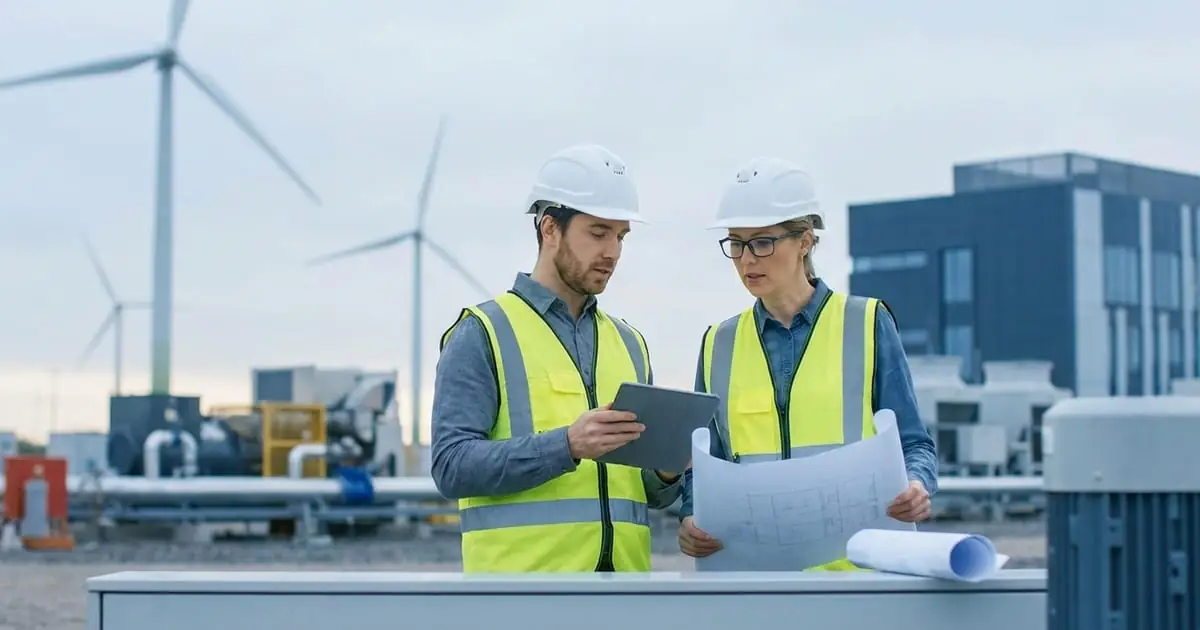
Introduction: Why Technical Feasibility is Your Project's Most Critical Early Step
For founders, business owners, consultants, and investors navigating the complexities of modern innovation, a robust technical feasibility study is not merely an option—it's a strategic imperative. In an era defined by rapid technological advancement and substantial investment, understanding whether a proposed project is technically viable can be the difference between groundbreaking success and costly failure.
The Evolving Landscape of Project Evaluation in 2026
The landscape of project evaluation is continuously evolving. In 2026, feasibility studies have moved far beyond basic cost checks and preliminary site reviews. They now integrate technical analysis, financial modeling, sustainability criteria, and ESG (Environmental, Social, and Governance) compliance into a single, coherent decision framework. This holistic approach, as highlighted by UGCE Consultants, is crucial for attracting investment and securing approvals in today's demanding market.
The stakes are higher than ever. Global IT spending is projected to reach an astounding USD 5.43 trillion in 2025, with AI spending alone forecast to hit USD 1.5 trillion in 2025 and rise above USD 2 trillion in 2026. These figures underscore the massive investments at play, where a rigorous technical feasibility study becomes a critical safeguard against misallocation of capital.
The High Stakes of Innovation: Avoiding Costly Mistakes
Projects often fail not just from technical shortcomings, but also from overlooking interconnected market, financial, operational, or legal factors. A comprehensive technical feasibility study provides a crucial lens through which all these elements can be considered, ensuring a project's technical foundation is sound within its broader context. It’s a common misconception that technical issues exist in a vacuum; in reality, they are deeply intertwined with every other aspect of a venture.
A well-executed feasibility study protects stakeholder investments by uncovering potential issues early in the process. It provides a clear roadmap for decision-making and significantly contributes to better project outcomes, making it an indispensable first step before any major land acquisition, infrastructure project, or energy development begins.
What is a Technical Feasibility Study? Defining the Core Evaluation
At its heart, a technical feasibility study is a rigorous evaluation of whether proposed technology, equipment, and processes can realistically deliver project requirements, considering existing capabilities and potential hurdles. It’s about asking: "Can we build this? And if so, how?"
Beyond the Buzzword: A Clear Definition
A technical feasibility study assesses several critical dimensions:
- Technology Availability: Is the necessary technology commercially available, or does it require significant research and development?
- Technical Skills: Are the required technical skills and expertise available within the project team or accessible through external partners?
- Integration Capabilities: Can the proposed system or technology seamlessly integrate with existing infrastructure, systems, and processes without creating undue complexity or disruption?
- Performance & Scalability: Can the technology meet the required performance metrics and scale to accommodate future growth?
- Reliability & Maintainability: Is the technology robust, reliable, and easy to maintain over its lifecycle?
This study delves into the practicalities of implementation, identifying potential technical roadblocks and evaluating solutions. It’s not just about what’s possible, but what’s practical, efficient, and sustainable.
Technical Feasibility vs. Other Feasibility Types
While a technical feasibility study is paramount, it is one of several types of feasibility studies that collectively inform a comprehensive project evaluation. It’s important to distinguish them:
- Market Feasibility: Assesses demand for the product or service, target audience, competition, and market size.
- Financial Feasibility: Evaluates the project's economic viability, including projected costs, revenues, profitability, and return on investment (ROI).
- Operational Feasibility: Examines whether the organization has the resources, expertise, and logistical capabilities to operate the proposed system or business.
- Legal Feasibility: Determines if the project complies with all applicable laws, regulations, permits, and intellectual property rights.
- Environmental Feasibility: Assesses the project's potential environmental impact and compliance with environmental regulations.
While interconnected, each type has distinct focuses. A technically brilliant solution is useless if there's no market demand or if it's financially unsustainable. Our team at SimpleFeasibility emphasizes that a holistic approach, where these studies inform each other, is essential for true project viability.
The Strategic Imperative: Why It's Not a Mere Formality
In 2026, feasibility studies are far from preliminary formalities; they are strategic decision-making tools. As expert insights from UGCE Consultants suggest, the scope of engineering feasibility studies has expanded significantly due to rising construction complexity, stricter regulations, and increased investor scrutiny. This makes them crucial for attracting investment and securing approvals.
Consider the investment: a good feasibility study typically costs between 0.75% and 1.5% of the total project cost. While this might seem like an upfront expense, it's a small investment compared to the risk of failure, which, for large ventures, can be considered "malpractice" if a proper study is skipped. A thorough technical feasibility study can determine not only whether to proceed, but also how to maximize ROI and long-term effectiveness, protecting stakeholders' investments by uncovering issues early.
Phase 1: Defining the 'What' – Technical Requirements Specification
The first critical phase of any technical feasibility study involves meticulously defining what the project's technology must achieve. This isn't just about listing features; it's about translating a vision into tangible, measurable technical requirements.
Translating Vision into Tangible Requirements
This phase demands precision. It involves detailing the exact technical capabilities and performance metrics the project's technology must achieve. Key elements include:
- System Inputs/Outputs: What data or actions will the system receive, and what will it produce?
- Processing Logic: How will the system process information or execute functions?
- Data Storage Needs: What are the requirements for data volume, type, retention, and accessibility?
- User Interfaces: How will users interact with the system, and what are the design and usability parameters?
- Security Protocols: What measures are needed to protect data and system integrity from unauthorized access or threats?
- Integration Points: How will the new system interact with existing software, hardware, or external services?
The goal is to create a clear, unambiguous blueprint that leaves no room for misinterpretation or scope creep later in the development cycle. Inadequate or outdated data in this phase can lead to flawed conclusions and poor decision-making, undermining the entire study.
Functional vs. Non-Functional Requirements
A crucial distinction in requirements specification is between functional and non-functional requirements:
- Functional Requirements: These define what the system *does*. They describe the specific actions or behaviors the system must perform to meet user needs. Examples include "The system shall allow users to upload documents," or "The system shall generate a monthly sales report."
- Non-Functional Requirements: These define how well the system *does* what it does. They specify criteria that can be used to judge the operation of a system, rather than specific behaviors. Key non-functional requirements include:
- Performance: How fast must the system respond? (e.g., "Page load time shall be under 2 seconds.")
- Scalability: How many users or transactions can the system handle? (e.g., "The system shall support 10,000 concurrent users.")
- Reliability: How often can the system fail, and how quickly can it recover? (e.g., "System uptime shall be 99.9%.")
- Security: What level of data protection and access control is required? (e.g., "All user data shall be encrypted at rest and in transit.")
- Usability: How easy is the system to learn and use?
- Maintainability: How easy is it to modify and update the system?
Both types of requirements are equally important. A system that performs all its functions but is slow, insecure, or constantly crashes is not a successful system. Our team ensures that both functional and non-functional requirements are thoroughly documented and aligned with project goals.
Tools and Methodologies for Specification
To thoroughly document technical specifications, various tools and methodologies can be employed:
- User Stories: Short, simple descriptions of a feature told from the perspective of the person who desires the new capability, often in the format: "As a [type of user], I want [some goal] so that [some reason]."
- Use Cases: Detailed descriptions of how users interact with a system to achieve a specific goal, outlining steps, actors, and system responses.
- Data Flow Diagrams (DFDs): Graphical representations of the flow of data through an information system, showing how data is input, processed, stored, and output.
- System Architecture Blueprints: High-level diagrams illustrating the components of a system, their relationships, and how they interact.
- Requirements Traceability Matrix: A document that links requirements to test cases, design elements, and business objectives, ensuring all requirements are addressed.
The choice of tools depends on the project's complexity and the team's preferences, but the underlying principle remains: clear, unambiguous, measurable, and testable requirements are paramount to avoid scope creep and ensure alignment throughout the project lifecycle.
Phase 2: Assessing the 'How' – Technology Readiness and Evaluation
Once the 'what' is defined, the next phase of a technical feasibility study focuses on the 'how'—assessing the maturity and suitability of the technologies required. This involves a deep dive into technology readiness, evaluating existing versus new solutions, and scrutinizing potential suppliers.
Understanding Technology Readiness Levels (TRL)
A critical tool for assessing technology maturity and risk is the Technology Readiness Level (TRL) scale. Developed by NASA, the TRL scale is a nine-level system that measures the maturity of a technology, from basic research to full operational deployment:
- TRL 1: Basic principles observed and reported. Scientific research begins, translating basic principles into applied research and development.
- TRL 2: Technology concept and/or application formulated. Practical application is identified.
- TRL 3: Analytical and experimental critical function and/or characteristic proof-of-concept. Active R&D is initiated.
- TRL 4: Component and/or breadboard validation in a laboratory environment. Basic technological components are integrated.
- TRL 5: Component and/or breadboard validation in a relevant environment. Components are integrated with reasonably realistic supporting elements.
- TRL 6: System/subsystem model or prototype demonstration in a relevant environment. A representative model or prototype system is tested.
- TRL 7: System prototype demonstration in an operational environment. Prototype is near or at planned operational system.
- TRL 8: Actual system completed and qualified through test and demonstration. Technology has been proven to work in its final form and under expected conditions.
- TRL 9: Actual system proven in operational environment. Technology is in its final form and operating under mission-specific conditions.
Applying TRLs to individual components and the overall system helps identify areas requiring further R&D or significant risk mitigation. A project heavily reliant on TRL 1-3 technologies will inherently carry higher technical risk than one leveraging TRL 7-9 solutions. Our team uses TRLs to provide a clear, objective measure of technological maturity, helping investors and stakeholders understand the inherent risks and development timelines.
Evaluating Existing vs. New Technologies
This part of the technical feasibility study involves a thorough assessment of whether the required technology is:
- Commercially Available (Off-the-Shelf): Readily available, proven, and often comes with vendor support. This reduces development risk but may limit customization.
- Requires Significant Customization: Existing technology needs substantial modification to fit project-specific requirements. This introduces complexity, cost, and potential integration challenges.
- Needs Novel Development: The technology does not exist or is in very early stages (low TRL) and requires extensive research, development, and testing. This carries the highest risk but can offer significant competitive advantages if successful.
For each technology component, we consider its technical complexity, potential integration challenges with other systems, and the risk of obsolescence. For instance, adopting a rapidly evolving technology might offer cutting-edge capabilities but also the risk of quickly becoming outdated or unsupported. Conversely, relying on older, stable technology might limit innovation but offer greater reliability and lower integration costs.
The evaluation must also consider the technical expertise required to implement and maintain these technologies. Does the team possess the necessary skills, or will external hiring or training be required? This directly impacts operational feasibility and project budget.
Supplier and Partner Evaluation: Assessing External Capabilities
Many projects rely on external technology suppliers, vendors, or development partners. A rigorous evaluation of these entities is paramount:
- Track Record and Experience: Do they have a proven history of delivering similar technologies or services successfully?
- Technical Expertise: Does their team possess the specific technical skills and certifications relevant to your project?
- Financial Stability: Are they financially sound enough to complete the project and provide long-term support?
- Support Capabilities: What level of technical support, maintenance, and warranty do they offer?
- Adherence to Specifications: Can they consistently meet the detailed technical and quality specifications?
- Intellectual Property Rights: Clear understanding of who owns the IP for any custom development or modifications.
- Security Practices: For software or cloud services, what are their cybersecurity protocols and data protection policies?
For projects involving advanced technologies like AI, additional considerations arise. Gartner predicts that 40% of agentic projects will fail by 2027 due to automating broken processes instead of redesigning operations. This underscores the need to assess not just the maturity of AI models and data requirements, but also the ethical implications of supplier solutions and their approach to process redesign. Despite 38% of organizations piloting AI agents, only 11% have them in production, highlighting the significant gap between pilot and production and the need for robust testing and supplier vetting.
Our team emphasizes conducting due diligence on potential partners, including reference checks, site visits, and detailed contractual agreements that clearly define scope, deliverables, timelines, and performance metrics.
Phase 3: Grounding in Reality – Site, Infrastructure, and Regulatory Landscape
A technically brilliant concept must ultimately operate within the constraints of the real world. This phase of the technical feasibility study grounds the project in reality by assessing physical site suitability, digital infrastructure requirements, and the complex web of regulations that govern its deployment and operation.
Physical Site Constraints and Requirements
For projects involving physical infrastructure or equipment, the chosen site plays a critical role. A thorough evaluation includes:
- Space and Layout: Is there sufficient physical space for equipment, personnel, and future expansion? How will the layout optimize workflow and safety?
- Power and Utilities: Is adequate and reliable power available? What are the requirements for water, gas, and other utilities? What are the costs associated with bringing these utilities to the site?
- Cooling and Environmental Controls: For sensitive equipment (e.g., data centers, manufacturing machinery), what are the cooling, humidity, and dust control requirements?
- Accessibility: Is the site accessible for equipment delivery, maintenance personnel, and raw materials? Consider transportation routes and logistical challenges.
- Environmental Conditions: Are there geological, meteorological, or other environmental factors (e.g., flood risk, seismic activity, extreme temperatures) that could impact the technology's operation or require special construction?
- Impact on Existing Operations: If the technology is integrated into an existing facility, how will it affect current operations, safety protocols, and personnel?
For instance, deploying a new high-performance computing cluster requires not only significant floor space but also robust power delivery, specialized cooling systems, and potentially elevated flooring for cable management. Overlooking these physical constraints can lead to significant cost overruns and operational bottlenecks.
Digital Infrastructure and Integration Challenges
Beyond physical space, the digital infrastructure is equally critical. This assessment considers:
- Existing IT Infrastructure: What hardware, software, and network components are already in place? Are they compatible with the proposed technology?
- Network Capabilities: Does the existing network bandwidth, latency, and reliability meet the project's demands? Will upgrades to local area networks (LANs) or wide area networks (WANs) be necessary?
- Data Storage: What are the storage requirements for the new system, including volume, performance, backup, and disaster recovery? Will cloud storage, on-premise servers, or a hybrid approach be most suitable?
- Cybersecurity Measures: Are existing cybersecurity protocols sufficient to protect the new technology and its data? What new measures are needed to mitigate vulnerabilities?
- Integration with Legacy Systems: This is a common challenge. How will the new technology interface with older, potentially proprietary systems? This often requires custom development, middleware, or data migration strategies, all of which add complexity and cost.
- Cloud Services: If cloud-based solutions are considered, evaluate provider reliability, data sovereignty issues, service level agreements (SLAs), and ongoing subscription costs.
A new enterprise resource planning (ERP) system, for example, might be technically sound on its own but fail if it cannot seamlessly integrate with existing accounting, inventory, and customer relationship management (CRM) systems, leading to data silos and operational inefficiencies.
Navigating the Regulatory and Compliance Environment
The regulatory landscape is a complex and ever-changing domain that can significantly impact project viability. A thorough technical feasibility study must meticulously research all applicable federal, state, and local regulations that govern the technology's deployment and operation.
Examples of critical regulatory considerations include:
- Environmental Regulations: The National Environmental Policy Act (NEPA) mandates environmental assessments for major federal actions, which can include many large-scale infrastructure or technology projects. State and local environmental protection agencies also have specific requirements for emissions, waste disposal, and resource usage.
- Industry-Specific Standards: Highly regulated industries such as healthcare (HIPAA for data privacy), finance (PCI DSS for payment card security), and manufacturing (ISO standards for quality management) have stringent technical and operational requirements.
- Data Privacy Laws: Regulations like GDPR (Europe) or CCPA (California) impose strict rules on how personal data is collected, stored, processed, and secured, directly impacting software and data architecture.
- Safety Certifications: Equipment and systems may require specific safety certifications (e.g., UL, CE) to operate legally and safely.
- Building Codes and Zoning Laws: For physical installations, local building codes, fire safety regulations, and zoning ordinances dictate construction standards and permissible land use.
Federal regulations, such as those from the U.S. Department of Agriculture (USDA) under 7 CFR § 1980.442, often require a feasibility study prepared by a recognized independent consultant for most loans. These regulations emphasize site suitability, environmental impact, and verifiable data, underscoring the legal and financial importance of this phase.
Furthermore, understanding available incentives can significantly impact project viability. For clean energy projects, for example, knowledge of programs like California's Bright Schools Program (providing grants for energy audits and feasibility studies) or the City of Denver's electrification rebates (up to $1,000 for feasibility reports) can be crucial. Federal policies, tax credits (like those under the 'One Big Beautiful Bill Act' enacted July 4, 2025), and utility incentives (such as Massachusetts' Mass Save programs for geothermal projects) can drastically reduce upfront costs and improve economic feasibility. Our team helps clients navigate these complex regulatory and incentive landscapes, leveraging our expertise to uncover opportunities and mitigate compliance risks.
Phase 4: Proving the Concept – Pilot Programs and Proofs-of-Concept (POCs)
Even after extensive theoretical analysis, the real-world application of a technology can reveal unforeseen challenges. This is where pilot programs and Proofs-of-Concept (POCs) become indispensable tools in a technical feasibility study, moving from theoretical possibility to demonstrated capability.
The Purpose and Value of Pilots/POCs
Pilot programs and POCs are crucial for validating technical assumptions, identifying unforeseen challenges, and demonstrating the technology's viability on a smaller, controlled scale. They serve as critical checkpoints before committing to full-scale deployment, significantly de-risking the project.
- Proof-of-Concept (POC): A POC is typically a small, internal project designed to test a specific technical hypothesis or assumption. Its primary goal is to determine if a particular idea or technology is feasible at all. For example, "Can our new AI algorithm accurately process images with 90% accuracy?" It's about answering a 'yes' or 'no' question regarding technical viability.
- Pilot Program: A pilot program is a broader test of a solution in a near-real or limited operational environment. It aims to validate the entire system, or a significant part of it, with a small group of actual users or in a specific location, to identify practical issues, gather feedback, and refine the solution before wider rollout. For example, "Can our new inventory management system integrate with existing hardware and be used effectively by a small team in one warehouse?"
Both approaches provide invaluable real-world data that theoretical analyses alone cannot capture. They help bridge the gap between design and deployment, revealing practical challenges related to integration, performance, user adoption, and operational workflows.
Planning and Executing Effective Tests
The success of a pilot or POC hinges on meticulous planning and execution:
- Define Clear Objectives: What specific technical risks are you trying to mitigate? What questions do you need answered? Objectives should be SMART (Specific, Measurable, Achievable, Relevant, Time-bound). For a POC, this might be "Prove that our chosen database can handle 10,000 transactions per second." For a pilot, "Validate that the new mobile app can be deployed and used by 50 field technicians with minimal training and 95% satisfaction."
- Establish Success Metrics: How will you measure if the pilot or POC was successful? These metrics should be quantifiable and directly tied to the objectives. Examples include system uptime, response times, error rates, user feedback scores, or specific performance benchmarks.
- Controlled Environment: Conduct tests in an environment that closely mimics the real operational setting but allows for controlled variables and minimal disruption to ongoing operations.
- Resource Allocation: Plan for the necessary personnel (developers, testers, end-users), equipment, software licenses, and budget.
- Timeline: Set a realistic timeline for preparation, execution, data collection, and analysis.
- Data Collection and Analysis: Implement robust mechanisms for collecting performance data, error logs, and qualitative feedback. Analyze this data systematically to identify patterns, issues, and areas for improvement.
Our team recommends a structured approach to pilots and POCs, ensuring that the insights gained are actionable and directly inform subsequent project phases.
Measuring Success and Iterating
Measuring success goes beyond simply observing if the technology "works." It involves comparing actual results against the predefined success metrics and gathering comprehensive feedback:
- Performance Benchmarking: Compare actual system performance (e.g., speed, capacity, reliability) against the non-functional requirements established in Phase 1.
- User Feedback: Collect qualitative feedback from early users and stakeholders through surveys, interviews, and observation. Are they finding the system intuitive? Are there unexpected pain points?
- Issue Logging: Document all bugs, errors, and operational issues encountered during the test. Categorize them by severity and frequency.
- Cost Analysis: Track the actual costs incurred during the pilot/POC and compare them to initial estimates.
The insights gained from pilots and POCs are invaluable for design iterations and refining technical requirements. For example, if a pilot reveals that a new AI-powered customer service agent struggles with complex queries, the technical requirements for its natural language processing capabilities might need to be refined, or a human-in-the-loop fallback mechanism developed. This iterative process is crucial for ensuring the final solution is robust and fit-for-purpose.
The gap between piloting and production is significant, especially with emerging technologies. Only 11% of organizations have AI agents in production, despite 38% piloting them. This stark difference underscores the challenges of scaling from a controlled test to a full operational environment and the critical need for robust testing in the technical feasibility study process.
Managing and Mitigating Technology Risk in Early-Stage Projects
Every innovative project inherently carries risk, and technology risk is often among the most significant in early-stage ventures. A comprehensive technical feasibility study doesn't just identify potential problems; it also lays the groundwork for managing and mitigating these risks effectively.
Identifying Key Technology Risks
Proactive identification of technical risks is paramount. These can manifest in various forms:
- Unproven Technology: Reliance on technologies with low TRLs or those that haven't been tested in a similar context. This introduces uncertainty regarding performance, reliability, and scalability.
- Integration Complexities: Challenges in making new systems work seamlessly with existing legacy infrastructure, leading to data silos, compatibility issues, and unexpected development costs.
- Scalability Issues: The technology might work well on a small scale but fail to perform under increased load or user demand, leading to performance bottlenecks and system crashes.
- Cybersecurity Vulnerabilities: Inadequate security measures can expose the project to data breaches, cyberattacks, and regulatory non-compliance, with severe financial and reputational consequences.
- Reliance on Single Suppliers: Over-dependence on a single vendor for critical technology components or expertise can create supply chain risks, vendor lock-in, and susceptibility to supplier failures or price changes.
- Technical Skill Gaps: Lack of in-house expertise to develop, implement, or maintain the proposed technology, leading to hiring delays, increased consulting costs, or project slowdowns.
- Obsolescence Risk: Rapid technological change can quickly render a chosen technology outdated, requiring costly upgrades or replacements shortly after deployment.
- Data Quality and Availability: Projects relying on data (especially AI projects) face risks if the necessary data is incomplete, inaccurate, biased, or unavailable, leading to flawed models and poor outcomes.
Skipping a thorough risk analysis means not recognizing these potential challenges, leaving the project vulnerable to crises and unprepared for unexpected hurdles. Our team emphasizes that a robust technical feasibility study provides a comprehensive risk assessment, serving as the foundation for proactive risk management.
Strategies for Risk Mitigation
Once identified, technical risks require deliberate mitigation strategies:
- Staggered Development and Phased Rollouts: Instead of a 'big bang' approach, break down development into smaller, manageable phases. This allows for testing and validation at each stage, reducing the impact of failures.
- Modular Design: Design systems with independent, interchangeable modules. This isolates failures, simplifies maintenance, and allows for easier upgrades or replacement of specific components without affecting the entire system.
- Redundant Systems and Failover Mechanisms: For critical components, implement backup systems (hardware, software, data) that can automatically take over in case of primary system failure, ensuring business continuity.
- Robust Testing Protocols: Beyond POCs and pilots, implement comprehensive unit testing, integration testing, system testing, and user acceptance testing (UAT) throughout the development lifecycle.
- Clear Exit Strategies: For highly experimental technologies, define clear criteria for when to pivot, scale back, or abandon an approach if it proves unfeasible. This minimizes sunk costs.
- Diversify Suppliers: Avoid single points of failure by having multiple qualified suppliers for critical components or services where possible.
- Skill Development and Training: Invest in training existing staff or hiring new talent to address skill gaps, reducing reliance on external consultants in the long term.
- Cybersecurity by Design: Integrate security considerations from the very beginning of the design process, rather than as an afterthought.
These strategies are not merely theoretical; they are practical steps that our team advises clients to embed into their project planning to build resilience and adaptability.
Contingency Planning and Adaptive Approaches
Despite best efforts, not all risks can be entirely eliminated. Therefore, robust contingency planning and an adaptive approach are essential:
- Alternative Technologies: For critical technical components, identify and evaluate alternative technologies that could be rapidly deployed if the primary choice proves unfeasible or problematic.
- Backup Suppliers: Maintain relationships with secondary suppliers who can step in if primary vendors face issues.
- Fallback Processes: Develop manual or semi-automated fallback processes that can sustain critical operations if automated systems fail.
- Budget for Contingencies: Allocate a contingency budget (typically 10-20% of project costs) to cover unforeseen technical challenges or scope changes.
- Agile and Iterative Development: Embrace an agile methodology that allows for flexibility, continuous feedback, and adaptation based on new information and test results. This contrasts with rigid, waterfall approaches that struggle to accommodate change.
- Regular Risk Reviews: Continuously monitor identified risks, assess their likelihood and impact, and update mitigation and contingency plans throughout the project lifecycle.
A well-executed technical feasibility study provides a structured roadmap for execution, identifying potential challenges before significant investment. This proactive approach, coupled with adaptive planning, ensures that projects are not just possible, but also resilient and capable of navigating the inevitable complexities of innovation.
The Strategic Advantage: Beyond Compliance to Innovation
In today's competitive landscape, a technical feasibility study is no longer just about avoiding failure or ensuring compliance. It's a powerful strategic tool that can drive innovation, enhance sustainability, and significantly boost a project's attractiveness to investors. It moves beyond mere technical checks to become a catalyst for forward-thinking design and robust long-term viability.
Integrating Sustainability and ESG Criteria
Modern engineering feasibility studies in 2026 must integrate sustainability criteria and ESG (Environmental, Social, and Governance) compliance into a coherent decision framework. This is no longer optional; it's crucial for attracting investment and securing approvals. Investors and consumers alike are increasingly scrutinizing a project's broader impact.
As part of the technical evaluation, this means assessing:
- Environmental Impact: How does the proposed technology affect resource consumption (energy, water, raw materials)? What are its carbon footprint and waste generation profiles? Can it be designed for circularity or minimal environmental harm?
- Resource Efficiency: Does the technology optimize energy usage and material efficiency throughout its lifecycle, from manufacturing to operation and disposal?
- Social Implications: Does the technology have positive or negative social impacts? Consider job creation, community engagement, data privacy, and ethical AI use.
- Governance: Are there clear governance structures for managing the technology responsibly, including data ethics, transparency, and accountability?
For example, when evaluating a new manufacturing process, a technical feasibility study would not only assess the machinery's performance but also its energy consumption, the toxicity of materials used, and the safety of its operation for employees. Projects that demonstrate a strong commitment to ESG principles through their technical design often gain a significant competitive edge and easier access to capital from socially responsible investors.
Leveraging Real-Time Data and AI for Enhanced Feasibility
The very technologies being assessed can also be leveraged to enhance the feasibility study process itself. AI and real-time data analytics are transforming how we conduct these evaluations, providing deeper insights and more accurate predictions.
- Predictive Analytics: AI models can analyze vast datasets to predict potential technical challenges, performance bottlenecks, or maintenance needs based on historical data from similar projects.
- Simulation and Digital Twins: Advanced simulation tools and digital twins (virtual replicas of physical systems) allow for testing and optimizing technical designs in a virtual environment before physical construction, reducing costs and risks.
- Automated Data Collection and Analysis: AI-powered tools can automate the collection and analysis of technical data, market trends, and regulatory updates, speeding up the feasibility process and improving accuracy.
- Optimized Resource Allocation: AI algorithms can help optimize the allocation of technical resources, identifying the most efficient configurations for hardware, software, and personnel.
The rapid pace of technological adoption underscores the need for agile feasibility assessments. Deloitte's Global 2025 Predictions Report notes that 25% of enterprises using generative AI plan to deploy AI agents by 2025, a figure that may rise to 50% by 2027. This rapid evolution necessitates feasibility studies that can quickly adapt to and incorporate new technological capabilities and risks.
The Role of Feasibility in Attracting Investment
For founders and business owners, a robust technical feasibility study is a key differentiator in attracting investment. Investors increasingly demand rigorous assessments that prove risks have been analyzed, understood, and mitigated. They want confidence that the technical foundation of a project is sound and that the proposed solution is not only innovative but also viable and executable.
A transparent feasibility analysis not only highlights potential problems but also proposes viable solutions and clearly explains what success demands. The findings, captured in a comprehensive feasibility report, serve as a true decision tool for investors. It demonstrates that the project team has done its homework, understands the technical challenges, and has a credible plan to overcome them.
Our team has seen firsthand how a well-articulated technical feasibility study can transform an ambitious idea into an investable proposition, providing the clarity and confidence that capital providers need to commit funds. It moves the conversation from "Is this a good idea?" to "How can we best execute this technically sound and strategically advantageous project?"
Choosing Your Navigator: Selecting an Independent Feasibility Consultant
While internal teams possess invaluable domain knowledge, an independent perspective is often critical for a truly objective and comprehensive technical feasibility study. Selecting the right external consultant is a strategic decision that can significantly impact the quality and credibility of your study.
Why Independence Matters
One of the most common pitfalls in feasibility studies is doing it yourself without independent assessment. Designers, engineers, and even CEOs can be inherently biased towards their own ideas, leading them to discount problems or overestimate capabilities. This lack of objectivity can result in flawed conclusions and poor decision-making.
Independent consultants provide an objective assessment, free from internal politics, preconceived notions, and emotional attachments to the project. This impartiality is often insisted upon by investors, bankers, and regulatory bodies. For instance, federal regulations like those from the USDA mandate independent consultants for feasibility studies, underscoring their importance in ensuring unbiased, verifiable data and conclusions.
An independent consultant brings a fresh pair of eyes, diverse industry experience, and a commitment to delivering an honest, unvarnished assessment, even if the findings are not what the project proponents hoped to hear. This objectivity is invaluable for de-risking a project and building trust with stakeholders.
Key Criteria for Selection
Choosing the right independent consultant for your technical feasibility study requires careful consideration. Here are key criteria:
- Demonstrable Experience: Look for consultants with a proven track record in similar technologies or industries. Have they successfully conducted technical feasibility studies for projects with comparable complexity and scope?
- Technical Expertise: Ensure their team possesses the specific technical expertise required for your project's unique challenges. If your project involves advanced AI, do they have AI specialists? If it's a complex manufacturing process, do they have process engineers?
- Understanding of Regulatory Landscape: Given the importance of regulatory compliance, the consultant should have a deep understanding of the federal, state, and local regulations relevant to your project and industry.
- Methodology and Approach: Evaluate their proposed methodology for conducting the study. Is it structured, comprehensive, and transparent? Do they align with best practices for data collection, analysis, and risk assessment?
- Communication Style and Reporting: Assess their ability to communicate complex technical information clearly and concisely to diverse audiences (technical teams, investors, non-technical executives). Review samples of their previous feasibility reports for clarity and depth.
- Financial Stability and Reputation: Choose a reputable firm with financial stability to ensure they can complete the engagement and stand by their findings. Check references from previous clients.
- Ability to Challenge Assumptions: A good consultant will not just confirm your existing beliefs but will constructively challenge assumptions, identify blind spots, and propose viable alternative solutions.
Our team at SimpleFeasibility, with our backgrounds in corporate finance and venture investment, understands the critical role an independent consultant plays. We look for partners who can not only identify problems but also provide a clear roadmap for decision-making and propose actionable solutions.
Maximizing the Value of External Expertise
Once you've selected a consultant, maximizing their value requires active collaboration:
- Provide Comprehensive Information: Give the consultant full access to all relevant project documentation, data, and internal experts. Withholding information can lead to incomplete or inaccurate findings.
- Define Scope Clearly: Work closely with the consultant to clearly define the scope of the technical feasibility study, objectives, deliverables, and timeline. This prevents scope creep and ensures alignment.
- Maintain Open Communication: Establish regular communication channels and meetings to discuss progress, address questions, and review preliminary findings.
- Be Open to Feedback: Be prepared to receive constructive criticism and potentially challenging findings. The purpose of the study is to uncover truths, not to validate existing biases.
- Engage Key Stakeholders: Facilitate the consultant's access to key internal stakeholders (engineering, operations, finance, legal) for interviews and data gathering.
- Utilize Their Recommendations: The value of the study lies in acting on its recommendations. Use the report as a living document to guide decision-making and project adjustments.
By carefully selecting an independent consultant and actively engaging with their expertise, businesses can transform a technical feasibility study from a mere requirement into a powerful strategic asset that provides clarity, mitigates risk, and enhances the likelihood of project success.
Common Pitfalls and How to Avoid Them in Your Technical Feasibility Study
Even with the best intentions, projects can stumble if common pitfalls in the technical feasibility study process are not recognized and avoided. Understanding these traps is crucial for ensuring the study provides genuine value and leads to sound decisions.
Overlooking the Broader Context
One of the most significant misconceptions is limiting the study to purely technical issues. While technical aspects are crucial, a common mistake is to overlook market, financial, operational, legal, and environmental factors. A technically perfect solution is useless if there's no market demand, it's financially unsustainable, or it violates regulations. Projects often fail due to a lack of understanding of customer needs or market demand, not just technical shortcomings. Our team always stresses the interconnectedness of these feasibility dimensions; a comprehensive technical feasibility study must always be viewed within this broader ecosystem.
Similarly, failing to gather input from all relevant stakeholders can lead to dissatisfaction, resistance, and missed critical insights. Neglecting the perspectives of end-users, operational staff, legal counsel, or environmental experts means the study will be incomplete and potentially flawed, leading to solutions that are technically sound but practically unworkable or undesirable.
The Danger of Bias and Incomplete Data
Another prevalent pitfall is doing it yourself (DIY) without independent assessment. Designers, engineers, and CEOs can be biased towards their own ideas, leading them to discount problems or overestimate capabilities. This internal bias can severely compromise the objectivity of the study. Independent professionals, often insisted upon by investors and bankers, provide an unbiased assessment, crucial for honest evaluation.
The success of any technical feasibility study hinges on the quality of its information. Relying on incomplete, inaccurate, or outdated data is a recipe for disaster. Inadequate or old data can lead to flawed conclusions and poor decision-making. Imagine basing a new system's capacity requirements on five-year-old user data; the resulting system would likely be undersized and quickly overwhelmed. Rigorous data collection, validation, and using the most current information available are non-negotiable.
Overly optimistic assumptions are another insidious danger. Underestimating costs, overestimating technical capabilities, or projecting unrealistic timelines can create a false sense of security. This leads to unforeseen challenges, budget overruns, and ultimately, project failure. A robust study demands conservative estimates and a realistic assessment of all variables.
Rushing the Process: A Recipe for Failure
Treating a technical feasibility study as a mere formality or rushing the process is a critical mistake. Viewing it as a procedural step rather than a strategic decision-making tool leads to superficial analysis and poor outcomes. A hurried study increases the odds of missing or underestimating important factors, such as subtle integration challenges, emerging regulatory changes, or critical technical dependencies.
Skipping risk analysis is a direct consequence of rushing. Failure to conduct a robust risk assessment means not recognizing potential challenges and risks, leading to poor preparedness for crises. Every project has risks; the goal is not to eliminate them but to identify, assess, and plan for them. A rushed study often glosses over this vital step, leaving projects vulnerable.
Our team at SimpleFeasibility has observed that projects that invest adequate time and resources into a comprehensive technical feasibility study—allowing for thorough data collection, expert consultation, and iterative analysis—are significantly more likely to succeed. It's an investment in foresight, preventing costly mistakes down the line and building a resilient foundation for innovation.
Conclusion: The Foundation for Sustainable Innovation
In today's complex and rapidly evolving technological landscape, a comprehensive technical feasibility study is not merely a checkbox; it is a strategic imperative for any new project or venture. It serves as the bedrock upon which sustainable innovation is built, providing the clarity, confidence, and roadmap needed to move from concept to successful execution.
By systematically evaluating technical requirements, assessing technology readiness levels, scrutinizing infrastructure, and proactively identifying and mitigating risks, businesses can make informed decisions. This rigorous process helps avoid costly mistakes, protects valuable investments, and maximizes the potential for long-term success. It ensures that a project is not just technically possible, but truly viable within its operational, financial, and regulatory context.
Embrace the technical feasibility study as an investment in foresight. It's the critical first step that ensures your project is not only innovative but also grounded in reality, poised for resilience, and positioned for enduring impact.
Frequently Asked Questions (FAQ) About Technical Feasibility Studies
Q: How long does a typical technical feasibility study take?
A: The duration varies greatly depending on project complexity, scope, and the availability of data. For simpler projects with well-defined technologies, it might range from a few weeks to a couple of months. For large-scale, innovative ventures involving novel technologies or significant infrastructure, it could extend to several months, sometimes even longer if extensive R&D or pilot programs are required.
Q: What are the key deliverables of a technical feasibility study?
A: Key deliverables typically include: a detailed technical requirements document (functional and non-functional), a technology assessment report (including TRLs for key components), a comprehensive risk assessment matrix (identifying technical risks and mitigation strategies), an infrastructure analysis (physical and digital), a pilot/Proof-of-Concept plan (if applicable), and a comprehensive feasibility report with clear recommendations (go/no-go, or conditional go with specific actions).
Q: Can a technical feasibility study guarantee project success?
A: While a technical feasibility study significantly increases the chances of success by identifying and mitigating risks early, no study can offer a 100% guarantee. It provides a robust foundation for informed decision-making, but successful project execution, unforeseen external factors (like market shifts or economic downturns), and ongoing management still play crucial roles. It provides confidence, not certainty.
Q: When is the best time to conduct a technical feasibility study?
A: It should be conducted in the early stages of project planning, ideally before significant capital investment or resource allocation. This allows the findings to inform the fundamental go/no-go decision and shape the project's direction, design, and budget. Conducting it too late means you might discover critical flaws after substantial resources have already been committed, leading to costly pivots or abandonment.
Q: Is a technical feasibility study required by law?
A: For many major projects, especially those involving federal funding, environmental impact, or specific industries (e.g., USDA loans, large infrastructure projects), feasibility studies are often mandated by regulations. For example, the USDA requires independent feasibility studies for certain loans under 7 CFR § 1980.442, and the National Environmental Policy Act (NEPA) often necessitates environmental assessments. Even when not legally required, they are crucial for due diligence, attracting investment, and ensuring responsible project development.
Q: What's the difference between a technical feasibility study and a business plan?
A: A technical feasibility study focuses specifically on the practical viability of the technology, equipment, and processes required for a project. It asks, "Can we build this, and how?" A business plan, conversely, is a broader document that outlines the entire strategy for a new venture or project. It includes market analysis, financial projections, operational plans, management team details, and the overall business model, often incorporating the findings of the technical feasibility study as a key component of its operational and risk assessment sections. The feasibility study is a deep dive into one critical aspect that informs the broader business plan.
Sources & References
- UGCE Consultants. "Engineering Feasibility Studies Requirements for 2026."
- AJProTech. "The Meaning of Feasibility Studies: It's Really Important in 2026." December 12, 2025.
- Deloitte Insights. "Tech Trends 2026."
- Gartner. "Top 10 Strategic Technology Trends for 2026."
- U.S. Department of Agriculture (USDA). "7 CFR § 1980.442 - Feasibility studies."
- Electronic Code of Federal Regulations (e-CFR). "43 CFR Part 404 Subpart D -- Feasibility Studies."
- National Environmental Policy Act (NEPA).
- U.S. Army Corps of Engineers (USACE). Engineering and Construction Bulletins and Regulations (e.g., 2024-3 for Technical Lead, 2025 for Vertical Team Alignment, 1105-2-103 for Civil Works Planning Studies).
- ACEEE | Policy Database. "Financial Incentives for clean energy." June 15, 2022.
- National Laboratory of the Rockies. "Financial Incentives to Enable Clean Energy Deployment: Policy Overview and Good Practices."
- Cervitude. "Why Government Agencies Require Feasibility Studies for Major Projects." November 12, 2024.
- Asana. "Feasibility Study: Steps, Types, Checklist & Examples [2026]."
- U.S. Bureau of Labor Statistics. "Employment Projections 2024-2034."
About the author
This article was produced by the SimpleFeasibility Editorial Team. Our team comprises professionals with extensive backgrounds in corporate finance, venture investment, and small business advisory. Each article undergoes a rigorous peer-review process to ensure technical accuracy and practical relevance for our global audience of founders, consultants, and investors.