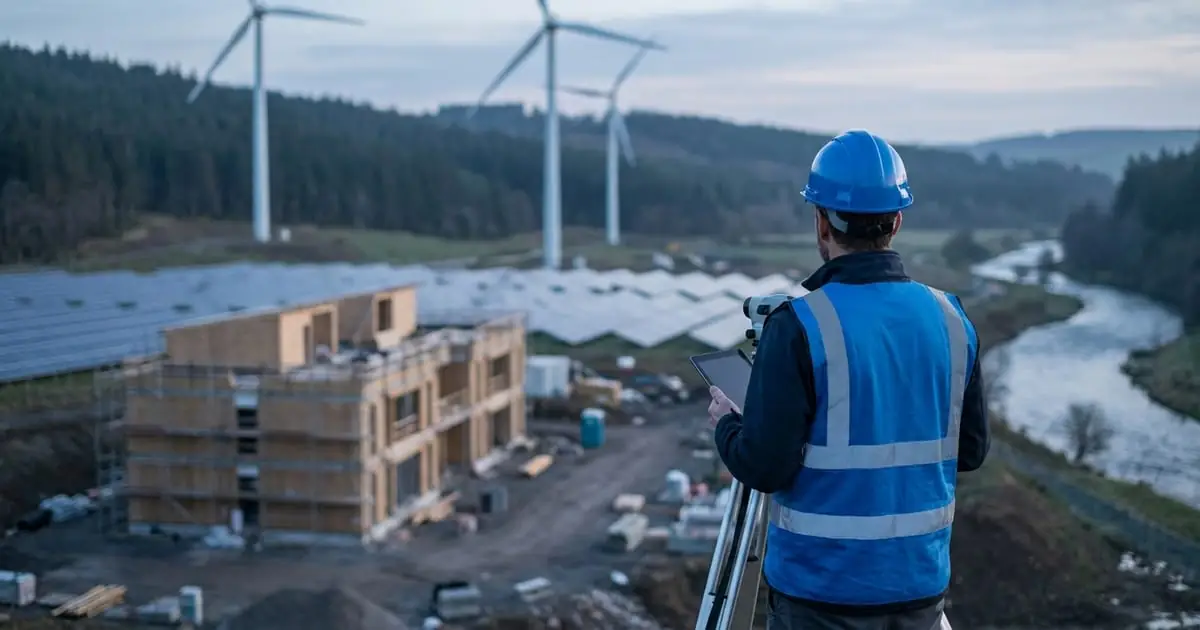
Why an Environmental Feasibility Study is Non-Negotiable for Modern Business
The journey of any new project or business venture is fraught with potential challenges, and increasingly, environmental considerations stand at the forefront. An **environmental feasibility study** (EFS) serves as a critical compass, guiding decision-makers through the complex interplay of ecological impacts, regulatory mandates, and community expectations. It's an indispensable tool for identifying potential risks, uncovering opportunities, and ensuring a project's long-term viability.More Than Just a Checkbox: Strategic Imperatives
For too long, environmental assessments were viewed as a necessary, albeit often burdensome, regulatory hurdle. However, this perspective has dramatically shifted. A robust EFS is now recognized as a strategic imperative, offering significant advantages beyond mere compliance. It's about proactive risk mitigation, enhancing reputation, and securing a competitive edge in a market that increasingly values sustainability. The global Environmental Impact Assessments (EIA) market, which forms a core component of many EFS, reflects this growing importance. Valued at $15.17 billion in 2025, it is projected to reach $20.87 billion by 2030, growing at a compound annual growth rate (CAGR) of 6.6% (The Business Research Company, Environmental Impact Assessments Market Report 2026). This significant growth underscores the increasing demand for expert environmental evaluation services across industries. Furthermore, a March 2025 study found a strong positive correlation, with a statistically significant effect estimated at 76%, between the application of environmental feasibility studies for construction projects and sustainable development, highlighting their tangible benefits.The Evolving Landscape of Environmental Responsibility
The drivers behind the surge in EFS adoption are multifaceted. Strengthening environmental regulations worldwide, coupled with the rapid mainstreaming of Environmental, Social, and Governance (ESG) frameworks, have placed environmental responsibility firmly on the corporate agenda. Investors, consumers, and even employees are demanding greater transparency and accountability from businesses regarding their ecological footprint. This evolving landscape means that projects failing to adequately address their environmental implications face not only regulatory penalties but also reputational damage, project delays, and difficulty attracting capital. An EFS transforms potential liabilities into strategic assets, demonstrating a commitment to responsible development and aligning projects with global sustainability goals.What is an Environmental Feasibility Study (EFS)? Beyond Regulatory Compliance
To fully appreciate the value of an EFS, it's essential to understand its comprehensive nature and how it distinguishes itself from other environmental assessments.Defining the Scope: A Holistic Approach
An **environmental feasibility study** is a systematic process of evaluating a proposed project's environmental viability, potential impacts, and the effectiveness of proposed mitigation strategies. It assesses whether a project can proceed in an environmentally responsible and sustainable manner, considering both natural and human environments. This goes beyond simply identifying impacts; it delves into the technical, economic, and social feasibility of addressing those impacts. The key objectives of an EFS include: * **Identifying Environmental Risks and Opportunities**: Pinpointing potential negative impacts (e.g., pollution, habitat destruction) and positive opportunities (e.g., resource efficiency, biodiversity enhancement). * **Assessing Technical and Economic Viability**: Determining if proposed mitigation measures are technically achievable and economically sustainable within the project's budget and timeline. * **Ensuring Strategic Fit with Corporate Objectives**: Aligning the project with the company's broader sustainability goals and risk management strategies. * **Preventing Negative Consequences**: Proactively designing projects to avoid or minimize adverse environmental and social outcomes. Our team at SimpleFeasibility often emphasizes that an EFS is fundamentally about "good business sense," not just technical environmental issues. It's a proactive investment that safeguards a project's future and enhances its overall value proposition.EFS vs. EIA: Understanding the Distinction
While often used interchangeably, an **environmental feasibility study** (EFS) and an Environmental Impact Assessment (EIA) are distinct, albeit related, concepts.| Feature | Environmental Feasibility Study (EFS) | Environmental Impact Assessment (EIA) |
|---|---|---|
| Primary Purpose | Evaluates overall project viability considering environmental, technical, economic, and social factors; informs strategic decision-making. | Systematically identifies, predicts, evaluates, and mitigates environmental impacts of a project *before* approval; focuses on regulatory compliance. |
| Scope | Broader, holistic approach. Includes EIA, but also integrates broader stakeholder concerns, investor expectations (ESG), and commercial viability. | Narrower, regulatory-driven. Focuses specifically on environmental impacts as defined by law. |
| Timing | Typically conducted earlier in the project lifecycle, often during the conceptual or pre-feasibility stage. | Mandatory regulatory requirement, usually conducted after initial project design but before final approval. | Key Output | A comprehensive report detailing environmental, technical, economic, and social viability, including recommended mitigation and alternative strategies. | An Environmental Impact Statement (EIS) or Report, outlining predicted impacts, mitigation measures, and monitoring plans for regulatory review. |
| Decision Focus | Informs internal business decisions on whether to proceed, how to design, and how to finance a project. | Informs regulatory authorities' decisions on whether to grant project approval. |
| Drivers | Strategic business planning, risk management, investor relations, sustainability goals, green finance eligibility. | Legal and regulatory mandates (e.g., NEPA in the US, EU Directive). |
The Regulatory Backbone: Environmental Impact Assessments (EIA) Framework
At the heart of environmental project planning lies the Environmental Impact Assessment (EIA) framework. This systematic process is a global standard for evaluating the potential ecological effects of proposed projects before any decisions are made, ensuring that environmental aspects are thoroughly considered by decision-makers (U.S. Environmental Protection Agency, eCFR).Understanding the EIA Process: A Step-by-Step Guide
Mandatory in over 140 countries, EIAs are a testament to strengthening environmental regulations worldwide. The process is designed to be systematic and transparent, involving several critical stages: 1. **Screening**: The initial step determines whether a proposed project requires an EIA. This is typically based on the project's type, size, location, and potential for significant environmental impact. 2. **Scoping**: If an EIA is required, scoping identifies the key environmental issues and potential impacts that need to be studied in detail. It involves consultation with regulatory agencies, experts, and often the public. 3. **Baseline Studies**: This crucial stage involves collecting and analyzing existing environmental data to establish the current conditions of the project area before any development occurs. This baseline serves as a reference point against which future impacts are measured. 4. **Impact Prediction & Evaluation**: This stage forecasts the likely positive and negative environmental impacts of the project, both direct and indirect, short-term and long-term. It uses various scientific methods, models, and expert judgment. 5. **Mitigation & Enhancement**: Once impacts are predicted, strategies are developed to avoid, reduce, remedy, or compensate for adverse effects. Opportunities to enhance environmental quality are also identified. 6. **Reporting (EIA Report/Statement)**: The findings of the assessment are compiled into a comprehensive report, often called an Environmental Impact Statement (EIS). This document details the project, its predicted impacts, proposed mitigation measures, and alternatives considered. 7. **Review & Decision-Making**: The EIA report is reviewed by relevant authorities and often made available for public comment. Based on this review, decision-makers determine whether to approve the project, approve it with conditions, or reject it. 8. **Monitoring & Auditing**: After project approval and implementation, environmental monitoring is conducted to ensure that mitigation measures are effective and that predicted impacts align with actual outcomes. Auditing assesses compliance with environmental conditions.Critical Stages: From Screening to Monitoring
Each stage of the EIA process is vital, but some warrant particular attention due to their foundational role in a robust **environmental feasibility study**. The screening stage prevents unnecessary assessments for minor projects while ensuring that potentially impactful projects are thoroughly reviewed. Scoping is crucial for focusing resources on the most significant issues, preventing an overly broad or superficial analysis. The review and decision-making phase is where the technical findings of the EIA are translated into actionable policy. This phase often involves public hearings and expert panels, ensuring a multi-faceted evaluation of the project's environmental implications. Finally, monitoring and auditing provide feedback loops, allowing for adaptive management and ensuring long-term environmental performance. This continuous oversight is a hallmark of truly sustainable development.Baseline Studies: The Foundation of Impact Assessment
Baseline studies are the bedrock upon which any credible EIA or **environmental feasibility study** is built. Without a clear understanding of the existing environmental conditions, it's impossible to accurately assess the changes a project might bring. These studies cover a wide range of parameters: * **Ecology**: This is often the largest share of EIA market revenue, accounting for 18.4% in 2025 (The Business Research Company). It includes assessing biodiversity, habitats, flora, and fauna. Biodiversity protection is central, reflected in legislation like the UK Environment Act 2021, the EU Habitats Directive, and the US Endangered Species Act. * **Air Quality**: Measuring existing levels of pollutants to predict changes from emissions. * **Water Resources**: Assessing surface and groundwater quality, hydrology, and water availability. * **Soil and Geology**: Analyzing soil composition, stability, and potential for contamination or erosion. * **Noise and Vibration**: Documenting ambient noise levels and predicting impacts from construction and operation. * **Socio-economic Conditions**: Evaluating existing demographics, land use, cultural heritage, and community livelihoods. * **Cultural Heritage**: Identifying archaeological sites, historical structures, and culturally significant landscapes. Infrastructure projects, such as roads, railways, and utilities, are a significant driver for EIAs, dominating the market with a 32.7% revenue share in 2025 (The Business Research Company). These large-scale developments inherently carry substantial environmental and social footprints, necessitating rigorous baseline data collection and impact assessment. Our team at SimpleFeasibility consistently advises clients that investing thoroughly in baseline studies upfront can save significant time and costs by preventing unforeseen issues and regulatory hurdles down the line.Building Trust: Stakeholder Engagement and Social License to Operate (SLO)
Beyond regulatory compliance, the success of any project, particularly those with environmental implications, hinges on its acceptance by the communities and groups it affects. This is where robust stakeholder engagement and the concept of a Social License to Operate (SLO) become paramount.Identifying and Engaging Diverse Stakeholders
Public participation is not merely a formality; it is vital for fostering support and ensuring that diverse perspectives are considered in an **environmental feasibility study**. Stakeholders are any individuals or groups who may be affected by or have an interest in a project. They can include: * **Local Communities**: Residents living near the project site. * **Indigenous Groups**: Communities with traditional ties to the land. * **Non-Governmental Organizations (NGOs)**: Environmental advocacy groups, social justice organizations. * **Local Authorities**: Municipal councils, regional planning bodies. * **Government Agencies**: Regulatory bodies, environmental protection agencies. * **Employees and Unions**: Those whose livelihoods may be directly affected. * **Investors and Lenders**: Financial stakeholders with an interest in sustainable practices. Effective engagement requires more than just informing stakeholders; it demands genuine dialogue, active listening, and incorporating feedback into project design and mitigation strategies. Our experience shows that transparent communication from the outset, inclusive consultation processes, and proactively addressing concerns are crucial for building long-term relationships and trust.The Concept of Social License to Operate (SLO)
The Social License to Operate (SLO) refers to the ongoing acceptance and approval for a project or business by local communities and stakeholders. It is not a legal permit or a formal document, but rather an intangible yet powerful form of social capital. An SLO is earned through legitimate, transparent, and fair engagement with stakeholders, demonstrating respect for local values, contributing positively to local development, and managing environmental impacts responsibly. Without an SLO, even a project that is fully compliant with all regulations can face significant challenges. As expert insights suggest, EIAs have transitioned from a mere formality to a crucial element driven by intensifying scrutiny. This scrutiny extends beyond legal parameters to encompass social and ethical considerations, making an SLO an essential ingredient for success.Mitigating Social and Environmental Risks through Dialogue
Ignoring stakeholder concerns in the **environmental feasibility study** process can lead to severe consequences: * **Loss of Community Support**: This can manifest as protests, negative media attention, and a hostile operating environment. * **Legal Challenges**: Dissatisfied communities or NGOs may pursue legal action, leading to costly delays and reputational damage. * **Project Delays and Increased Costs**: Opposition can halt construction, require redesigns, or increase security expenses. * **Reputational Damage**: A tarnished reputation can affect brand value, investor confidence, and talent acquisition. * **Inability to Secure Funding**: Lenders and investors are increasingly wary of projects lacking strong social acceptance. By engaging in meaningful dialogue, businesses can identify potential social and environmental risks early, co-create solutions, and foster a sense of shared ownership. For instance, a renewable energy project might proactively engage with local farmers to discuss land use, offering compensation or alternative benefits, thereby transforming potential opposition into partnership. This proactive approach, guided by a thorough **environmental feasibility study**, not only mitigates risks but also builds a foundation for resilient and responsible development.Integrating ESG: From Compliance to Competitive Advantage for Investors
Environmental, Social, and Governance (ESG) factors have rapidly become central to investment decisions and corporate strategy. An **environmental feasibility study** plays a pivotal role in informing a company's ESG strategy and demonstrating its commitment to sustainable practices, thereby transforming compliance into a competitive advantage.ESG Reporting Requirements and Global Frameworks
The demand for transparent and verifiable ESG data has led to the proliferation of global reporting frameworks. Major frameworks include: * **International Sustainability Standards Board (ISSB)**: Developing a global baseline of sustainability disclosure standards. * **Global Reporting Initiative (GRI)**: Widely used standards for sustainability reporting, covering a broad range of environmental, social, and economic impacts. * **European Financial Reporting Advisory Group (EFRAG)**: Developing European Sustainability Reporting Standards (ESRS) under the Corporate Sustainability Reporting Directive (CSRD). * **Taskforce on Nature-related Financial Disclosures (TNFD)**: Providing a framework for organizations to report on nature-related risks and opportunities. These frameworks are increasingly aligning to produce "high-quality, decision-grade ESG data," reflecting a global push for consistency and comparability in sustainability reporting.How EFS Informs ESG Strategy and Performance
An **environmental feasibility study** provides the foundational data and analysis necessary for robust environmental components of ESG reports. It systematically identifies, quantifies, and evaluates environmental impacts, risks, and opportunities, directly feeding into key ESG metrics. For example: * **Climate Risk**: An EFS can assess a project's carbon footprint, vulnerability to climate change impacts (e.g., sea-level rise, extreme weather), and opportunities for emissions reduction, informing climate-related disclosures. Expert insights indicate that EIAs are adapting to encompass carbon footprint evaluations and climate resilience strategies, closely aligning with corporate sustainability reporting. * **Biodiversity Impact**: The ecology assessment within an EFS directly quantifies potential impacts on ecosystems and species, providing data for biodiversity loss and conservation metrics. * **Water Stewardship**: An EFS evaluates water usage, discharge quality, and local water stress. With water stress rising on the global risk agenda, and increased regulatory, investor, and consumer scrutiny of water use anticipated in 2026, water stewardship is becoming a core ESG metric. A comprehensive EFS can demonstrate a project's responsible approach to water resources. * **Pollution and Waste Management**: An EFS details waste generation, pollution prevention measures, and circular economy opportunities. By conducting a thorough EFS, businesses can gather the necessary evidence to demonstrate their environmental performance, identify areas for improvement, and develop credible ESG targets.The Rise of Sustainable Investing and Investor Scrutiny
Sustainable investing has moved from a niche market to a mainstream financial force. Investors, from large institutional funds to individual retail investors, are increasingly using ESG criteria to screen investments, manage risk, and identify opportunities for long-term value creation. This means that projects lacking a strong environmental profile, or those that fail to demonstrate robust environmental due diligence, are at a significant disadvantage. Investors are demanding transparent, verifiable ESG data, and a well-executed **environmental feasibility study** provides precisely that. It acts as a powerful signal to the market that a project is de-risked from an environmental perspective, aligned with global sustainability trends, and poised for resilient growth. Our team has observed that sustainability is increasingly taking center stage in EIA initiatives, aligning perfectly with corporate sustainability reporting expectations. Businesses that proactively integrate EFS into their planning are better positioned to attract this growing pool of sustainable capital.Unlocking Capital: How Environmental Feasibility Drives Green Funding
In the era of sustainable finance, an **environmental feasibility study** is not just a regulatory hurdle or a corporate responsibility; it's a powerful tool for unlocking capital. Projects with strong environmental credentials are increasingly favored by lenders and investors, who are channeling significant funds into green and sustainability-linked instruments.Green Bonds and Sustainability-Linked Loans: An Overview
The green finance market has expanded dramatically, offering innovative ways to fund environmentally sound projects: * **Green Bonds**: These are fixed-income instruments specifically designed to raise capital for projects with environmental benefits, such as renewable energy, energy efficiency, sustainable waste management, and clean transportation. The proceeds from green bonds are ring-fenced for eligible "green" projects, and their issuance often requires independent verification of environmental impact. * **Sustainability-Linked Loans (SLLs)**: Unlike green bonds, SLLs are general-purpose corporate loans where the interest rate is tied to the borrower's achievement of pre-defined sustainability performance targets (SPTs). These targets can relate to various ESG metrics, including emissions reduction, water conservation, waste diversion, or biodiversity protection. Failure to meet these targets can result in higher interest rates, while success can lead to lower rates. These instruments represent a significant shift in how capital is allocated, prioritizing projects that demonstrate clear environmental benefits and responsible management.The Role of EFS in Attracting Green Investment
A comprehensive **environmental feasibility study** is instrumental in attracting green investment by: 1. **Reducing Perceived Environmental Risks**: By thoroughly identifying and proposing mitigation for environmental risks, an EFS provides assurance to lenders and investors, reducing their perceived risk exposure. This can lead to more favorable financing terms. 2. **Demonstrating Project Eligibility**: Green finance instruments often have strict eligibility criteria. An EFS helps demonstrate that a project aligns with these criteria, such as the Green Bond Principles, which require transparency and clear environmental benefits. It provides the detailed analysis needed to classify a project as "green." 3. **Enhancing Creditworthiness**: Projects with robust environmental planning and a commitment to sustainability are often viewed as more resilient and future-proof. This enhanced creditworthiness can improve access to capital and lower borrowing costs. 4. **Providing Verifiable Data**: The detailed environmental baseline data and impact predictions from an EFS provide the verifiable information required for reporting on the environmental performance of green-funded projects. This transparency is crucial for maintaining investor confidence. The International Energy Agency's World Energy Investment 2024 report highlights increased investments in renewable energy as a key driver for the EIA market. EIAs, and by extension the broader **environmental feasibility study**, are vital for evaluating the environmental effects of these projects and ensuring their sustainability and compliance.Case Studies: Funding Sustainable Projects
Consider the growing trend of developing renewable energy projects on contaminated lands, such as former industrial sites or brownfields. In the United States, the EPA provides incentives and policies for such developments through initiatives like the RE-Powering Initiative and provisions in the Infrastructure Investment and Jobs Act and Inflation Reduction Act. State-level incentives further encourage these projects. An **environmental feasibility study** for such a project would be complex, needing to address: * **Contamination Remediation**: Assessing the nature and extent of existing contamination and the feasibility of remediation strategies. * **Ecological Restoration**: Planning for habitat creation or enhancement alongside energy generation. * **Regulatory Navigation**: Ensuring compliance with both environmental remediation laws (e.g., Superfund site regulations) and renewable energy permitting. A successful EFS for such a project would clearly outline the environmental benefits (e.g., land reuse, clean energy generation, reduced greenhouse gas emissions), the technical viability of remediation and energy infrastructure, and the economic returns. This detailed analysis could then be presented to green bond investors or lenders offering sustainability-linked loans, demonstrating not only financial viability but also profound environmental and social impact. Another example is large-scale sustainable infrastructure projects, such as eco-friendly public transportation systems or green buildings. These projects often require significant capital and can leverage green bonds or SLLs if their environmental benefits are clearly articulated through a rigorous **environmental feasibility study**. The EFS would quantify carbon reductions, resource efficiency gains, and positive community impacts, making the project highly attractive to green investors.Executing an Environmental Feasibility Study: Tools, Talent, and Best Practices
Conducting a thorough **environmental feasibility study** requires a blend of scientific rigor, technological prowess, and human expertise. Modern advancements have significantly enhanced the capabilities of EFS, but the human element remains irreplaceable.Leveraging Technology: AI, GIS, and Remote Sensing
The digitalization of environmental assessment processes is a key trend, with technology playing an increasingly vital role: * **AI-driven Assessment Models**: Artificial intelligence (AI) can automate data collection, process vast datasets, and identify patterns that human analysts might miss. AI models can predict impacts with greater accuracy, simulate various scenarios (e.g., different development layouts, climate change projections), and even suggest optimal mitigation strategies. * **Geographic Information Systems (GIS)**: GIS is indispensable for spatial analysis. It allows for the layering of diverse environmental data (e.g., land use, hydrology, biodiversity hotspots, population density) to visualize potential impacts, identify sensitive areas, and inform site selection. GIS maps provide powerful visual communication tools for stakeholders. * **Remote Sensing**: Satellite imagery, drone-based surveys, and aerial photography provide high-resolution data on land cover, vegetation health, water quality, and even changes over time. This technology enables efficient data collection over large or inaccessible areas, reducing field time and costs. These tools, when integrated, facilitate data-driven decision-making, enhance the efficiency of the EFS process, and improve the robustness of impact predictions. The anticipated expansion of the EIA market is fueled by the adoption of AI-driven assessment tools and the broader use of data-driven decision-making technologies (The Business Research Company).The Importance of Expert Practitioners and Interdisciplinary Teams
While technology is a powerful enabler, it cannot replace the critical thinking, judgment, and nuanced understanding provided by skilled human experts. A robust **environmental feasibility study** demands an interdisciplinary team, typically including: * **Environmental Scientists/Ecologists**: For baseline studies, impact prediction, and biodiversity assessments. * **Hydrologists/Geologists**: To assess water resources, soil, and geological stability. * **Air Quality Specialists**: For emissions modeling and air quality impact assessments. * **Social Scientists/Community Engagement Specialists**: To manage stakeholder engagement and assess socio-economic impacts. * **Engineers**: To design and evaluate the technical feasibility of mitigation measures. * **Regulatory Experts/Lawyers**: To navigate complex environmental laws and permitting processes. The limited availability of skilled environmental experts is often cited as a challenge in the market. This underscores the importance of engaging reputable consulting firms or building strong internal capabilities with certified professionals. Our team at SimpleFeasibility, with backgrounds in corporate finance, venture investment, and small business advisory, understands the importance of peer-reviewed technical accuracy in these studies.Common Challenges and How to Overcome Them
Executing an **environmental feasibility study** is not without its hurdles: * **Data Availability and Quality**: Access to reliable historical and baseline environmental data can be challenging, especially in developing regions. * *Overcoming:* Utilize remote sensing, conduct targeted field surveys, and collaborate with local universities or government agencies for data sharing. * **Managing Complex Stakeholder Expectations**: Balancing the often-conflicting interests of various stakeholder groups requires exceptional communication and negotiation skills. * *Overcoming:* Implement a structured stakeholder engagement plan, use neutral facilitators, and prioritize transparent, two-way communication. * **Navigating Diverse Regulatory Environments**: Environmental laws vary significantly across jurisdictions, making multi-national projects particularly complex. * *Overcoming:* Engage local legal and environmental experts, conduct thorough regulatory mapping, and maintain up-to-date knowledge of policy changes. * **High Upfront Costs**: A comprehensive EFS can be a significant initial investment. * *Overcoming:* Frame the EFS as a long-term investment in risk reduction, reputation enhancement, and access to capital. The long-term benefits often significantly outweigh the initial outlay. Phased studies can also help manage costs. Best practices for an effective EFS include early integration into the project planning process, a clear and well-defined scope, continuous monitoring throughout the project lifecycle, and an adaptive management approach that allows for adjustments based on new information or unforeseen circumstances.Looking Ahead: Trends Shaping Environmental Feasibility Studies
The field of environmental assessment is dynamic, constantly evolving to address new challenges and leverage emerging technologies. Several key trends are shaping the future of the **environmental feasibility study**.Climate Resilience and Carbon Footprint Integration
A major shift is the increasing integration of climate change considerations into EFS. EIAs are adapting to encompass thorough carbon footprint evaluations, assessing both direct and indirect greenhouse gas emissions from projects. Beyond emissions, there's a growing focus on climate resilience planning, evaluating a project's vulnerability to physical climate risks (e.g., extreme weather, sea-level rise, water scarcity) and designing adaptive measures. This aligns with the expansion of sustainable infrastructure projects that are built to withstand future climate impacts.Standardization and Robust Impact Measurement
The demand for high-quality, decision-grade ESG data is driving greater standardization in impact measurement. We anticipate more robust and standardized methodologies for quantifying environmental impacts, with greater alignment across global frameworks like ISSB, GRI, EFRAG, and TNFD. This will improve comparability, reduce "greenwashing" risks, and provide clearer signals for sustainable investors. The focus will be on demonstrable, measurable outcomes rather than just intentions.Responsible AI and Digital Governance
As AI-driven assessment models become more sophisticated, there will be increasing scrutiny around the environmental impact of large language models and data infrastructure themselves. This means that responsible AI usage will become a key part of sustainable digital governance within the EFS context. Furthermore, the demand for continuous environmental monitoring, facilitated by digital tools and sensors, will grow, enabling real-time data-driven decision-making and adaptive management throughout a project's lifecycle. The anticipated expansion of the EIA market is fueled by these AI-driven tools and an enhanced focus on climate resilience, signaling a future where technology and environmental stewardship are deeply intertwined.Beyond the Hype: Addressing Common Misconceptions and Limitations
Despite its growing importance, the **environmental feasibility study** is still subject to several common misconceptions and inherent limitations that business leaders should be aware of.Debunking EFS Myths for Business Leaders
Our team at SimpleFeasibility frequently encounters several misunderstandings about environmental assessments: * **Myth 1: EFS/EIA are only for large projects.** * *Reality:* While large infrastructure projects certainly require them, environmental assessments can be mandated for a wide range of projects, regardless of size, from small housing developments to local road improvements. Any project with potential environmental or social impact should consider an EFS. * **Myth 2: EFS/EIA are a barrier to development.** * *Reality:* The primary goal is not to stop development but to ensure it proceeds in an environmentally responsible manner. By identifying and mitigating negative impacts early, an EFS actually facilitates sustainable development, preventing costly delays and legal challenges down the line. * **Myth 3: EFS are solely focused on technical issues.** * *Reality:* While technical environmental science is a core component, a proper EFS evaluates whether a development opportunity makes good business sense, encompassing commercial, economic, and social considerations alongside technical feasibility. Focusing only on economic aspects and neglecting social or environmental impacts is a common mistake. * **Myth 4: Public participation is not important.** * *Reality:* Engaging with communities and stakeholders is vital for considering different perspectives, fostering community support, and securing the Social License to Operate. Ignoring this can lead to losing community support or legal trouble.Acknowledging Inherent Challenges and Uncertainties
While powerful, an EFS is not a crystal ball. It comes with inherent challenges and uncertainties: * **Uncertainties in Prediction**: Environmental systems are complex. Despite advanced models, predicting long-term or indirect impacts with absolute certainty is difficult. * **Reliance on Data Quality**: The accuracy of an EFS heavily depends on the quality and availability of baseline data. Gaps or inaccuracies can lead to flawed conclusions. * **Potential for 'Greenwashing'**: If not rigorously applied and independently verified, there's a risk that an EFS could be used to superficially "greenwash" a project without genuine commitment to sustainability. * **High Upfront Costs**: As mentioned, a comprehensive study can be expensive, which can be a deterrent for smaller projects or businesses.The Cost-Benefit Equation: Investing for Long-Term Value
Despite these challenges and costs, the long-term benefits of an **environmental feasibility study** typically far outweigh the initial investment. By integrating EFS early into project planning, businesses can: * **Reduce Financial Risk**: Avoid costly fines, legal battles, and project delays. * **Improve Reputation**: Enhance brand image and stakeholder trust. * **Secure Access to Capital**: Attract green finance and responsible investors. * **Foster Innovation**: Drive more sustainable designs and operational efficiencies. * **Ensure Long-Term Viability**: Build projects that are resilient to future environmental and regulatory changes. In essence, an EFS is an investment in the future resilience and profitability of a project, transforming potential liabilities into strategic advantages.Strategic Imperative: Embracing Environmental Feasibility for Sustainable Success
The modern business landscape demands a holistic approach to project development, one where environmental stewardship is intrinsically linked to financial success and social responsibility. An **environmental feasibility study** stands as a crucial guidepost in this journey, enabling businesses to navigate complex regulatory landscapes, satisfy diverse stakeholder expectations, meet the rigorous demands of investors, and ultimately unlock the growing opportunities presented by green finance. By embracing robust environmental feasibility assessments, businesses can mitigate risks, enhance their reputation, gain a significant competitive advantage, and ensure the long-term sustainability of their ventures. Our team at SimpleFeasibility believes that integrating a comprehensive **environmental feasibility study** into your project planning is not just a best practice; it is a strategic imperative for resilient and responsible growth in the 21st century.Frequently Asked Questions About Environmental Feasibility Studies
What is the primary difference between an EFS and an EIA?
An Environmental Feasibility Study (EFS) is a broader, holistic assessment that evaluates a project's overall viability, encompassing environmental, technical, economic, and social factors, including stakeholder concerns and ESG criteria. An Environmental Impact Assessment (EIA) is a more specific, regulatory-driven process focused on identifying, predicting, evaluating, and mitigating a project's direct environmental impacts to ensure compliance with legal requirements. An EIA is often a component of a larger EFS.
How long does an Environmental Feasibility Study typically take?
The duration of an Environmental Feasibility Study varies greatly depending on the project's scale, complexity, location, and the availability of existing data. Small, straightforward projects might take a few weeks to a few months, while large-scale infrastructure or industrial projects with significant potential impacts could take several months to over a year, involving extensive baseline data collection and stakeholder engagement.
Who needs an Environmental Feasibility Study?
Any business or organization proposing a new project, expansion, or significant change in operations that has the potential for environmental or social impact should consider an Environmental Feasibility Study. This includes developers, industrial companies, energy providers, infrastructure planners, and even smaller businesses seeking green finance or aiming to align with ESG principles. Government regulations often mandate these studies as part of project approval processes.
Can an EFS help my business secure funding?
Yes, absolutely. A comprehensive Environmental Feasibility Study can significantly enhance your project's attractiveness to lenders and investors, particularly those focused on sustainable finance. It demonstrates environmental responsibility, reduces perceived risks, and provides the verifiable data needed to qualify for green bonds, sustainability-linked loans, and other forms of green capital. This can lead to more favorable financing terms and broaden your access to funding.
What are the consequences of skipping an EFS?
Skipping an Environmental Feasibility Study can lead to severe consequences, including legal penalties and fines for non-compliance with environmental regulations, significant project delays or even outright rejection, loss of community support and a tarnished Social License to Operate, severe reputational damage, and an inability to secure necessary funding from increasingly environmentally conscious investors and lenders. It also increases the risk of unforeseen environmental problems during operation, leading to costly remediation.
About the Author
This article was prepared by the SimpleFeasibility Editorial Team. Our team comprises professionals with extensive backgrounds in corporate finance, venture investment, and small business advisory. All articles undergo rigorous peer review to ensure technical accuracy and adherence to industry best practices.
Sources & References
- The Business Research Company. (2026). Environmental Impact Assessments Market Report 2026.
- Dataintelo. (2034). Environmental Impact Assessments Market Research Report 2034.
- Research and Markets. (2026). Environmental Impact Assessments Market Report 2026.
- U.S. Environmental Protection Agency (EPA). National Environmental Policy Act (NEPA). Retrieved from epa.gov/nepa
- eCFR (Code of Federal Regulations). Title 40, Protection of Environment, Part 1500-1508.
- International Energy Agency. (2024). World Energy Investment 2024.
- Bureau of Ocean Energy Management (BOEM). (2025-2026). Studies Development Plan FY 2025-2026.
- UK Environment Act 2021.
- EU Habitats Directive (Council Directive 92/43/EEC).
- US Endangered Species Act of 1973.
- U.S. Environmental Protection Agency (EPA). RE-Powering America's Land: Siting Renewable Energy on Potentially Contaminated Land, Landfills, and Mine Sites. Retrieved from epa.gov/re-powering
- Infrastructure Investment and Jobs Act (2021).
- Inflation Reduction Act (2022).
- U.S. Environmental Protection Agency (EPA). Superfund Remedial Action: Feasibility Study. Retrieved from epa.gov/superfund/superfund-remedial-action-feasibility-study
- U.S. Department of the Interior, Bureau of Reclamation. Principles and Guidelines (43 CFR Part 404 Subpart D).
- ISSB (International Sustainability Standards Board). Retrieved from issb.org
- GRI (Global Reporting Initiative). Retrieved from globalreporting.org
- EFRAG (European Financial Reporting Advisory Group). Retrieved from efrag.org
- TNFD (Taskforce on Nature-related Financial Disclosures). Retrieved from tnfd.global
- Green Bond Principles (GBP) by ICMA. Retrieved from icmagroup.org/sustainable-finance/the-principles-guidelines-and-handbooks/green-bond-principles-gbp/