A Complete Sushi Restaurant Feasibility Study Guide for 2026: From Concept to Capital
Embarking on the journey to open a sushi restaurant is an exciting venture, blending culinary artistry with significant business potential. However, like any significant investment, success hinges on meticulous planning and a deep understanding of the market. This comprehensive guide is designed to walk founders, business owners, consultants, and investors through every critical step of conducting a robust sushi restaurant feasibility study for 2026, transforming a vision into a viable sushi restaurant business plan.
The sushi industry, with its unique blend of tradition and innovation, offers substantial rewards but also presents distinct operational challenges. A thorough feasibility study acts as your compass, navigating these complexities and providing the clarity needed to make informed decisions for your sushi business feasibility.
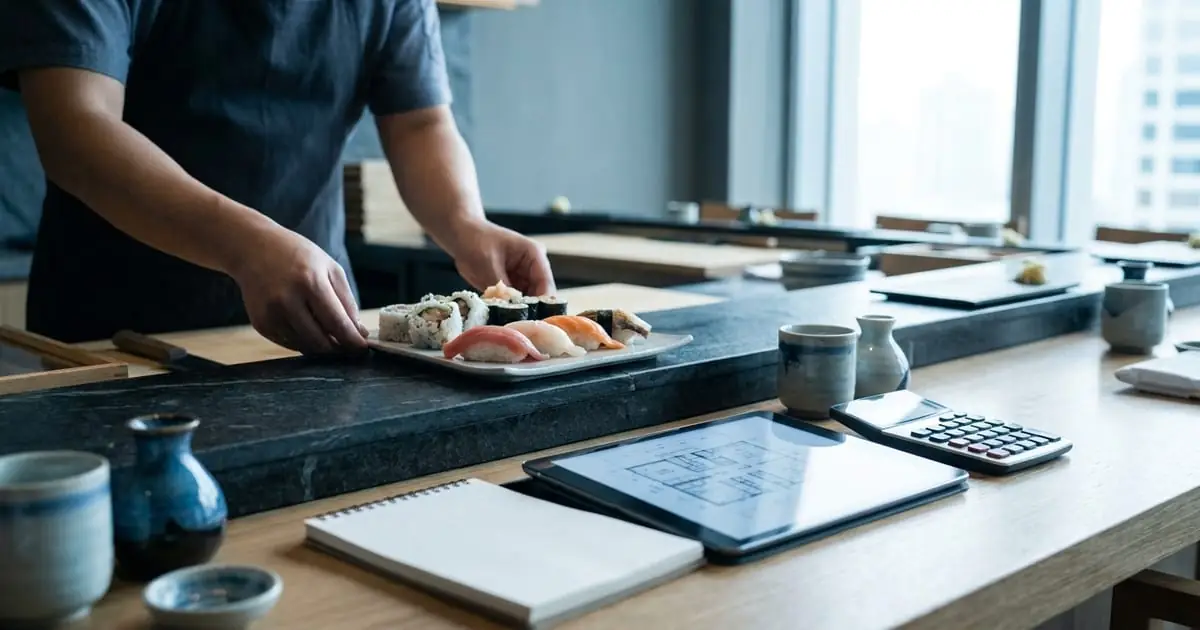
1. Introduction: Unwrapping the Opportunity in Sushi
Why a Sushi Restaurant Feasibility Study Matters for Your Vision
Before any significant capital is deployed, a comprehensive sushi restaurant feasibility study is indispensable. It's not merely a bureaucratic step; it's a strategic imperative that validates your concept, identifies potential pitfalls, and quantifies the financial viability of your proposed venture. This study serves as a foundational document, critical for attracting investors, securing loans, and guiding your operational strategy for a successful sushi bar feasibility.
Without a rigorous assessment, even the most passionate culinary vision can falter due to unforeseen market dynamics, underestimated costs, or unaddressed operational complexities. Our team at SimpleFeasibility, with our backgrounds in corporate finance and venture investment, consistently advises that a well-executed sushi restaurant feasibility study is the single most important document for de-risking a new restaurant opening.
The Enduring Appeal and Growth of Sushi
The global appetite for sushi continues its robust expansion. In 2024, the global sushi restaurant market was valued at approximately USD 9.61 billion and is projected to reach USD 14.28 billion by 2032, demonstrating a Compound Annual Growth Rate (CAGR) of 5.06% [1]. Other analyses project an even more aggressive growth, with the market reaching USD 17.62 billion by 2032 at an 8.00% CAGR from 2025 [2]. The U.S. market alone is a significant contributor, valued at approximately $22 billion as of April 2026, with $16 billion generated directly through restaurant sales [3].
Sushi consistently ranks among the highest-margin concepts in full-service dining, a testament to its enduring popularity and perceived value. This consistent demand, coupled with the potential for high profitability, makes a sushi restaurant an attractive proposition for entrepreneurs and investors alike. However, tapping into this potential requires a clear understanding of market trends, operational nuances, and financial realities, all covered in a thorough japanese restaurant feasibility assessment.
2. Market Landscape & Consumer Trends: Slicing into Demand for Your Sushi Restaurant
Global and Local Market Dynamics for a Sushi Restaurant Feasibility Study
The global sushi market's projected growth is driven by several factors, including the increasing popularity of Japanese cuisine worldwide, a rising health consciousness among consumers, and continuous innovation in sushi offerings [4]. The National Restaurant Association's 2025 report identifies Japanese cuisine as one of the fastest-growing segments in the U.S., fueled by consumer interest in fresh, health-conscious dining options [5].
Locally, understanding your specific market is paramount. While national trends provide a macro view, a localized sushi restaurant feasibility study must analyze demographic data, competitor presence, and specific consumer preferences within your target area. For instance, a bustling urban center might support a high-end omakase concept, while a suburban family-oriented neighborhood might thrive with a more casual, accessible sushi spot. This market analysis is key for any sushi business feasibility analysis.
Evolving Consumer Palates and Preferences
Today's sushi consumer is sophisticated and discerning. Key trends include a strong demand for fresh, health-conscious dining options. There's also a significant surge in demand for premium, authentic, chef-curated omakase experiences, a segment that has grown by 15% annually [6]. This indicates a willingness among certain demographics to pay more for quality, artistry, and a unique dining journey.
Interestingly, the fastest-rising consumer need for sushi is 'intense flavor,' showing a remarkable +338% growth [7]. This suggests a market for creative, bolder flavor profiles alongside traditional offerings. Moreover, transparency is increasingly vital: 60% of consumers are more likely to purchase sushi if it comes with clear origin and traceability information [8]. This aligns with growing awareness around food safety and ethical sourcing, a critical aspect for any sushi restaurant business plan.
Leveraging Technology and Sustainability Trends for Your Sushi Restaurant
The restaurant industry is rapidly digitizing, and sushi establishments are no exception. In 2024, 73% of restaurant operators increased their technology investments to enhance customer experience and operational efficiency [9]. Takeout and delivery are no longer supplementary services but critical revenue streams, projected to reach US$7.9 billion and US$7.8 billion respectively by 2035 [10]. Integrating robust online ordering platforms, efficient kitchen display systems, and engaging loyalty programs is no longer optional; it's essential for competitive advantage in your sushi restaurant.
Sustainability and local sourcing are also top macro trends for 2025, particularly influencing younger generations (Millennials and Gen Z) [11]. Consumers are increasingly demanding transparency in food sourcing and sustainable practices. A sushi restaurant that can credibly demonstrate its commitment to sustainably harvested seafood, waste reduction, and eco-friendly packaging can build a powerful brand identity and attract a loyal customer base. The global sushi-grade seafood market, valued at USD 10.1 billion in 2024, is expected to reach USD 16.2 billion by 2034, indicating a growing supply chain for responsibly sourced ingredients [12]. This is a key consideration in any japanese restaurant feasibility study.
3. Defining Your Sushi Concept & Revenue Model for a Successful Sushi Restaurant Feasibility Study
A successful sushi restaurant feasibility study starts with a clear, compelling concept. This foundational decision will dictate everything from your location and interior design to your menu, pricing, and operational structure for your sushi bar business plan.
Choosing Your Niche: From Fast-Casual to Fine Dining Omakase
The sushi market offers a spectrum of concepts, each appealing to a different target audience and requiring distinct operational models. Defining your niche early on is crucial for focus and differentiation in your sushi restaurant venture.
Sushi Restaurant Concept Niches & Characteristics
| Concept Niche | Target Audience | Key Characteristics |
|---|---|---|
| Traditional/Edomae | Connoisseurs, foodies | Classic preparations, fresh fish, skilled Itamae, dine-in focus. |
| Omakase | Affluent, experiential diners | Chef's choice tasting menu, intimate, curated, premium pricing. |
| Fusion | Adventurous palates, younger demographics | Blends Japanese techniques with international flavors, creative. |
| Fast-Casual/Conveyor Belt | Value-conscious, quick diners | Speed, affordability, accessibility, high volume. |
| Grab-and-Go/Kiosk | Busy professionals, shoppers | Convenient, pre-packaged, minimal seating, high turnover. |
| Ghost Kitchen/Delivery-Only | Delivery-focused, tech-savvy | Optimized for off-premise dining, robust delivery logistics. |
Your chosen concept must align with your target audience. For example, a high-end omakase spot requires a demographic with significant disposable income, while a fast-casual outlet targets a broader, value-conscious customer base. This strategic alignment is a core part of any sushi business feasibility assessment.
Crafting Your Pricing Strategy for Profitability
Pricing is a delicate balance between perceived value, competitive positioning, and your target profit margins. For sushi, the quality of ingredients often justifies a premium, but this must be communicated effectively to the customer. Your pricing strategy for your sushi restaurant should consider:
- Target Food Cost: For sushi, this typically ranges between 28% and 35% of revenue [13]. This is a critical metric, as high-quality fish can be expensive.
- Labor Costs: The cost of skilled Itamae (sushi chefs) is significant and must be factored in.
- Rent and Overhead: These fixed costs need to be covered by sales.
- Perceived Value: What are customers willing to pay for your specific concept, quality, and experience?
- Competitive Analysis: How do your prices compare to similar establishments in your area?
- Menu Engineering: Strategically pricing high-margin items (e.g., certain rolls, appetizers, beverages) to offset lower-margin items (e.g., premium sashimi) is essential for overall profitability. Learn more about restaurant menu engineering strategies.
A common misconception is that "more menu options always lead to more customers." In reality, an overly extensive menu can complicate operations, lead to inventory waste, increase training difficulty for staff, and even confuse customers. A focused menu, well-executed and aligned with your concept, often performs better in a sushi restaurant.
Exploring Diverse Revenue Streams for Your Sushi Restaurant
Beyond traditional dine-in, modern sushi restaurants can diversify their revenue streams to maximize profitability and resilience. This is a key area explored in any comprehensive sushi restaurant business plan.
- Dine-in Service: The core experience for most sushi restaurants.
- Takeout & Delivery: As noted, these are fast-growing segments. Partnering with third-party delivery services or building your own platform is crucial.
- Catering: Offering sushi platters for corporate events, private parties, or special occasions.
- Private Events/Buyouts: Hosting exclusive dining experiences or allowing full restaurant buyouts for celebrations.
- Merchandise: Selling branded items like chef's knives, aprons, or unique Japanese ceramics.
- Cooking Classes: Leveraging the expertise of your Itamae to offer sushi-making classes, creating an experiential revenue stream and fostering customer loyalty.
- Beverage Program: A well-curated selection of sake, Japanese beers, wine, and specialty cocktails can significantly boost average check size and profit margins. Explore more diverse restaurant revenue streams.
A well-defined concept and a strong brand identity are crucial for justifying premium pricing, driving word-of-mouth referrals, and fostering customer trust. This is particularly true in the sushi world, where quality and authenticity are paramount for any successful sushi restaurant.
4. Capital Expenditure (CAPEX) for a Sushi Restaurant (2026 Estimates)
Understanding the initial investment required is a cornerstone of any robust sushi restaurant feasibility study. These estimates are for 2026 and are highly dependent on location, size, concept, and the existing infrastructure of the chosen property. Costs are subject to inflation and regional variations, making a detailed financial projection crucial for your sushi business feasibility report.
Disclaimer: Estimated Ranges for 2026
The following figures are broad estimates. A detailed pro forma financial model tailored to your specific project will provide more precise figures. These costs exclude the purchase of real estate itself.
Estimated Sushi Restaurant CAPEX (2026)
| Category | Estimated Range | Key Specifics |
|---|---|---|
| Leasehold Improvements & Build-Out | $50,000 - $300,000+ | Sushi bar construction, ventilation, plumbing, flooring, restrooms, decor. |
| Specialized Kitchen & Sushi Bar Equipment | $40,000 - $150,000 | Commercial rice cookers, refrigerated sushi display cases, walk-in coolers, specialized knives, dishwashers. |
| Dining Room, Front-of-House & Technology | $20,000 - $100,000 | Furniture, lighting, signage, smallware, POS system, online ordering, KDS. |
| Initial Inventory & Working Capital | $5,000 - $20,000 (Inventory) + 3-6 months OPEX (Working Capital) | Sushi-grade fish, rice, nori, produce, dry goods, licenses, permits, operational buffer. |
| Total Estimated CAPEX (excluding real estate) | $120,000 - $600,000+ |
Leasehold Improvements & Build-Out
This category covers modifications to the leased space to make it suitable for a sushi restaurant. It's often the largest CAPEX component. Specifics include specialized design and build for the sushi counter, often requiring specific materials and refrigeration integration. Ventilation and HVAC upgrades are needed to handle cooking fumes (if a hot kitchen is included) and maintain comfortable dining temperatures. Plumbing and electrical installations for new sinks, drains, gas lines, and specialized equipment are also critical. Durable, easy-to-clean flooring and wall finishes suitable for a commercial kitchen and dining area are essential, along with restrooms compliant with accessibility standards. Finally, decor and ambiance elements must align with your brand concept.
Specialized Kitchen & Sushi Bar Equipment
Sushi operations require specific, often high-quality, equipment. This includes high-capacity, specialized commercial rice cookers for sushi rice, and essential refrigerated sushi display cases (Neta Cases) for safely storing and showcasing raw fish at precise temperatures. Walk-in coolers/freezers are critical for bulk ingredient storage, especially highly perishable seafood. Dedicated prep stations and cutting boards for fish preparation are a must. High-quality specialized sushi knives (yanagiba, deba, usuba) represent a significant investment for an Itamae. Commercial-grade dishwashers and sinks ensure hygiene and efficiency, while ice machines are needed for drinks and maintaining fish temperature during prep. Standard kitchen equipment (fryers, stovetops, ovens) is also required if offering cooked items, as part of your sushi bar feasibility planning.
Dining Room, Front-of-House & Technology
Creating an inviting dining experience and an efficient service flow is paramount for a sushi restaurant. This includes furniture like tables, chairs, bar stools, and a host stand, along with lighting fixtures to enhance ambiance. Exterior and interior signage is vital for branding. Smallware such as chopsticks, plates, bowls, sake cups, glassware, and serving dishes, often Japanese-inspired, contribute to the experience. Uniforms for all front-of-house and back-of-house staff are also necessary. Technology includes an advanced Point-of-Sale (POS) system for complex menus, order management, and inventory tracking, an online ordering platform integrated with POS for seamless takeout/delivery, and a Kitchen Display System (KDS) for efficient order flow. Security cameras, a sound system, and telephone/internet systems complete the setup.
Initial Inventory & Working Capital
Getting started requires initial stock and a buffer for initial operations. Initial inventory ($5,000 - $20,000) includes high-quality sushi-grade fish, sushi rice, nori (seaweed), fresh produce, dry goods (soy sauce, ginger, wasabi), and beverages. Given the perishability, this is a frequent, ongoing cost. Licenses & Permits (initial fees: $1,000 - $5,000) cover business, health, alcohol (if applicable), and fire safety permits. Crucially, working capital is needed to cover initial operating losses. New restaurants typically operate at a loss for the first 3-6 months, and sufficient working capital is vital to bridge this period. This is often an underestimated but critical component of startup costs for any japanese restaurant feasibility assessment.
5. Operational Expenditure (OPEX) for a Sushi Restaurant (2026 Estimates)
Understanding ongoing operational costs is as critical as initial capital expenditure in a sushi restaurant feasibility study. These are estimated ranges for 2026 and are highly dependent on location, concept, sales volume, and operational efficiency. Costs are subject to inflation and market fluctuations, and are essential for your sushi restaurant financial model.
Disclaimer: Estimated Ranges for 2026
The following figures represent typical percentages of revenue. Actual dollar amounts will vary significantly based on your sushi restaurant's sales volume and specific operating model.
Estimated Sushi Restaurant OPEX (as % of Revenue, 2026)
| Category | Estimated Range (% of Revenue) | Key Considerations |
|---|---|---|
| Food Costs | 28% - 35% | High-quality fish, effective inventory management, supplier relationships. |
| Labor Costs | 25% - 35% | Skilled Itamae, FOH/BOH staff, competitive compensation, efficient scheduling. |
| Rent/Lease | 5% - 10% | Location-dependent, prime locations command higher rents. |
| Utilities | 2% - 4% | Electricity (refrigeration), gas, water, waste disposal; energy efficiency helps. |
| Marketing & Advertising | 1% - 3% | Digital marketing, social media, loyalty programs, local promotions. |
| Insurance | $1,000 - $3,000 per month (fixed) | General liability, property, workers' comp, food spoilage. |
| Supplies | 1% - 2% | Packaging, cleaning supplies, smallware replacement, paper goods. |
| Administrative & Miscellaneous | 1% - 3% | Accounting, legal, software subscriptions, repairs, professional development. |
| Total OPEX (for profitable operation) | Typically 80-90% of Revenue | Leaving 10-20% for net profit before taxes. |
Prime Costs: Food & Labor
These are the largest and most variable costs, directly tied to sales volume. Sushi ingredients, especially high-quality fish, are expensive. Rising food costs impacted 78% of operators in 2024, with 82% anticipating further increases in 2025 [14]. Effective inventory management, supplier relationships, and menu engineering are vital to control these costs for your sushi restaurant. Labor costs include wages for front-of-house staff, kitchen staff, and crucially, highly skilled Itamae. The extensive training and expertise required for sushi chefs command higher salaries. 85% of restaurants experienced increased payroll expenses in 2024, with many expecting a further 1-14% rise [15]. Managing labor efficiency through smart scheduling and technology is key for sushi bar feasibility.
Occupancy & Utilities
These are largely fixed costs, regardless of sales volume. Rent/Lease (5% - 10% of revenue) is highly location-dependent; prime locations in high-traffic areas will command higher rents. Utilities (2% - 4% of revenue) include electricity (especially for refrigeration), gas, water, and waste disposal. Energy-efficient equipment can help mitigate these costs for your sushi restaurant.
Marketing, Administrative & Miscellaneous
These costs support the business's growth and day-to-day operations. Marketing & Advertising (1% - 3% of revenue) covers digital marketing, social media management, loyalty programs, local promotions, and public relations. The misconception that "good food sells itself" is a dangerous one; strategic marketing is essential for visibility and customer acquisition for a sushi restaurant. Insurance ($1,000 - $3,000 per month) includes general liability, property insurance, workers' compensation, and potentially specialized food spoilage insurance. Supplies (1% - 2% of revenue) cover packaging for takeout/delivery, cleaning supplies, smallware replacement, and paper goods. Administrative & Miscellaneous (1% - 3% of revenue) includes accounting services, legal fees, software subscriptions (POS, inventory, HR), repairs and maintenance, and professional development.
6. Financial Projections & Breakeven Analysis: A Worked Example for Your Sushi Restaurant
The financial section of your sushi restaurant feasibility study translates all your market research and cost estimates into concrete numbers, demonstrating when and how your restaurant will become profitable. Our team at SimpleFeasibility emphasizes that realistic projections are far more valuable than overly optimistic ones for any sushi business financial planning.
Establishing Realistic Assumptions for Your Model
Accurate financial projections begin with sound assumptions. These should be grounded in your market research, competitive analysis, and operational plan. For our worked example, let's consider a mid-size sushi restaurant with a mix of dine-in and takeout service.
- Average Check: $40 (This will vary significantly by concept; omakase would be much higher, fast-casual lower).
- Operating Days: 26 days/month (e.g., closed one day a week).
- Target Food Cost: 30% of revenue.
- Target Labor Cost: 30% of revenue.
- Estimated Fixed Monthly OPEX: $15,000 (Includes rent, insurance, base salaries for management, utilities, software subscriptions).
- Estimated Variable Monthly OPEX: 10% of revenue (Includes marketing, supplies, hourly wages for staff directly tied to sales volume).
Calculating Your Breakeven Point for a Sushi Restaurant
The breakeven point is the level of sales at which your total revenues equal your total costs, meaning you are neither making a profit nor incurring a loss. It's a critical metric for understanding the minimum performance required for your sushi restaurant. For a deeper dive, explore our guide on restaurant breakeven analysis.
- Calculate Contribution Margin Ratio: This represents the percentage of each sales dollar that contributes to covering fixed costs and generating profit after variable costs are paid.
- Contribution Margin Ratio = 1 - (Food Cost % + Labor Cost % + Variable OPEX %)
- = 1 - (0.30 + 0.30 + 0.10) = 0.30 (or 30%)
- Calculate Breakeven Revenue:
- Breakeven Revenue = Fixed Monthly OPEX / Contribution Margin Ratio
- = $15,000 / 0.30 = $50,000 per month
- Calculate Daily Covers to Breakeven: To understand what this means operationally, we convert the revenue into average daily customers.
- Daily Revenue to Breakeven = $50,000 / 26 operating days = $1,923.08 per day
- Daily Covers to Breakeven = Daily Revenue to Breakeven / Average Check
- = $1,923.08 / $40 = ~48 covers/day
This means our example sushi restaurant needs to serve approximately 48 customers per day, on average, to cover all its costs. This provides a tangible target for sales and marketing efforts, crucial for any sushi bar feasibility assessment.
Understanding Realistic Ramp-Up Curves for a New Sushi Restaurant
A common misconception among new restaurateurs is that "profits will appear quickly." In reality, new restaurants typically operate at a loss for the first 3-6 months, sometimes longer. It takes time to build a customer base, refine operations, and achieve efficiency. Your financial projections must account for a realistic ramp-up curve, illustrating a gradual increase in sales and customer volume for your sushi restaurant.
For example:
- Month 1: 30 covers/day (operating at a loss)
- Month 3: 40 covers/day (still likely operating at a loss, but improving)
- Month 6: 55 covers/day (surpassing breakeven, starting to generate profit)
- Year 2: 100 covers/day (established, profitable operation)
This gradual curve underscores the critical need for sufficient working capital to cover initial operating losses until breakeven is achieved and sustained profitability begins. Underestimating this ramp-up period is a leading cause of early restaurant failure, especially for a sushi restaurant with high initial costs and perishable inventory.
7. Key Operational Risks & Mitigation Strategies (Sushi-Specific)
A thorough sushi restaurant feasibility study must not only identify opportunities but also rigorously assess and plan for unique risks. The sushi business, while rewarding, presents specific operational challenges due to its core product, making risk mitigation a critical part of your japanese restaurant business plan.
Extreme Perishability and Inventory Management for Sushi
Risk: Sushi-grade fish is extremely perishable, typically needing to be used within 24-48 hours of delivery. Improper storage or over-ordering leads to significant waste and financial loss for a sushi restaurant. Mitigation:
- Precise Forecasting: Implement robust sales forecasting methods, leveraging historical data and upcoming events, to minimize over-ordering.
- Frequent Deliveries: Establish strong relationships with specialized seafood distributors who can provide frequent deliveries (ideally 3+ times/week) to ensure maximum freshness and reduce on-hand inventory.
- Robust Inventory Management Systems: Utilize digital inventory tracking systems that monitor stock levels, expiration dates, and usage patterns, helping to identify slow-moving items and reduce waste. Learn more about restaurant inventory management.
- "First-In, First-Out" (FIFO): Strict adherence to FIFO principles for all perishable ingredients.
- Creative Utilization: Develop secondary menu items (e.g., cooked fish dishes, seafood salads) that can utilize fish nearing its raw consumption limit, provided it still meets safety standards.
Dependency on Skilled Itamae (Sushi Chefs)
Risk: The art of sushi making requires highly skilled Itamae, whose knife skills, rice preparation, and fish-cutting precision take years of dedicated training. Attracting and retaining these professionals in a competitive labor market is a significant challenge for any sushi restaurant. Mitigation:
- Competitive Compensation & Benefits: Offer attractive salaries, benefits packages, and performance incentives.
- Positive Work Environment: Foster a respectful, professional, and collaborative kitchen culture.
- Training & Development Programs: Invest in ongoing training and professional development, offering clear career paths within the restaurant or group.
- Cross-Training: Where possible, cross-train junior chefs in basic sushi preparation to build a talent pipeline and reduce single-point-of-failure risk.
- Strategic Recruitment: Network within culinary schools and Japanese culinary communities for your sushi restaurant.
Rigorous Food Safety and Quality Control for Sushi
Risk: Sushi, particularly raw fish, is a high-risk product for foodborne illnesses if not handled with extreme care. Any lapse in food safety can lead to severe health consequences, reputational damage, and legal issues for a sushi restaurant. Mitigation:
- HACCP Plan: Develop and strictly adhere to a Hazard Analysis and Critical Control Points (HACCP) plan specifically for raw fish handling. Consult our guide on HACCP food safety plans.
- FDA Freezing Protocols: Ensure all fish intended for raw consumption meets strict FDA freezing protocols (e.g., -4°F for 7 days, or -31°F until solid and held for 15 hours).
- pH Control for Sushi Rice: Regularly monitor and maintain sushi rice pH at 4.6 or less to inhibit bacterial growth.
- Rigorous Staff Training: Implement comprehensive, ongoing training for all staff on food safety, cross-contamination prevention, temperature control, and personal hygiene.
- Regular Health Inspections: Proactively schedule internal and external health inspections to ensure continuous compliance.
- Traceability: Implement systems to track ingredients from source to plate, aiding in recall management if necessary.
Supply Chain Volatility and Sourcing Challenges for a Sushi Restaurant
Risk: Global seafood prices are volatile, influenced by environmental factors, fishing quotas, geopolitical events, and demand. Sourcing high-quality, sustainable sushi-grade fish can be complex for a sushi restaurant. Mitigation:
- Diversifying Suppliers: Establish relationships with multiple reputable seafood distributors to reduce dependency on a single source and mitigate supply disruptions.
- Long-Term Contracts: Explore long-term contracts with suppliers to lock in prices and ensure consistent supply where possible.
- Sustainability Certifications: Prioritize suppliers who provide fish with recognized sustainability certifications (e.g., Marine Stewardship Council - MSC, Aquaculture Stewardship Council - ASC).
- FSMA 204 Traceability: Leverage enhanced traceability requirements under the Food Safety Modernization Act (FSMA) Section 204 to ensure transparency and resilience in the supply chain.
- Seasonal Menu Adjustments: Adapt menu offerings to reflect the seasonality and availability of certain fish species, promoting freshness and cost efficiency.
Competition and Market Saturation for Sushi Restaurants
Risk: The growing popularity of sushi can lead to increased competition and market saturation in desirable locations. This is a key challenge highlighted in any sushi business feasibility report. Mitigation:
- Unique Concept & Brand Identity: Differentiate your sushi restaurant through a unique concept, compelling brand story, and distinctive ambiance.
- Superior Quality & Consistency: Consistently deliver exceptional food quality and presentation.
- Exceptional Service: Provide outstanding customer service that creates memorable dining experiences.
- Experiential Dining: Offer unique experiences, such as omakase, chef's table events, or interactive elements, that competitors may not provide.
- Proactive Marketing: Continuously engage in targeted marketing and community outreach to build brand loyalty.
Rising Costs for Sushi Restaurant Operations
Risk: Persistent increases in food and labor costs, as observed in 2024 and projected for 2025, can squeeze profit margins for a sushi restaurant. Mitigation:
- Proactive Menu Engineering: Regularly analyze menu item profitability and adjust pricing or ingredient sourcing as needed.
- Technology for Efficiency: Leverage technology (e.g., advanced POS, inventory management, labor scheduling software) to streamline operations and reduce waste.
- Waste Reduction Programs: Implement strict portion control, ingredient utilization, and composting programs.
- Strategic Pricing Adjustments: Be prepared to make small, strategic price adjustments rather than large, infrequent ones.
8. Regulatory & Licensing Requirements: Navigating the Legal Landscape for Your Sushi Restaurant
Navigating the complex web of regulations and licensing is a critical component of any comprehensive sushi restaurant feasibility study. Failure to comply can result in significant fines, operational shutdowns, and reputational damage. Our team strongly advises consulting with local legal and regulatory experts early in your planning process for your sushi bar feasibility.
Essential Federal, State, and Local Permits for a Sushi Restaurant
Opening a sushi restaurant involves securing a variety of permits and licenses, which vary by jurisdiction.
- Business License: Required by nearly all cities or counties to operate legally. Costs typically range from $50-$1,000 and require periodic renewal.
- Employer Identification Number (EIN): A federal tax ID issued by the IRS, essential for hiring employees and tax purposes.
- Food Service License / Health Permit: Issued by the local health department, this permit is crucial for any establishment serving food. It ensures adherence to strict food safety guidelines. Costs typically range from $100-$1,000, often requires annual renewal, and necessitates regular inspections.
- Seller's Permit / Sales Tax Permit / Resale Permit: Required by states for businesses that sell products and services to collect sales tax. These typically have no upfront fees but may require a security deposit.
- Alcohol License: If you plan to serve alcoholic beverages (sake, beer, wine, spirits), you will need federal, state, and local licenses. This is often the most complex, time-consuming, and expensive permit to obtain, with costs ranging from a few hundred to tens of thousands of dollars. See our guide to restaurant alcohol licensing.
- Fire Safety Permit: Issued by the local fire department, ensuring your premises meet fire safety codes.
- Signage Permit: For exterior restaurant signs.
Critical Food Safety Regulations for Raw Fish in Sushi Restaurants
Sushi is classified as a high-risk food product due to its raw seafood components. Strict adherence to food safety regulations is paramount for any sushi restaurant.
- FDA Food Code for Raw Fish: The U.S. Food and Drug Administration (FDA) mandates specific freezing protocols to destroy parasites in fish intended for raw or undercooked consumption.
- Fish must be frozen and held at -4°F (-20°C) or below for 7 days (168 hours).
- OR frozen at -31°F (-35°C) or below until solid, and held at -31°F (-35°C) or below for at least 15 hours.
- OR frozen at -31°F (-35°C) or below until solid, and held at -4°F (-20°C) or below for at least 24 hours.
- Exceptions: Certain species of tuna (e.g., Yellowfin, Bluefin) and aquaculture fish (farmed fish) fed formulated feed may be exempt from these freezing requirements, provided documentation is available.
- Sushi Rice pH Control: Acidified sushi rice must achieve a pH of 4.6 or less to inhibit the growth of harmful bacteria. This requires precise measurement and control.
- Temperature Control: All raw seafood and prepared sushi must be stored, transported, and displayed at 5°C (41°F) or less.
- Cross-Contamination Prevention: Strict protocols must be in place to prevent cross-contamination between raw and ready-to-eat foods, including dedicated cutting boards, utensils, and handwashing procedures.
- Staff Certifications: Many jurisdictions require all food handlers to possess Food Handler's Cards, and at least one manager on duty to hold a Food Manager's Certification.
It's important to clarify a common misconception: "sushi grade fish" is an unregulated marketing term. There are no official guidelines or standards for this label. The true standard for safety for a sushi restaurant is adherence to the FDA's strict regulations for handling and freezing fish intended for raw consumption.
Traceability and Sustainability Compliance for Your Sushi Restaurant
- FSMA 204 Traceability: The Food Safety Modernization Act (FSMA) Section 204 enhances traceability requirements for certain food items, including many sushi ingredients. This means you must be able to track your seafood from its origin through various points in the supply chain to your sushi restaurant. This improves supply chain resilience and aids in rapid response to foodborne illness outbreaks.
- Sustainability Compliance: While not always legally mandated, adhering to sustainable seafood sourcing guidelines (e.g., avoiding overfished species, supporting responsible aquaculture) is increasingly important for consumer trust and brand reputation. Many organizations provide guidance and certifications for sustainable seafood, such as the Monterey Bay Aquarium Seafood Watch program.
A comprehensive sushi restaurant feasibility study must account for the time and cost associated with securing all necessary permits and ensuring ongoing compliance. Ignoring these aspects can derail even the most promising culinary venture, making a robust sushi restaurant business plan essential.
Ready to Launch Your Sushi Restaurant?
Don't leave your dream to chance. Our expert team at SimpleFeasibility specializes in crafting detailed and accurate sushi restaurant feasibility studies that de-risk your investment and pave the way for success. From market analysis to financial projections and operational planning, we provide the insights you need.
Get Your Custom Feasibility Study Today!
Or explore our restaurant business plan services.
Frequently Asked Questions About Sushi Restaurant Feasibility Studies
What is the typical profit margin for a sushi restaurant?
While specific margins vary greatly by concept (fast-casual vs. fine dining), sushi consistently ranks among the highest-margin concepts in full-service dining. After all operational expenses, a well-managed sushi restaurant typically aims for a net profit margin before taxes of 10-20% of revenue. Factors like food cost (ideally 28-35%), labor cost (25-35%), and rent (5-10%) are critical determinants in a sushi business feasibility report.
How much capital do I need to open a sushi restaurant in 2026?
Based on 2026 estimates, the total Capital Expenditure (CAPEX) for a sushi restaurant (excluding real estate purchase) can range from $120,000 to over $600,000. This includes leasehold improvements, specialized kitchen and sushi bar equipment, dining room setup, technology, initial inventory, and crucial working capital to cover initial operating losses for 3-6 months. The exact amount depends heavily on your concept, size, and location, as detailed in a comprehensive japanese restaurant feasibility study.
Is "sushi grade fish" a regulated term for sushi restaurants?
No, "sushi grade fish" is a marketing term and is not regulated by any official government body. The U.S. Food and Drug Administration (FDA) has strict guidelines for the proper handling and freezing of fish intended for raw consumption to destroy parasites. When sourcing for your sushi restaurant, always prioritize suppliers who can demonstrate adherence to these FDA freezing protocols, rather than relying solely on the "sushi grade" label.
What are the biggest challenges for a new sushi restaurant?
The primary challenges for a sushi restaurant include the extreme perishability of sushi-grade fish, requiring precise inventory management and frequent deliveries; the high dependency on highly skilled and well-compensated Itamae (sushi chefs); rigorous food safety and quality control standards; and managing volatile seafood supply chains and rising costs. Additionally, building a strong brand and customer base amidst competition is crucial for sushi bar feasibility.
How important is technology for a sushi restaurant today?
Technology is increasingly vital for a modern sushi restaurant. In 2024, 73% of restaurant operators increased tech investments. Robust Point-of-Sale (POS) systems, online ordering platforms, kitchen display systems (KDS), and inventory management software enhance operational efficiency, improve customer experience, and support critical revenue streams like takeout and delivery, which are projected to reach significant market sizes by 2035.
Why is working capital so important for a sushi restaurant startup?
Working capital is crucial because new sushi restaurants typically operate at a loss for the first 3-6 months. It provides the necessary funds to cover ongoing operational expenses (rent, salaries, utilities, marketing) before the restaurant reaches its breakeven point and generates consistent profits. Insufficient working capital is a leading cause of early restaurant failure, especially with the high initial costs and perishable inventory of a sushi establishment, as highlighted in any thorough sushi restaurant feasibility study guide.
About the Author
This article was produced by the SimpleFeasibility Editorial Team. Our team comprises professionals with extensive backgrounds in corporate finance, venture investment, and small business advisory. All articles undergo peer review to ensure technical accuracy and provide actionable insights for founders, consultants, and investors worldwide, particularly those considering a sushi restaurant feasibility study.
Sources & References
- Strategic Market Research. "Global Sushi Restaurants Market Size, Share, Trends, & Forecasts (2025-2032)."
- Spheric Research (commissioned by NFI Sushi Council). "Global Sushi Restaurants Market Size, Share, Trends, & Forecasts (2025-2032)."
- IBISWorld. "Sushi Restaurants in the US - Market Size 2004–2029." April 2026.
- Technavio. "Sushi Restaurants Market by Type and Geography - Forecast and Analysis 2024-2028."
- National Restaurant Association. "2025 State of the Restaurant Industry Report."
- Expert Insights from SimpleFeasibility Editorial Team.
- Technavio. "Sushi Restaurants Market by Type and Geography - Forecast and Analysis 2024-2028." (Referencing consumer need for 'intense flavor').
- U.S. Food and Drug Administration (FDA). "Food Safety Modernization Act (FSMA)." Section 204.
- National Restaurant Association. "2025 State of the Restaurant Industry Report." (Referencing tech investments).
- Strategic Market Research. "Global Sushi Restaurants Market Size, Share, Trends, & Forecasts (2025-2032)." (Referencing takeout and delivery growth).
- National Restaurant Association. "2025 State of the Restaurant Industry Report." (Referencing sustainability and local sourcing trends).
- Strategic Market Research. "Global Sushi Grade Seafood Market Size, Share, Trends, & Forecasts (2025-2034)."
- U.S. Small Business Administration (SBA). General restaurant industry guidance.
- National Restaurant Association. "2025 State of the Restaurant Industry Report." (Referencing rising food costs).
- National Restaurant Association. "2025 State of the Restaurant Industry Report." (Referencing increased payroll expenses).