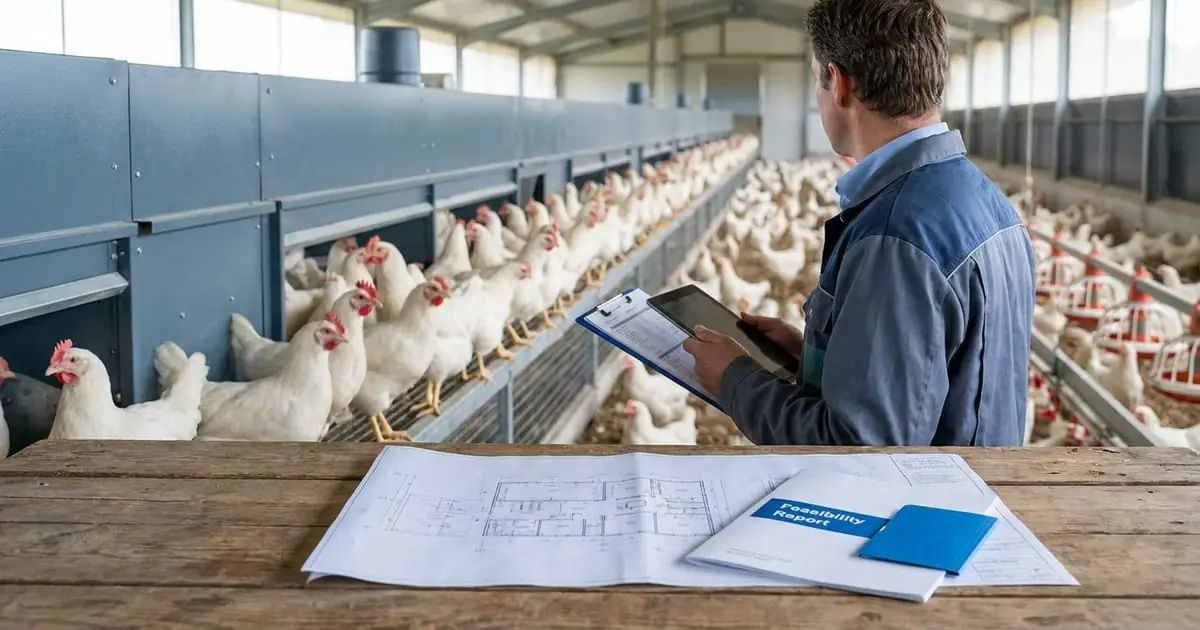
The global poultry market is a powerhouse of agricultural enterprise, experiencing robust and consistent growth. Projected to reach USD 521.95 billion in 2026, this sector is driven by the affordability of poultry products and strong consumer demand worldwide [1]. In the United States, broiler production alone is forecast to increase by 1% in 2026, nearing 9.4 billion heads, a testament to lower feed costs and continuous productivity enhancements [2].
For founders, business owners, consultants, and investors eyeing opportunities in this dynamic industry, a comprehensive poultry farm feasibility study is not just a formality; it's a critical tool. It serves as your strategic compass, helping to navigate opportunities, mitigate inherent risks, and ultimately secure the investment necessary to thrive in the 2026 landscape and beyond.
This guide provides a detailed framework for conducting a robust poultry farm feasibility study. We will cover essential components, from in-depth market analysis and realistic financial projections to operational risks, regulatory compliance, and the specific expectations of potential investors. Our aim is to equip you with the insights and tools needed to transform your vision into a viable, profitable poultry farming venture.
1. Introduction: Why a Poultry Farm Feasibility Study is Essential for 2026
The poultry industry stands as one of the most resilient and rapidly expanding sectors within agriculture. Its consistent growth trajectory makes it an attractive proposition for new ventures, yet success is far from guaranteed without meticulous planning. A well-executed poultry farm feasibility study provides the foundational analysis to determine the viability of a proposed project, identifying potential pitfalls and illuminating pathways to profitability.
In 2026, the industry continues to evolve, shaped by global economic shifts, technological advancements, and changing consumer preferences. A comprehensive feasibility study offers several critical advantages:
- Risk Mitigation: It identifies potential challenges early, allowing for proactive planning and the development of robust mitigation strategies. This is particularly vital in an industry susceptible to disease outbreaks and market volatility.
- Informed Decision-Making: By providing a clear, data-driven picture of market demand, operational requirements, and financial projections, it enables stakeholders to make strategic decisions based on facts, not assumptions.
- Securing Investment: Banks, private investors, and government lending programs require a detailed business plan underpinned by a thorough feasibility study. It demonstrates a deep understanding of the market and a clear path to return on investment.
- Optimized Resource Allocation: It helps in planning the most efficient use of capital, land, labor, and technology, preventing costly mistakes and maximizing operational efficiency from the outset.
- Regulatory Compliance: Navigating the complex web of federal, state, and local regulations is streamlined when compliance is integrated into the initial planning stages.
This guide will walk you through each critical component, ensuring your poultry farm feasibility study is thorough, accurate, and compelling for the opportunities and challenges of the coming years.
2. Market Analysis: Understanding the Poultry Landscape in 2026
A robust poultry farm feasibility study begins with a deep dive into the market. Understanding the current landscape and future trends is paramount to positioning your venture for success.
Global and Regional Market Trends
The global poultry market is on a significant upward trajectory. One projection estimates the market size to grow from USD 491.02 billion in 2025 to USD 521.95 billion in 2026, with a compound annual growth rate (CAGR) of 7.20% through 2034 [1]. Other estimates, while varying in specific figures, consistently point to substantial growth, reflecting poultry's position as a preferred protein source globally [3, 4].
Global poultry meat production is predicted to grow to 151.4 million metric tons (MT) in 2025 and is projected to increase by 14.5% to 173.4 million MT by 2034, according to the OECD/FAO Agricultural Outlook [5]. This growth is largely attributed to improved slaughter weights, strong global demand, lower overall production costs compared to other meats, and the adaptability of poultry farming to urbanizing populations, as highlighted by RaboResearch [6].
Regionally, the U.S. market remains robust. U.S. broiler production is forecast to increase by 1% in 2026, nearing 9.4 billion heads, supported by lower feed costs and continued productivity enhancements [2]. U.S. egg production is also expected to rebound significantly, increasing by 6% to 9.2 billion dozen in 2026, recovering from declines in previous years due to Highly Pathogenic Avian Influenza (HPAI) [7]. These trends underscore a resilient and growing domestic market.
Consumer Preferences and Demand Drivers
Consumer preferences are increasingly sophisticated. Americans consumed an estimated 104.5 pounds of chicken products per capita in 2025, reflecting sustained and growing demand [8]. However, beyond sheer volume, there's a significant shift towards health-conscious choices. This includes a rising demand for organic, free-range, antibiotic-free, and other specialized poultry products. Experts at RaboResearch refer to this as a "premiumization paradox," where the industry balances mass-market affordability with the demand for high-value, specialized offerings [6].
Animal welfare is another critical driver. By 2026, nearly 90% of broiler chickens are predicted to be raised in enhanced conditions, reflecting a growing emphasis on humane treatment, according to Ryan Bennett, Executive Director of the U.S. Roundtable for Sustainable Poultry & Eggs [9]. This trend is not just consumer-driven; corporate buyers and climate risks are also pushing for greater sustainability and outcomes-based animal welfare practices.
A successful poultry farm feasibility study must conduct granular local market analysis. This involves identifying specific consumer preferences in your target area, understanding local distribution channels, and pinpointing unique competitive advantages you can leverage. For example, a farm near an urban center might focus on direct-to-consumer sales of specialty eggs or processed chicken, while a more rural operation might target wholesale distribution to regional supermarkets or food service providers.
Competitive Landscape and Niche Opportunities
The competitive landscape varies significantly by region and scale. Large integrators dominate much of the commercial broiler and egg markets, but there are ample opportunities for smaller and medium-sized farms to carve out niches. These can include:
- Specialty Products: Organic, pasture-raised, free-range, heritage breeds, or specific cuts of meat.
- Direct-to-Consumer (D2C): Farmers' markets, farm stands, CSA (Community Supported Agriculture) models, or online sales.
- Local Food Systems: Supplying local restaurants, schools, or institutions that prioritize locally sourced ingredients.
- Value-Added Processing: Offering processed products like sausages, smoked poultry, or ready-to-cook meals.
Analyzing competitors involves understanding their pricing strategies, product offerings, distribution networks, and customer loyalty. Your poultry farm feasibility study should identify how your proposed venture will differentiate itself and capture a share of the market. This might involve superior product quality, unique branding, a focus on sustainability, or innovative distribution methods.
3. Operational Framework: Farm Models and Production Strategies
Defining your operational framework is a cornerstone of any robust poultry farm feasibility study. This section outlines the practical decisions regarding poultry type, scale, infrastructure, and crucial management protocols.
Choosing Your Poultry Type (Broilers, Layers, Turkeys)
The choice of poultry type fundamentally shapes your farm's operations and revenue model:
- Broilers (Meat Birds): Raised for meat, broilers have a rapid growth cycle (typically 6-9 weeks). They require specific housing, feed, and processing considerations. Profitability hinges on efficient feed conversion ratios and market demand for poultry meat.
- Layers (Egg-Laying Hens): Raised for egg production, layers have a longer productive lifespan (1-2 years). They require different housing systems (cages, cage-free barns, pastured), consistent feed, and careful egg collection and grading. The market for eggs can be volatile but offers daily revenue streams.
- Turkeys: Often raised for seasonal demand (e.g., Thanksgiving, Christmas), turkeys require more space and a longer growth period than broilers. They can offer higher per-bird revenue but may involve more specialized processing and marketing.
- Other Poultry: Ducks, geese, and specialty birds can cater to niche markets but often require specialized knowledge and infrastructure.
Your decision should align with your market analysis, capital availability, and operational expertise.
Scale of Operation: Small, Medium, or Large
A common misconception is that poultry farming requires a huge initial investment. In reality, poultry farming can be started on a small or medium scale with modest facilities, gradually expanding as the business grows and generates revenue. This allows new entrants to test the market, gain experience, and build capital incrementally. For instance, a small-scale layer operation might start with a few hundred birds in a backyard flock for local sales, while a medium-scale broiler farm might manage 10,000-20,000 birds per cycle in purpose-built houses.
- Small Scale: Often characterized by direct-to-consumer sales, lower capital investment, and more hands-on management. Focus on niche markets and premium pricing.
- Medium Scale: Balances efficiency with flexibility, potentially supplying local retailers and restaurants while maintaining some direct sales. Requires more structured infrastructure and management.
- Large Scale (Commercial): High capital investment, highly automated, focused on efficiency and volume. Typically supplies large processors or distributors.
Your poultry farm feasibility study should clearly define the intended scale and provide a realistic growth trajectory.
Key Infrastructure and Technology Considerations
Essential infrastructure forms the backbone of your poultry farm:
- Housing: This is paramount. Broiler houses require optimal ventilation, temperature control, and litter management. Layer houses vary from conventional cages to cage-free aviaries or pastured systems, each with specific requirements for nesting boxes, perches, and space.
- Ventilation Systems: Crucial for air quality, temperature regulation, and moisture control, impacting bird health and performance.
- Automated Feeding and Watering Systems: Improve efficiency, reduce labor costs, and ensure consistent access to feed and water, especially for larger operations.
- Waste Management Facilities: Proper handling of poultry litter (manure mixed with bedding) is vital for biosecurity, environmental compliance, and potential revenue (e.g., selling as organic fertilizer).
- Processing Equipment: Depending on your sales model, you may need on-farm processing equipment for slaughter, defeathering, evisceration, and packaging.
- Storage: Adequate facilities for feed, eggs, finished products, and equipment.
The poultry sector is increasingly adopting smart farming technologies, which are expected to increase productivity by up to 30% by 2026 [10]. Your poultry farm feasibility study should explore the integration of AI in supply chain management, precision agriculture tools (e.g., sensors for environmental monitoring), and automation technologies (e.g., robotic egg collection, automated climate control) to enhance efficiency and productivity.
Feed Management and Biosecurity Protocols
These two areas are non-negotiable for success:
- Feed Management: Feed represents 60-70% of total operational costs. A robust feed management plan includes sourcing high-quality, balanced feed, efficient storage to prevent spoilage, and strategies to minimize waste. Improving feed conversion ratios through genetics and management practices directly impacts profitability.
- Biosecurity Protocols: Implementing stringent biosecurity measures is a critical risk mitigation strategy to prevent disease outbreaks, such as Highly Pathogenic Avian Influenza (HPAI). Key protocols include:
- Restricted access to the farm premises.
- Strict sanitation procedures for personnel, vehicles, and equipment.
- Separation of flocks by age or health status.
- Effective pest and rodent control programs.
- Monitoring flock health daily and promptly isolating sick birds.
- Proper disposal of mortalities.
These operational details, thoroughly documented in your poultry farm feasibility study, demonstrate a practical understanding of running a successful and resilient operation.
4. Financial Projections: CAPEX, OPEX, and Revenue Models (2026 Dollars)
The financial section of your poultry farm feasibility study is where your vision meets economic reality. It quantifies the investment required, estimates ongoing costs, and projects potential earnings. All figures here are illustrative and should be meticulously adjusted based on your specific location, scale, and market conditions for 2026.
Capital Expenditure (CAPEX) Estimates for a New Farm
CAPEX represents the initial, one-time investments required to establish your farm. These estimates are highly variable:
- Land Acquisition/Lease: $5,000 - $50,000+ per acre. This is highly location-dependent, varying significantly between rural and semi-urban areas. Leasing land can reduce initial CAPEX.
- Housing Construction:
- Basic housing (e.g., pole barn for 10,000 broilers): $100,000 - $200,000.
- Automated, environmentally controlled housing (e.g., 20,000-bird broiler house): $250,000 - $400,000+.
- Layer barns (cage-free): Can range from $200,000 to $500,000+ depending on capacity and level of automation.
- Equipment: $50,000 - $250,000+. This includes feeders, waterers, ventilation systems, heating systems, egg collection systems (for layers), processing equipment (if applicable), and waste handling machinery.
- Initial Flock/Chicks: For 20,000 broiler chicks, expect $10,000 - $25,000. For layer pullets, costs will vary based on age and breed.
- Vehicles/Logistics: $15,000 - $100,000. This could include a pickup truck, feed delivery truck, or refrigerated transport for products.
- Utilities and Infrastructure: $2,000 - $15,000. Costs for well drilling, septic systems, electricity connection, and access roads.
- Permits, Licenses, and Professional Fees: $2,000 - $15,000. Legal, architectural, and consulting fees.
- Contingency: A crucial element, budget 10-15% of total CAPEX for unforeseen costs, delays, or price increases.
Operational Expenditure (OPEX) Projections
OPEX covers the ongoing costs of running the farm. These are typically projected per bird, per dozen eggs, or per cycle:
- Feed: This is the largest component, often 60-70% of total OPEX.
- Broiler feed cost: $0.75 - $1.30 per bird cycle (influenced by global grain prices). Lower feed prices in 2026 are improving profitability for many producers [11].
- Layer feed cost: Varies based on production stage and feed conversion ratio (e.g., $0.05 - $0.10 per dozen eggs).
- Labor: $0.12 - $0.35 per bird (or per dozen eggs). This includes wages for farmhands, managers, and any part-time staff. Automation can reduce this, but skilled labor remains essential.
- Utilities (Electricity, Water, Heating): $0.06 - $0.18 per bird. Costs are influenced by climate, housing insulation, and energy efficiency of equipment.
- Veterinary Care and Medication: $0.03 - $0.10 per bird. Essential for flock health and disease prevention.
- Chicks/Pullets: Cost of purchasing day-old chicks or ready-to-lay pullets for each cycle or flock replacement.
- Litter/Bedding Material: Sawdust, shavings, or other materials for housing.
- Maintenance and Repairs: $0.02 - $0.07 per bird. For equipment, housing, and vehicles.
- Insurance: Property, liability, and potentially crop/livestock insurance.
- Marketing and Sales: Costs associated with selling your products (packaging, transportation, advertising).
- Administrative Costs: Office supplies, accounting, professional memberships.
Revenue Streams and Pricing Strategies
Identifying and projecting your revenue streams is critical:
- Sales of Live Birds: For broilers sold directly to processors or other farmers.
- Sales of Dressed Meat: Whole chickens, cut-up parts, or processed products.
- Sales of Eggs: Table eggs, hatching eggs, or specialty eggs (e.g., organic, brown eggs).
- Poultry Litter: Can be sold as organic fertilizer, generating additional income and offsetting waste management costs.
Pricing strategies will depend on your market and product differentiation:
- Market-Based Pricing: Aligning prices with prevailing market rates for similar products.
- Cost-Plus Pricing: Adding a desired profit margin to your total cost of production.
- Value-Based Pricing: For niche products (e.g., organic, free-range, heritage breeds), you can command higher prices due to perceived value and quality.
Your poultry farm feasibility study must include detailed cash flow projections, profit & loss statements, and a balance sheet for at least the first three to five years, demonstrating financial viability and potential profitability.
5. Breakeven Analysis and Realistic Ramp-Up Curves: A Worked Example
Understanding your breakeven point and developing realistic ramp-up curves are vital components of any comprehensive poultry farm feasibility study. They provide clarity on when your investment will start generating profit and how long it will take to reach full operational capacity.
Understanding Breakeven Point
The breakeven point is the volume of sales (in birds, dozens of eggs, or revenue dollars) at which your total costs equal your total revenue, resulting in zero net profit or loss. Operating above this point means you are profitable; below it, you are incurring losses. Knowing your breakeven point helps set sales targets and understand the minimum viable production volume.
The basic formula for calculating the breakeven point in units is:
Breakeven Point (Units) = Fixed Costs / (Revenue per Unit - Variable Cost per Unit)
Where:
- Fixed Costs: Expenses that do not change with the level of production (e.g., rent, insurance, salaries for management, depreciation of equipment).
- Variable Costs: Expenses that vary directly with the level of production (e.g., feed, chicks, veterinary supplies, labor directly tied to production volume).
- Revenue per Unit: The selling price of one bird or one dozen eggs.
- Contribution Margin per Unit: The amount each unit sold contributes towards covering fixed costs (Revenue per Unit - Variable Cost per Unit).
Realistic Production Ramp-Up
It is unrealistic to expect a new poultry farm to operate at full capacity and efficiency from day one. A realistic ramp-up curve accounts for several factors:
- Initial Lower Yields: New flocks may have slightly lower initial production or growth rates as management practices are refined.
- Learning Curves: Staff and management will need time to become fully proficient with new equipment, systems, and biosecurity protocols.
- Market Penetration: Building customer relationships and establishing distribution channels takes time.
- Infrastructure Completion: Construction and equipment installation may extend beyond initial estimates.
Typically, a new poultry farm might take 6 to 18 months to reach near-full operational capacity and efficiency, depending on its scale and complexity. Your financial projections must reflect this gradual increase in production and sales.
Worked Financial Example (Illustrative Small-to-Medium Broiler Farm - 2026 Dollars)
Let's consider a hypothetical broiler farm aiming for 10,000 birds per production cycle, with 5 cycles per year.
Assumptions (Illustrative for 2026):
- Average live weight per bird at slaughter: 5.5 lbs
- Average selling price per lb (live, wholesale): $1.10
- Variable cost per bird (feed, chick, vet, utilities, direct labor): $1.60
- Annual Fixed Costs (management salary, rent/lease, insurance, depreciation of housing/equipment, administrative): $75,000
Calculations:
- Revenue per bird: 5.5 lbs * $1.10/lb = $6.05
- Contribution Margin per bird: $6.05 (Revenue) - $1.60 (Variable Cost) = $4.45
- Annual Production Capacity: 10,000 birds/cycle * 5 cycles/year = 50,000 birds
- Breakeven in Birds: $75,000 (Annual Fixed Costs) / $4.45 (Contribution Margin per bird) = ~16,854 birds
- Breakeven in Cycles: 16,854 birds / 10,000 birds/cycle = ~1.69 cycles.
This means, under these assumptions, the farm would break even during its second production cycle within the first year of operation. This calculation provides a crucial benchmark for evaluating the financial viability of your poultry farm feasibility study.
Sensitivity Analysis:
It is crucial to perform sensitivity analysis. How do fluctuations in key variables impact your breakeven point and overall profitability? For example:
- Impact of a $0.10/bird increase in feed prices:
- New Variable Cost per bird: $1.70
- New Contribution Margin: $6.05 - $1.70 = $4.35
- New Breakeven in Birds: $75,000 / $4.35 = ~17,241 birds (an increase of 387 birds).
- Impact of a $0.05/lb decrease in selling prices:
- New Selling Price per lb: $1.05
- New Revenue per bird: 5.5 lbs * $1.05/lb = $5.775
- New Contribution Margin: $5.775 - $1.60 = $4.175
- New Breakeven in Birds: $75,000 / $4.175 = ~17,964 birds (an increase of 1,110 birds).
This analysis reveals the significant impact of feed costs and market prices on profitability, highlighting areas where risk mitigation strategies (e.g., forward contracts for feed, diversified sales channels) are most critical. Including such detailed analysis in your poultry farm feasibility study demonstrates a thorough understanding of financial risks and opportunities.
6. Critical Risk Assessment and Mitigation Strategies
Every business venture carries risks, and poultry farming is no exception. A robust poultry farm feasibility study must comprehensively identify potential threats and outline proactive mitigation strategies. This demonstrates foresight and preparedness to investors and stakeholders.
Disease Outbreaks (e.g., HPAI)
Risk: Disease outbreaks, such as Highly Pathogenic Avian Influenza (HPAI), remain a significant threat to poultry flocks, leading to high mortality rates, culling, and significant economic losses. The U.S. has experienced severe HPAI outbreaks in recent years, impacting egg and turkey production [7].
Mitigation:
- Strict Biosecurity Protocols: As detailed in Section 3, implement and rigorously enforce measures like restricted access, sanitation, pest control, and proper disposal of mortalities.
- Vaccination Programs: Where available and appropriate, implement vaccination programs to protect against common diseases.
- Flock Health Monitoring: Daily observation of birds, prompt isolation of sick individuals, and rapid diagnostic testing.
- Comprehensive Insurance Policies: Obtain insurance specifically covering livestock loss due to disease outbreaks.
- Contingency Planning: Develop a clear action plan for responding to an outbreak, including communication protocols with veterinary authorities.
Market Price Volatility and Feed Cost Fluctuations
Risk: Poultry product prices (meat, eggs) can fluctuate due to supply and demand imbalances, seasonal variations, and economic factors. Simultaneously, feed costs, which constitute 60-70% of OPEX, are subject to volatility based on global grain markets, weather patterns, and geopolitical events.
Mitigation:
- Diversify Sales Channels: Sell to multiple buyers (e.g., direct-to-consumer, HRI, retail, wholesale) to reduce reliance on any single market segment.
- Explore Forward Contracts: Secure pricing for future feed deliveries or product sales to hedge against price swings.
- Focus on Value-Added Products: Differentiate your products (e.g., organic, processed items) to command higher, more stable prices and capture higher margins.
- Improve Feed Conversion Ratios (FCR): Optimize genetics, nutrition, and environmental conditions to maximize weight gain per unit of feed consumed.
- Bulk Purchasing: Buy feed in larger quantities when prices are favorable, if storage allows.
Regulatory Changes and Compliance Risks
Risk: The poultry industry is heavily regulated, and changes in federal, state, or local laws (e.g., animal welfare, environmental, food safety) can impose new costs, operational requirements, or restrictions. The USDA Packers and Stockyards Act (P&S Act) has seen proposed rule changes in June 2024 aimed at ensuring fairness in broiler grower payments and capital improvement requests, which could impact contract growers [12].
Mitigation:
- Stay Informed: Actively monitor regulatory bodies (USDA, EPA, state agricultural departments) for proposed changes.
- Legal Counsel: Engage legal or consulting expertise to ensure full compliance with all relevant regulations.
- Proactive Compliance: Design farm operations to exceed minimum standards where feasible, anticipating future regulatory trends (e.g., enhanced animal welfare, sustainable practices).
- Industry Association Membership: Leverage resources and advocacy efforts of industry groups like the U.S. Poultry & Egg Association.
Environmental and Sustainability Challenges
Risk: Poultry farms can face scrutiny regarding their environmental footprint, including manure management, water usage, and greenhouse gas emissions. Non-compliance with environmental regulations can lead to fines and reputational damage.
Mitigation:
- Robust Manure Management Plans: Implement systems for composting, anaerobic digestion, or selling poultry litter as organic fertilizer to minimize environmental impact and potentially generate revenue.
- Water Conservation Practices: Utilize efficient watering systems, rainwater harvesting, and wastewater treatment where possible.
- Energy Efficiency and Renewable Energy: Invest in energy-efficient lighting, ventilation, and consider solar panels or other renewable energy sources to reduce operational costs and carbon footprint.
- Site Selection: Choose a location that minimizes environmental impact and aligns with local land use regulations.
Labor and Supply Chain Disruptions
Risk: Labor shortages, particularly for skilled farmhands or processing plant workers, can impact operational efficiency. Disruptions in the supply chain (e.g., feed, chicks, equipment parts) can lead to delays and increased costs.
Mitigation:
- Competitive Wages and Benefits: Offer attractive compensation packages to recruit and retain skilled staff.
- Training and Development: Invest in continuous training programs to enhance employee skills and loyalty.
- Automation: Where feasible, invest in automated systems to reduce reliance on manual labor for routine tasks.
- Diversify Suppliers: Establish relationships with multiple feed suppliers, chick hatcheries, and equipment vendors to reduce single-point failure risks.
- Maintain Inventory: Keep a strategic inventory of critical supplies to buffer against short-term disruptions.
By thoroughly addressing these risks in your poultry farm feasibility study, you demonstrate a comprehensive understanding of the challenges and a strategic approach to navigating them, instilling confidence in your venture's long-term viability.
7. Regulatory and Licensing Requirements for Poultry Farms
Navigating the regulatory landscape is a critical component of any poultry farm feasibility study. Compliance with federal, state, and local requirements is non-negotiable for legal operation and long-term success.
Federal Regulations (USDA, P&S Act)
The U.S. Department of Agriculture (USDA) plays a central role in regulating the poultry industry:
- Packers and Stockyards Act (P&S Act): This act ensures fair business practices and competitive environments in the livestock, meat, and poultry industries. In June 2024, the USDA proposed significant updates to the P&S Act regulations. These proposed rules aim to address unfairness and deception in broiler grower payments, tournament operations, and capital improvement systems [12]. Key aspects include:
- Eliminating pay deductions or discounts from the base price in contracts for broiler chicken growers paid by a poultry grower ranking (tournament) system.
- Requiring live poultry dealers (LPDs) to adopt policies and procedures for operating a fair ranking system for broiler growers and establish a duty of fair comparison.
- Mandating disclosure requirements when broiler growers are requested or required to make additional capital investments (ACIs), including the purpose and justification for the improvement.
If you plan to operate as a contract grower, understanding these proposed changes is paramount for your poultry farm feasibility study.
- Food Safety and Inspection Service (FSIS): For farms involved in processing and selling meat, FSIS regulations govern slaughter, processing, and labeling to ensure product safety.
- Hormone Use: It's a common misconception that poultry are given hormones. The addition of hormones to poultry is prohibited by government regulation in the U.S. and has been banned by the USDA since the 1950s [13].
- Antibiotic Use: Another misconception is that poultry meat contains antibiotic residues. Federal rules require that any antibiotics used must clear the animals' systems before poultry leaves the farm, ensuring meat is antibiotic-free [14].
- On-Farm Processing Exemptions: Federal regulations allow producers under specific 1,000-bird and 20,000-bird exemptions to sell in intrastate commerce to hotels, restaurants, institutions (HRI), retail stores, and direct-to-consumer. States have the option to adopt these exemptions, providing pathways for smaller producers to process and sell their products without full federal inspection [15].
State and Local Permitting and Zoning
Beyond federal requirements, state and local regulations are crucial:
- Zoning Approvals: Your chosen farm location must be zoned for agricultural use, specifically for poultry operations. This often involves discussions with local planning and zoning boards.
- Environmental Permits: Depending on the scale and location, you may need permits for waste discharge (e.g., manure runoff), air quality (odor control), and water usage. The Environmental Protection Agency (EPA) and state environmental protection departments oversee these.
- Business Licenses: General business licenses are typically required at the state or county level.
- Building Permits: For new construction or significant renovations of poultry houses and other farm structures.
- Animal Welfare Certifications: While not always legally mandated, specific certifications (e.g., Certified Humane, Global Animal Partnership) may be required by certain buyers or preferred by consumers.
It is essential to contact your local county extension office, planning department, and state department of agriculture early in your poultry farm feasibility study process to understand all applicable requirements.
Animal Welfare and Food Safety Standards
Adherence to animal welfare and food safety standards is not only a regulatory requirement but also increasingly a market expectation:
- Animal Welfare: While baseline standards exist, many consumers and corporate buyers demand higher welfare practices. Your farm's operational plan should detail how it will meet or exceed these expectations, covering aspects like housing space, enrichment, and humane handling.
- Food Safety: Beyond federal inspection for processing, on-farm practices like proper egg handling, feed storage, and biosecurity contribute directly to food safety. Implementing a Hazard Analysis and Critical Control Points (HACCP) plan, even if not strictly mandated for your scale, is a best practice.
Financial Assistance Programs (USDA FSA)
The USDA Farm Service Agency (FSA) offers various direct lending programs that can be vital for new and established poultry farmers:
- Direct Farm Ownership Loans: Up to $600,000 to help eligible family farmers purchase or enlarge a farm, construct or improve buildings, or make other farm improvements.
- Direct Farm Operating Loans: Up to $400,000 to assist with day-to-day operating expenses, such as feed, livestock, equipment, and other production costs.
- Down Payment Loans: Specifically designed to help beginning farmers and ranchers make a down payment on a farm.
Eligibility for these programs typically requires being a family farmer, demonstrating farm management experience, proving sufficient income to repay the loan, and being unable to obtain sufficient credit elsewhere [16]. Exploring these options should be a key part of the financial planning in your poultry farm feasibility study.
Thoroughly documenting all applicable regulatory and licensing requirements in your poultry farm feasibility study demonstrates diligence and minimizes the risk of costly delays or legal issues down the line.
8. What Bankers and Investors Look For in a Poultry Farm Business Plan
Your poultry farm feasibility study is the foundation upon which your business plan is built. When presenting this plan to bankers and investors, they are looking for specific indicators of viability, management capability, and return on investment. Understanding these expectations is crucial for securing funding.
Robust Financial Projections and ROI
This is often the first and most scrutinized section. Investors want to see clear, conservative, and well-substantiated financial projections. This includes:
- Detailed CAPEX and OPEX: As outlined in Section 4, broken down and justified.
- Cash Flow Statements: Projecting monthly and annual cash inflows and outflows for at least 3-5 years, demonstrating liquidity.
- Profit & Loss Statements: Showing projected revenues, costs, and net profit.
- Balance Sheet: Outlining assets, liabilities, and equity.
- Return on Investment (ROI) and Net Present Value (NPV) Analysis: Clearly demonstrating the expected financial returns and the project's long-term value. Avoid overly optimistic projections; conservative estimates build credibility.
- Breakeven Analysis: As discussed in Section 5, showing when the business will become profitable.
Our team at SimpleFeasibility, with backgrounds in corporate finance and venture investment, consistently advises founders to stress-test their financial models. Show how your projections hold up under various scenarios, such as a 10% increase in feed costs or a 5% decrease in selling prices.
Demonstrated Market Understanding
Investors need assurance that there's a real market for your products. Your poultry farm feasibility study must provide:
- Evidence of Strong Demand: Supported by local or regional data, not just global trends.
- Clear Understanding of the Competitive Landscape: Who are your competitors, and how will you differentiate?
- Identified Niche Markets: If applicable (e.g., organic, specialty products, direct-to-consumer), demonstrate the size and growth potential of these segments.
- Marketing and Sales Strategy: A clear plan for how you will reach your target customers and generate sales.
Management Team Expertise
Banks and investors fund people as much as ideas. They want to see a credible team:
- Proven Experience: Highlight any direct experience in poultry farming, agricultural management, or relevant business operations.
- Relevant Skills: Demonstrate expertise in areas like finance, marketing, operations, and human resources.
- Advisory Board: If you lack direct experience, a strong advisory board with seasoned poultry industry experts can significantly enhance your credibility.
- Commitment: Show your personal dedication and understanding of the demanding nature of farming.
Comprehensive Risk Mitigation
As detailed in Section 6, investors want to know you've thought through potential challenges and have plans to address them:
- Identification of Key Risks: Disease, market volatility, feed costs, regulatory changes, environmental impacts, labor shortages.
- Detailed Mitigation Strategies: Specific, actionable plans for each identified risk. This demonstrates foresight and preparedness, crucial for long-term resilience.
- Insurance Coverage: Evidence of appropriate insurance policies.
Sustainability and Scalability
Modern investors are increasingly focused on the long-term viability and ethical considerations of a business:
- Environmental Stewardship: Commitment to responsible manure management, water conservation, and energy efficiency.
- Animal Welfare: Adherence to or exceeding industry animal welfare standards.
- Social Impact: Contribution to local employment, food security, or community development.
- Growth Strategy: A clear vision for future growth, potential expansion, and how the business can scale profitably. This shows long-term vision beyond the initial setup.
By meticulously addressing these areas in your poultry farm feasibility study and subsequent business plan, you significantly increase your chances of attracting the necessary capital to launch and grow your poultry farming venture.
9. Conclusion: Your Strategic Path Forward
Embarking on a poultry farming venture in 2026 presents a compelling opportunity, underpinned by consistent global demand and evolving consumer preferences. However, as with any significant investment, success hinges on meticulous planning and a deep understanding of the industry's nuances.
A meticulously crafted poultry farm feasibility study is the cornerstone of a successful venture, transforming ambition into a viable, actionable business plan. It serves not merely as a document, but as a strategic roadmap that guides every decision, from initial capital outlay to daily operational protocols.
By thoroughly analyzing market dynamics, projecting realistic financials grounded in 2026 economic realities, addressing operational risks with proactive mitigation strategies, and understanding the complex regulatory landscape, you position your poultry farm for resilience and profitability. This comprehensive approach not only safeguards your investment but also instills confidence in potential financial partners.
Leverage this guide as a robust framework, but always remember to supplement it with localized research, expert consultations, and a commitment to continuous improvement. The poultry industry is dynamic, and adaptability will be key to long-term success. With a well-executed poultry farm feasibility study, you are not just planning a farm; you are laying the groundwork for a thriving, sustainable business that contributes to global food security.
10. Frequently Asked Questions (FAQ)
Is poultry farming profitable in 2026?
Yes, with strategic planning, efficient operations, and adaptation to market trends (e.g., sustainability, niche products), poultry farming remains a profitable venture. Lower feed costs and strong consumer demand are positive factors for 2026.
How much land is needed for a poultry farm?
This varies significantly. Small-scale operations can start with a few acres, while large commercial farms may require 20+ acres for housing, feed storage, waste management, and buffer zones. The specific type of poultry and housing system (e.g., pastured vs. confined) also impacts land requirements.
Are hormones used in U.S. poultry production?
No, the use of hormones in poultry is prohibited by federal regulations in the U.S. and has been banned by the USDA since the 1950s. Rapid growth in poultry is due to scientific improvements in selective breeding, balanced nutrition, and a stress-free environment.
What are the biggest risks for a new poultry farm?
Key risks include disease outbreaks (like HPAI), volatility in feed prices, market price fluctuations for poultry products, and evolving environmental and animal welfare regulations. Labor shortages and supply chain disruptions are also significant concerns that require robust mitigation strategies.
Can I start a poultry farm with a small investment?
Yes, poultry farming can be scaled. Starting with a smaller flock and basic facilities, then expanding as the business generates revenue, is a common and viable approach. USDA Farm Service Agency (FSA) loans can also assist eligible beginning farmers with capital and operating expenses.
What permits and licenses are required for a poultry farm?
Requirements vary by state and locality but typically include zoning permits, environmental permits (for waste management, air quality), general business licenses, and compliance with USDA food safety and animal welfare standards. Specific on-farm processing exemptions may also apply, allowing smaller producers to sell directly to consumers and local businesses.
How long does it typically take for a poultry farm to break even?
A realistic breakeven period for a new poultry farm is generally 1 to 3 years. This timeframe depends on the initial investment, operational efficiency, scale of the operation, prevailing market conditions, and the specific poultry type (broilers typically have faster production cycles and thus potentially quicker returns than layers).
Sources & References
- Fortune Business Insights. (2023). Poultry Market Size, Share & COVID-19 Impact Analysis. Retrieved from Fortune Business Insights
- U.S. Department of Agriculture (USDA). (2025). Livestock, Dairy, and Poultry Outlook. (Forecast for 2026).
- Market Data Forecast. (2023). Global Poultry Market Size, Share, Trends, & Opportunities.
- Research and Markets. (2023). Global Poultry Market Report 2023-2030.
- Organisation for Economic Co-operation and Development (OECD) / Food and Agriculture Organization (FAO). (2024). OECD-FAO Agricultural Outlook 2024-2033.
- RaboResearch. (2023). Global Animal Protein Outlook 2024.
- U.S. Department of Agriculture (USDA). (2025). Livestock, Dairy, and Poultry Outlook. (Egg production forecast for 2026).
- National Chicken Council. (2025). Per Capita Consumption of Poultry and Livestock.
- Bennett, Ryan. (2024). Executive Director of the U.S. Roundtable for Sustainable Poultry & Eggs and the International Poultry Welfare Alliance. (Expert Insight).
- Cognitive Market Research. (2023). Smart Farming Market Size, Share, Trends, & Forecast.
- Expert Insight: Lower feed prices contributing to improved profitability. (General industry observation, e.g., RaboResearch reports).
- U.S. Department of Agriculture (USDA). (June 2024). Proposed Rule: Transparency in Broiler Grower Contracting. (Packers and Stockyards Act).
- National Chicken Council. (n.d.). Chicken & Hormones. Retrieved from National Chicken Council
- National Chicken Council. (n.d.). Antibiotics in Chicken. Retrieved from National Chicken Council
- U.S. Department of Agriculture (USDA). (n.d.). Poultry Processing Exemptions.
- U.S. Department of Agriculture (USDA) Farm Service Agency (FSA). (n.d.). Direct Farm Loans. Retrieved from USDA FSA
About the Author
The SimpleFeasibility Editorial Team comprises seasoned professionals with extensive backgrounds in corporate finance, venture investment, and small business advisory. Each article undergoes a rigorous peer-review process to ensure technical accuracy and practical relevance for founders, consultants, and investors worldwide.