A Complete Greenhouse Feasibility Study Guide: Your Roadmap to Profitable Cultivation
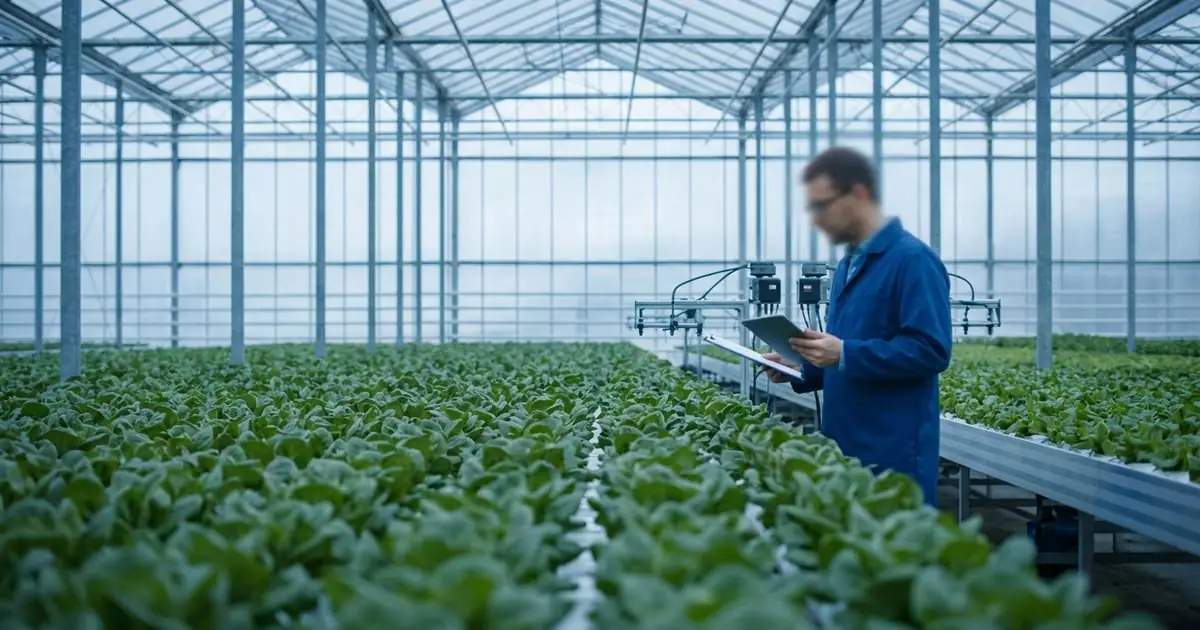
The allure of controlled environment agriculture (CEA) is undeniable. It offers the promise of consistent yields, reduced resource consumption, and year-round production, regardless of external climate challenges.
As the global commercial greenhouse market continues its impressive expansion, projected to grow from USD 41.87 billion in 2026 to USD 96.13 billion by 2034 at a compound annual growth rate (CAGR) of 10.95% (Fortune Business Insights, 2023), the opportunities for new ventures are significant. However, beneath this promise lies a complex landscape demanding rigorous planning.
This is precisely where a comprehensive **greenhouse feasibility study** becomes not just beneficial, but non-negotiable for anyone considering a greenhouse startup feasibility assessment. It's the foundational step for any successful greenhouse business feasibility endeavor.
1. Introduction: Why a Greenhouse Feasibility Study is Non-Negotiable
Embarking on a greenhouse farming venture without a thorough understanding of its viability is akin to setting sail without a map. Initial enthusiasm can quickly be tempered by unforeseen costs, operational hurdles, or market miscalculations.
A well-executed **greenhouse feasibility study** serves as your essential navigational tool. It guides you through the intricate details of establishing a successful operation, ensuring you understand the full scope of your greenhouse business feasibility.
Defining a Feasibility Study for Greenhouse Ventures
At its core, a feasibility study is an in-depth analysis designed to validate a business concept. For greenhouse ventures, this means assessing every facet of the proposed farm—technical, economic, legal, operational, and scheduling viability—before significant capital is committed.
It's a systematic evaluation that answers the fundamental question: "Is this greenhouse project viable and sustainable, and if so, how?" Our team at SimpleFeasibility understands that this foundational step provides the clarity needed to proceed with confidence or, equally important, to identify insurmountable obstacles early in your greenhouse startup feasibility journey.
The Critical Role of Planning in Controlled Environment Agriculture (CEA)
Greenhouse farming, a key component of CEA, is inherently complex. It involves specialized infrastructure, sophisticated environmental controls, precise cultivation techniques, and intricate supply chain logistics.
Unlike traditional open-field agriculture, the capital expenditure (CAPEX) and operational expenditure (OPEX) can be substantial. This demands detailed analysis to mitigate risks and secure necessary funding.
For founders, business owners, consultants, and investors evaluating new business opportunities, this guide offers a practical roadmap to navigate these complexities. It ensures that every decision for your protected agriculture feasibility is informed by data and expert insights, making a comprehensive **greenhouse feasibility study** indispensable.
2. The Thriving Greenhouse Market: Trends, Opportunities, and Growth Drivers
The global greenhouse market is a dynamic and rapidly expanding sector. It's driven by increasing demand for fresh produce, technological advancements, and a growing focus on food security and sustainable agriculture.
Understanding these market dynamics is crucial for any aspiring greenhouse operator undertaking a greenhouse business feasibility assessment.
Global Market Outlook and Regional Dominance
The commercial greenhouse market is experiencing robust growth. As noted, it's projected to reach USD 41.87 billion in 2026 and surge to USD 96.13 billion by 2034, demonstrating a strong CAGR of 10.95% (Fortune Business Insights, 2023).
The high-end greenhouse market, focusing on advanced technology and infrastructure, is also on a significant upward trajectory. It was valued at USD 2.11 billion in 2025 and is expected to grow from USD 2.27 billion in 2026 to approximately USD 4.36 billion by 2035, with a CAGR of 7.53% (Precedence Research, 2023).
Geographically, the market exhibits distinct areas of strength. Europe held a substantial 17.13% market share in the global commercial greenhouse market in 2025, while Asia Pacific dominated the high-end segment with 38% in the same year.
Looking ahead, North America is estimated to be the fastest-growing region for high-end greenhouses between 2026 and 2035 (Precedence Research, 2023). This regional growth is often fueled by local demand, government support, and technological adoption rates, all critical factors in any greenhouse feasibility study.
Key Crop Segments and Cultivation Methods
In terms of crop types, vegetables continue to dominate the market, accounting for over 42% market share in both the high-end and commercial greenhouse markets in 2025. The combined vegetables and fruits segment within the commercial greenhouse market is projected to reach approximately USD 50.07 billion by 2034, growing at a CAGR of about 10.67% from USD 20.12 billion in 2025 (Fortune Business Insights, 2023).
This highlights the enduring consumer demand for fresh, high-quality produce. Cultivation methods are also evolving. Hydroponics, a soilless farming technique, is projected to be the fastest-growing segment within the smart greenhouse market from 2026 to 2033 (Precedence Research, 2023).
This growth is driven by its efficiency in water and nutrient use, higher yields, and reduced land requirements. These trends are vital considerations for a hydroponic farm feasibility assessment.
Emerging Trends Shaping the 2026 Landscape
Expert insights for 2026 reveal several critical trends. NIP Group (2023) predicts a shift towards retrofitting aging greenhouse infrastructure rather than solely focusing on new construction. This includes phasing in advanced lighting controls, sensors, and automation software to cut costs and improve efficiency.
Agritecture (2023) highlights the first large-scale integration of vertical farming into retailer supply chains. This enables retailers to capture supplier margins and align with their own-brand ambitions and ESG (Environmental, Social, Governance) obligations.
Another innovative trend identified by Agritecture (2023) is the co-location of large, high-tech greenhouse clusters with data centers in the U.S. This creates ecosystems where agriculture and digital infrastructure share energy flows, climate control, and water systems, fostering climate-smart planning.
Furthermore, extreme weather events are increasingly driving protected fruit crops, such as figs, passionfruit, table grapes, and berries, into greenhouses in regions like Brazil during hot, rainy months (Agritecture, 2023). This necessitates robust greenhouse designs and climate-smart technology, underscoring the resilience and adaptability offered by controlled environments and reinforcing the need for a thorough **greenhouse feasibility study**.
3. Capital Expenditures (CAPEX): Your Initial Investment (2026 Projections)
Understanding the initial investment, or CAPEX, is a cornerstone of any robust **greenhouse feasibility study**. These costs are highly variable, depending on the scale, technology level, crop choice, and geographic location of your operation.
The following 2026 projections offer realistic ranges for a commercial greenhouse farm, crucial for assessing greenhouse startup feasibility.
Land Acquisition and Site Preparation
The cost of land can fluctuate dramatically. Raw agricultural land might be less expensive than developed plots with existing infrastructure. Site preparation involves clearing, grading, drainage, and utility hookups.
- **Land & Site Prep:** $10,000 - $100,000+ per acre. This range depends heavily on whether you're acquiring raw land or a partially developed site, and the extent of necessary grading, drainage, and access road construction.
Greenhouse Structure and Covering Materials
The choice of greenhouse structure and covering material significantly impacts both initial cost and long-term operational efficiency. Here's a comparison:
| Material Type | Cost per sq ft (2026 est.) | Key Characteristics |
|---|---|---|
| **Film/Polyethylene (Hoophouse)** | $3 - $10 | Most economical, suitable for seasonal growing or less demanding crops. |
| **Polycarbonate** | $15 - $30 | Better insulation and durability than film, good light diffusion. |
| **Glass** | $30 - $70+ | Superior light transmission and longevity, often for high-tech, year-round operations. |
The glass segment is predicted to witness the highest CAGR of 11.7% from 2025 to 2033 in the North American commercial greenhouse market (Dimension Market Research, 2023), indicating its growing adoption.
For perspective, a 1-acre (43,560 sq ft) greenhouse structure could range from approximately $130,000 (for a basic film hoophouse) to over $3,000,000 (for a high-end glass structure) for the structure alone.
Environmental Control and Irrigation Systems
These systems are critical for maintaining optimal growing conditions and maximizing yields, essential for any protected agriculture feasibility assessment.
- **Environmental Control:** Heating, cooling, ventilation, CO2 enrichment, and energy screens (Climate Screens). Costs range from $5 - $25 per sq ft. Specific requirements vary significantly based on climate and crop needs.
- **Irrigation Systems:** This includes hydroponic setups (Nutrient Film Technique (NFT), Deep Water Culture (DWC), Drip irrigation) or recirculating systems. Expect $3 - $15 per sq ft, influenced by the chosen technology and scale.
- **Lighting:** Supplemental LED or High-Pressure Sodium (HPS) lighting. Essential for year-round production or specific crop needs, costing $5 - $20 per sq ft. Expert insights from NIP Group (2023) highlight the trend of phasing in advanced lighting controls as part of retrofitting aging infrastructure in 2026.
Automation, Utilities, and Ancillary Equipment
Modern greenhouse operations increasingly rely on technology for efficiency, a key factor in greenhouse business feasibility.
- **Automation & Technology:** Sensors, climate controllers, and even robotics. Initial setup costs can range from $2 - $10 per sq ft. Expert insights predict the integration of multifunctional robots will continue to improve efficiency in 2026 (AgriMarketing.com, 2023).
- **Utilities & Infrastructure:** Electrical upgrades, water storage tanks, pumps, and plumbing. This can be a substantial cost, estimated at $50,000 - $500,000+, depending on existing infrastructure and the scale of your operation.
- **Processing/Packing Equipment:** Washing, sorting, and packaging lines. These are crucial for post-harvest handling and market readiness, ranging from $20,000 - $200,000+.
- **Soft Costs:** Permits, engineering fees, architectural designs, and consulting services typically account for 5-15% of the total CAPEX. These are essential for ensuring compliance and optimal design.
A thorough **greenhouse feasibility study** will break down these costs with granular detail, tailored to your specific project, providing a clear picture for your greenhouse startup feasibility.
4. Operational Expenditures (OPEX): Running Your Farm Day-to-Day (2026 Projections)
Beyond the initial investment, understanding your ongoing operational expenditures (OPEX) is crucial for projecting profitability and ensuring long-term sustainability. These are the costs incurred to keep your greenhouse farm running day-to-day.
Labor Costs and Workforce Strategy
Labor typically represents the largest component of OPEX for most greenhouse operations, a critical aspect of any **greenhouse feasibility study**.
- **Labor:** General labor for planting, harvesting, and maintenance might cost $15 - $25+ per hour, while skilled labor or management could range from $25 - $50+ per hour.
DTN Progressive Farmer (2023) highlights that "labor remains a structural challenge despite a cooling market, with long-term shortages expected without broader immigration reform." This emphasizes the need for a robust workforce strategy, including competitive wages, employee retention programs, cross-training, and strategic investment in automation to mitigate shortages for your greenhouse startup feasibility.
Energy, Water, and Nutrient Consumption
These are the lifeblood of a controlled environment, but also significant cost drivers for protected agriculture feasibility.
- **Energy:** Heating, cooling, and lighting are highly variable based on climate, crop type, greenhouse technology, and energy efficiency. Annual costs can range from $0.50 - $3.00+ per sq ft.
It's vital to explore energy efficiency rebates and incentive programs, which are available from utility suppliers in various regions (e.g., Michigan, Oregon, Massachusetts) for upgrades like energy-efficient lighting and heating systems (U.S. Department of Energy, 2023; Michigan State University Extension, 2023). The co-location of greenhouses with data centers for shared energy flows, as highlighted by Agritecture (2023), also presents an innovative strategy for energy cost reduction.
- **Water & Nutrients:** Modern hydroponic systems are remarkably efficient. Costs for water and nutrients are significantly lower than traditional field farming, typically $0.05 - $0.20 per sq ft annually, making them a strong point in a hydroponic farm feasibility assessment.
Consumables, Maintenance, and Insurance
These categories cover the ongoing needs for crop production and facility upkeep.
- **Consumables:** This includes seeds or starts, growing media, packaging materials, and Integrated Pest Management (IPM) supplies. Expect $0.10 - $0.50 per sq ft per crop cycle.
- **Maintenance & Repairs:** Regular upkeep of the greenhouse structure (e.g., replacement of glass or polycarbonate panels, especially given the glass segment's 11.7% CAGR (Dimension Market Research, 2023)), environmental control systems, and irrigation equipment. Budget 1-3% of your initial CAPEX annually for maintenance.
- **Insurance:** Property, liability, and crop insurance are essential for risk mitigation. Annual costs are typically $0.05 - $0.15 per sq ft.
- **Marketing & Sales:** Costs associated with distribution, branding, and promotional activities can be 5-15% of your total revenue, depending on your market strategy.
- **Administrative:** Software subscriptions, office supplies, and costs associated with obtaining and maintaining industry certifications such as SCS Global Services, Food Alliance, or EcoVadis.
It’s important to acknowledge that "Input costs for growers are projected to jump another 3.7% in 2026, after a modest 1.6% increase in 2025," making astute margin management and pricing strategies crucial for profitability (DTN Progressive Farmer, 2023). A detailed **greenhouse feasibility study** will provide a realistic picture of these fluctuating costs for your greenhouse business feasibility.
5. Revenue Models & Pricing Strategies for Greenhouse Produce
A successful greenhouse farm requires not only efficient production but also a clear understanding of how to market and sell its produce for optimal profitability. This involves identifying your target market, choosing appropriate distribution channels, and implementing effective pricing strategies, all part of a robust **greenhouse feasibility study**.
Identifying Your Target Market and Distribution Channels
Your target market will largely dictate your distribution channels and pricing. Common models include:
- **Direct-to-Consumer (D2C):** Selling directly to end-users through farmers' markets, Community Supported Agriculture (CSA) subscriptions, or on-farm stands. This often yields higher margins but requires significant marketing and labor for sales.
- **Wholesale:** Supplying grocery stores, restaurants, food service institutions, or distributors. This offers larger volume sales but typically at lower per-unit prices.
- **Specialty Markets:** Focusing on niche segments such as organic produce, hydroponically grown items, or unique, high-value varieties. These markets can command premium prices.
Agritecture (2023) highlights the increasing integration of vertical farming into retailer supply chains. This presents an opportunity for greenhouse growers to capture supplier margins by forming direct partnerships with retailers, aligning with their own-brand ambitions and ESG obligations. This is a key consideration for greenhouse business feasibility.
Pricing Strategies for Optimal Profitability
Effective pricing is a delicate balance between covering your costs, remaining competitive, and capturing value. Your **greenhouse feasibility study** should explore these strategies:
- **Cost-Plus Pricing:** Calculating your total cost per unit and adding a desired profit margin. This is a baseline approach to ensure profitability.
- **Value-Based Pricing:** Setting prices based on the perceived value of your product to the customer. For greenhouse produce, this can include premiums for freshness, superior quality, local origin, or specific certifications.
- **Competitive Pricing:** Benchmarking your prices against similar products from competitors in your target market.
- **Seasonal Pricing:** Adjusting prices based on supply and demand fluctuations throughout the year. For example, charging more for locally grown produce during off-peak seasons when field-grown alternatives are scarce.
It is paramount to conduct thorough market research to understand local demand, competitor pricing, and consumer willingness to pay for the specific attributes of your greenhouse-grown produce. This research is a vital component of any hydroponic farm feasibility or protected agriculture feasibility assessment.
Diversifying Revenue Streams
To enhance financial resilience and maximize facility utilization, consider diversifying beyond fresh produce sales.
- **Value-Added Products:** Processing surplus or less-than-perfect produce into items like prepared salads, sauces, pestos, or dried herbs.
- **Agritourism:** Offering farm tours, educational workshops, or pick-your-own experiences to engage the public and create additional income streams.
- **Plant Sales:** Selling seedlings or starter plants to home gardeners or other commercial growers.
A detailed **greenhouse feasibility study** will analyze these revenue models and pricing strategies within your specific market context, providing a clear path to financial success for your greenhouse startup feasibility.
6. Breakeven Analysis and Realistic Ramp-Up Curves
Understanding when your greenhouse farm will become profitable is critical for both internal planning and securing external funding. Breakeven analysis and realistic ramp-up curves provide this essential financial clarity for any **greenhouse feasibility study**.
Calculating Your Breakeven Point
Breakeven analysis determines the point at which your total revenues equal your total costs (both fixed and variable), meaning your business is neither making a profit nor incurring a loss. Reaching this point is a fundamental milestone for any new venture.
The formula for calculating the breakeven point in units is:
Breakeven Units = Fixed Costs / (Per-Unit Revenue - Per-Unit Variable Costs)To calculate breakeven revenue, you would multiply the breakeven units by your per-unit selling price. Fixed costs are those that do not change with the level of production (e.g., rent, insurance, management salaries), while variable costs fluctuate directly with production volume (e.g., seeds, packaging, some energy).
A robust **greenhouse feasibility study** meticulously categorizes these costs, providing a solid foundation for your greenhouse business feasibility assessment.
Understanding Production and Sales Ramp-Up
It's a common pitfall in business planning to assume immediate full capacity and market penetration. In reality, new greenhouse operations experience a ramp-up period for both production and sales.
- **Production Ramp-Up:** This involves calibrating environmental controls, optimizing growing protocols, training staff, and achieving consistent yields. It takes time for plants to grow, and for systems to operate at peak efficiency. Initial crop cycles may not achieve full potential.
- **Sales Ramp-Up:** Building market awareness, establishing distribution channels, and securing customer relationships takes time. You won't sell at full capacity from day one, especially if you're introducing a new brand or product to the market.
Factors Influencing Your Path to Profitability
Several factors will influence the speed and trajectory of your ramp-up, crucial for any greenhouse startup feasibility plan:
- **Crop Cycles:** The inherent growth duration of your chosen crops directly impacts how quickly you can generate revenue.
- **Market Acceptance:** How quickly consumers or wholesale buyers adopt your product.
- **Operational Efficiency Gains:** As your team gains experience and systems are fine-tuned, efficiency will improve, reducing per-unit costs.
- **Initial Marketing Efforts:** The effectiveness of your branding and sales strategies in capturing market share.
- **Seasonal Demand:** Some crops or markets exhibit seasonal fluctuations, which must be factored into your ramp-up projections.
Overly optimistic ramp-up projections are a frequent shortcoming in business plans. A realistic **greenhouse feasibility study** will model a conservative ramp-up curve, incorporating a phased approach to capacity utilization and sales growth, providing a more accurate picture of your path to profitability for your hydroponic farm feasibility or protected agriculture feasibility project.
7. Key Operational Risks and Mitigation Strategies for Greenhouse Farms
While greenhouse farming offers significant advantages, it is not without its risks. A comprehensive **greenhouse feasibility study** identifies potential challenges and outlines proactive mitigation strategies, demonstrating foresight and resilience.
Environmental and Climate-Related Risks
Even in controlled environments, external factors pose threats to protected agriculture feasibility.
- **Extreme Weather:** Disruptive extreme weather events are increasingly common. Agritecture (2023) notes that "protected fruit crops... are migrating into greenhouses... due to disruptive extreme weather events."
- **Mitigation:** Invest in robust greenhouse designs engineered for local climate conditions, utilize climate screens for insulation and shading, implement backup power systems for critical environmental controls, and secure comprehensive crop insurance (potentially improved by provisions in the 2026 House Farm Bill Markup, as per AmericanHort).
Pest, Disease, and Crop Health Challenges
Controlled environments reduce, but do not eliminate, these threats. This is a crucial area for a **greenhouse feasibility study** to address.
- **Pests & Diseases:** While greenhouses offer a degree of protection, outbreaks are still possible. It's a misconception that pests and diseases cannot be managed effectively in greenhouses; in fact, controlled environments offer significant advantages.
- **Mitigation:** Implement a rigorous Integrated Pest Management (IPM) program, enforce strict biosecurity protocols, conduct regular scouting for early detection, and select disease-resistant crop varieties.
Market, Labor, and Supply Chain Volatility
External economic and logistical factors can impact profitability, affecting greenhouse business feasibility.
- **Market Volatility:** Fluctuations in market prices and intense competition.
- **Mitigation:** Diversify your market channels, explore contract farming agreements for stable pricing, cultivate niche crops, and build strong brand recognition to command premium prices.
- **Labor Shortages:** "Labor remains a structural challenge despite a cooling market, with long-term shortages expected" (DTN Progressive Farmer, 2023).
- **Mitigation:** Invest strategically in automation, offer competitive wages and benefits, implement robust employee retention programs, and cross-train staff to increase flexibility.
- **Supply Chain Disruptions:** Interruptions in the supply of critical inputs (seeds, nutrients, growing media) or distribution challenges for your produce.
- **Mitigation:** Diversify suppliers, maintain adequate inventory levels, explore local sourcing options, and establish robust logistics partnerships.
Technology Failure and Energy Cost Fluctuations
Reliance on technology and external resources introduces specific vulnerabilities, which must be analyzed in a risk assessment within your **greenhouse feasibility study**.
- **Energy Costs:** Volatility in energy prices can significantly impact OPEX.
- **Mitigation:** Invest in energy-efficient technologies (e.g., LED lighting, high-efficiency HVAC, energy screens), explore alternative energy sources (solar, geothermal), and take advantage of available energy efficiency rebates. Co-location with data centers, as mentioned by Agritecture (2023), is another innovative strategy.
- **Technology Failure:** Malfunctions in automation systems, sensors, or HVAC equipment.
- **Mitigation:** Implement redundancy for critical systems, adhere to preventative maintenance schedules, ensure access to skilled technicians, and secure robust support contracts with equipment providers.
A comprehensive risk assessment framework, detailing each potential risk, its likelihood, potential impact, and a clear mitigation plan, is an indispensable part of a thorough **greenhouse feasibility study** for any greenhouse startup feasibility.
8. Navigating Regulations & Licensing for Your Greenhouse Farm
Establishing a commercial greenhouse farm involves navigating a complex web of local, state, and federal regulations. Overlooking these requirements can lead to costly delays, fines, or even project termination, making this a critical section of your **greenhouse feasibility study**.
Local Zoning and Building Permits
The most immediate regulatory hurdles are typically at the local level for any greenhouse startup feasibility.
- **Local Permits:** "Permits for greenhouses in the U.S. vary by local jurisdiction, depending on factors like size, location, permanence, and intended use" (El Paso County Planning and Community Development Department, 2023).
- **Building Permits:** Generally required for permanent structures, those exceeding a certain size (e.g., over 120 or 200 square feet in some areas), or those incorporating utilities like electricity or plumbing.
- **Zoning Permits:** Regulate the location of your greenhouse on the property, including setbacks from property lines and the number of accessory buildings allowed.
- **Exemptions:** Some states, like Massachusetts, offer exemptions for hoophouses covered exclusively with plastic film, provided they lack a permanent anchoring system, are not wider than 31 feet, and are used solely for plant production or storage (UMass Amherst, 2023). However, even with exemptions, compliance with building codes for electrical, plumbing, and mechanical work is still required.
Environmental Compliance and Waste Management
Sustainable operations require adherence to environmental standards, a key aspect of protected agriculture feasibility.
- **Water Discharge:** Regulations governing water runoff and discharge, especially from nutrient-rich irrigation systems.
- **Waste Management:** Proper disposal or composting of agricultural waste. California's Senate Bill 279, effective 2026, expands composting infrastructure for agricultural waste, allowing farms to create and distribute compost onsite (Fruit Growers Supply, 2023).
- **GHG Reporting:** While the U.S. Environmental Protection Agency (EPA) repealed the 2009 'endangerment finding' in February 2026, renouncing its right to regulate greenhouse gases (GHG) from motor vehicles and engines (a decision being challenged by some states), other specific GHG reporting rules may apply. For example, New York has a GHG reporting rule for biofuels that imposes reporting and compliance obligations (U.S. Department of Energy, 2023).
Food Safety, Labor, and Specialty Crop Regulations
These regulations ensure product quality, worker welfare, and industry support, vital for greenhouse business feasibility.
- **Food Safety:** Compliance with Good Agricultural Practices (GAP), Hazard Analysis and Critical Control Points (HACCP) principles, and local health department requirements are crucial for market access.
- **Labor Laws:** Adherence to federal and state wage, hour, and safety regulations, including worker protection standards.
- **Pesticide Use:** Compliance with EPA regulations and state-specific licensing for pesticide applicators, if chemical controls are part of your IPM strategy.
- **Specialty Crop Support:** The 2026 House Farm Bill Markup includes significant provisions for specialty crop producers (AmericanHort, 2023). These aim to strengthen disaster protection (e.g., expanding eligibility for the Tree Assistance Program), improve crop insurance (creating a Specialty Crop Advisory Committee and developing new tools like frost and prevented planting coverage for greenhouses), expand access to capital, and reform pesticide and regulatory processes (requiring economic analysis before EPA mitigation rules and mandating nationwide uniform pesticide labeling).
Incentives and Grant Opportunities
Government programs can significantly offset costs and promote sustainable practices, enhancing the overall greenhouse feasibility study.
- **USDA Programs:** The USDA's Environmental Quality Incentives Program (EQIP) offers financial and technical assistance for high tunnel purchases and energy upgrades. The USDA Specialty Crop Block Grant Program (SCBGP) provides grants to projects that strengthen the specialty crop sector, which greenhouse growers can apply for through their state's department of agriculture.
- **Energy Efficiency Rebates:** Utility suppliers in various regions offer rebates for energy-efficient upgrades like lighting, heating systems, energy curtains, and greenhouse poly film (U.S. Department of Energy, 2023; Michigan State University Extension, 2023).
Given the "complex and localized nature" of regulations, our editorial team strongly advises engaging with local planning departments and agricultural extension services early in your **greenhouse feasibility study** process.
9. What Investors and Bankers Look For in a Greenhouse Farm Proposal
Securing funding is often a critical hurdle for new greenhouse ventures. Investors and bankers scrutinize proposals for evidence of thorough planning, competent management, and clear financial viability.
A well-crafted **greenhouse feasibility study** is your primary tool to demonstrate these qualities, especially for greenhouse startup feasibility.
The Comprehensive Business Plan and Financial Projections
This is the cornerstone of any funding application. Investors expect to see that due diligence has been rigorously performed.
- **Robust Feasibility Study/Business Plan:** This document, detailing every aspect of your proposed operation from market analysis to operational plans, is paramount. It demonstrates that you have thoroughly investigated the opportunity and its challenges.
- **Detailed Financial Projections:** This includes realistic CAPEX and OPEX breakdowns, revenue forecasts, cash flow statements, breakeven analysis, Return on Investment (ROI) calculations, and sensitivity analysis. Projections must be well-supported by market data and realistic assumptions, not just optimistic hopes.
Management Expertise and Market Understanding
People and strategy are often as important as the numbers when evaluating greenhouse business feasibility.
- **Experienced Management Team:** Investors look for a team with proven expertise in agriculture, business management, and/or technical operations. Agritecture (2023) notes, "There's an increasing demand for skilled labor in CEA," underscoring the value of a competent team. Highlight relevant certifications, past successes, and a clear understanding of greenhouse operations.
- **Clear Market Strategy:** A well-defined target market, a clear competitive advantage (e.g., product quality, unique varieties, local sourcing), and a robust distribution plan are essential. How will your greenhouse farm capture market share and differentiate itself? This is key for hydroponic farm feasibility or protected agriculture feasibility.
Risk Mitigation and Sustainability Commitment
Demonstrating foresight and responsible planning reassures potential funders.
- **Comprehensive Risk Assessment:** Acknowledging potential operational, market, and financial risks, coupled with credible and actionable mitigation strategies, shows a realistic understanding of the business landscape.
- **Scalability & Growth Potential:** Investors are often looking for ventures with the potential for future expansion and increased profitability. Present a clear vision for how the business can grow.
- **Sustainability & ESG (Environmental, Social, Governance):** Alignment with ESG obligations, efficient resource use (water, energy), and relevant certifications (e.g., SCS Global Services, Food Alliance, EcoVadis) are increasingly important to investors. This demonstrates responsible business practices and long-term viability.
- **Collateral & Equity Contribution:** For traditional lenders, demonstrating personal financial investment (equity contribution) and available collateral reduces lender risk and shows your commitment.
The "green industry in 2026 is characterized by cautious optimism, with opportunities for producers who are nimble and adaptable" (DTN Progressive Farmer, 2023). Investors seek this adaptability and a well-articulated plan that reflects a deep understanding of the market and operational realities. Your **greenhouse feasibility study** is the key to conveying this confidence.
10. Worked Financial Example: A 1-Acre Hydroponic Lettuce Greenhouse (2026)
To bring the concepts of CAPEX, OPEX, and revenue to life, let's consider a simplified financial example for a 1-acre hydroponic lettuce greenhouse in 2026. This illustration provides a practical application of the financial components discussed in a **greenhouse feasibility study**.
Assumptions and Setup
For this example, we'll make the following assumptions for our hydroponic farm feasibility assessment:
- **Size:** 1 acre (43,560 sq ft) dedicated to production.
- **Crop:** Hydroponic Lettuce (e.g., Butterhead, Romaine), chosen for its relatively fast growth cycle and consistent market demand.
- **Yield:** Conservative estimate of 10 crops per year, with an average of 100,000 heads per acre per crop cycle.
- **Selling Price:** $2.50 per head wholesale.
- **Labor:** 4 full-time employees for cultivation and packing, plus 1 manager.
- **Greenhouse Type:** Mid-tech polycarbonate structure, balancing cost and performance.
Estimated CAPEX Breakdown (2026)
Based on our earlier projections, here’s a breakdown of the initial investment for this greenhouse startup feasibility:
- **Land & Site Prep:** $50,000 (assuming a moderately developed site)
- **Polycarbonate Greenhouse Structure:** $1,000,000 (approx. $23/sq ft for 43,560 sq ft)
- **Hydroponic System (NFT):** $300,000
- **Environmental Controls (HVAC, CO2):** $250,000
- **Supplemental LED Lighting:** $200,000
- **Utilities & Infrastructure:** $150,000
- **Packing/Processing Equipment:** $100,000
- **Soft Costs (Permits, Engineering):** $100,000
- **Total Estimated CAPEX: $2,150,000**
This represents a significant initial investment, underscoring the importance of a detailed **greenhouse feasibility study**.
Projected Annual OPEX (2026)
Here are the estimated annual operational costs for this greenhouse business feasibility example:
- **Labor (5 FTEs incl. benefits):** $300,000
- **Energy (Heating, Cooling, Lighting):** $150,000 (highly dependent on climate and efficiency)
- **Water & Nutrients:** $20,000
- **Consumables (Seeds, Packaging):** $100,000
- **Maintenance & Repairs:** $40,000 (approx. 1.8% of CAPEX)
- **Insurance:** $15,000
- **Marketing & Sales:** $50,000
- **Administrative:** $30,000
- **Total Estimated Annual OPEX: $705,000**
Revenue Generation and Breakeven Calculation
Now, let's look at the income potential and the simplified breakeven point for this hydroponic farm feasibility project:
- **Annual Production:** 10 crops/year * 100,000 heads/crop = 1,000,000 heads annually.
- **Annual Revenue:** 1,000,000 heads * $2.50/head = $2,500,000.
For a simplified breakeven calculation:
- **Assume Fixed Costs (from OPEX):** Let's estimate fixed OPEX components (labor, insurance, admin, a portion of energy, maintenance) at approximately $600,000.
- **Variable Costs per head:** Consumables, water, nutrients, and the variable portion of energy might be around $0.50 per head.
- **Contribution Margin per head:** $2.50 (Per-Unit Revenue) - $0.50 (Per-Unit Variable Costs) = $2.00.
- **Breakeven Units:** $600,000 (Fixed Costs) / $2.00 (Contribution Margin per head) = 300,000 heads.
- **Breakeven Revenue:** 300,000 heads * $2.50/head = $750,000.
Conclusion for Example:
This simplified example suggests that with an annual revenue of $2,500,000, this 1-acre hydroponic lettuce greenhouse would be operating well above its breakeven point. However, it is crucial to reiterate that this is a simplified illustration. Real-world figures will vary significantly based on specific location, market conditions, technology choices, and management efficiency. A comprehensive **greenhouse feasibility study** will delve into these numbers with far greater detail and precision for your protected agriculture feasibility.
11. Conclusion: Your Roadmap to Greenhouse Success
The journey into commercial greenhouse farming, while promising, is multifaceted and demands meticulous planning. As we've explored throughout this guide, a thorough **greenhouse feasibility study** is not merely a formality; it is the cornerstone of a successful and sustainable operation.
It provides the clarity, data, and strategic direction needed to navigate the complexities of controlled environment agriculture. We've delved into the significant capital expenditures (CAPEX) and ongoing operational expenditures (OPEX) that define these ventures, examined diverse revenue models, and highlighted the critical importance of realistic financial projections and breakeven analysis.
Furthermore, we've identified the key operational risks inherent in greenhouse farming and outlined robust mitigation strategies, alongside the essential regulatory landscape and the specific criteria that investors and bankers seek in a compelling proposal. This holistic approach is vital for any greenhouse business feasibility assessment.
The opportunities within the growing CEA market are indeed significant, particularly for those who approach it with a well-planned, data-driven strategy. While challenges such as high initial investment and managing input costs (DTN Progressive Farmer, 2023) exist, the market's projected growth (Fortune Business Insights, 2023) underscores the potential for substantial returns.
We encourage all prospective growers and investors to conduct their own detailed, localized **greenhouse feasibility studies**, leveraging expert advice and current market data to build a resilient and profitable future in greenhouse cultivation. This is your essential step towards successful greenhouse startup feasibility.
Start Your Greenhouse Feasibility Study Today!12. Frequently Asked Questions (FAQ) About Greenhouse Feasibility Studies
Q: What is the typical ROI for a commercial greenhouse farm?
A: Return on Investment (ROI) for a commercial greenhouse farm varies widely, typically ranging from 10-30% or more. This figure is heavily influenced by factors such as initial CAPEX, operational efficiency, crop choice, local market pricing, and management expertise. A detailed **greenhouse feasibility study** provides a project-specific estimate based on comprehensive financial projections.
Q: How much land do I need for a commercial greenhouse?
A: Commercial greenhouse operations can range significantly in scale, from less than an acre to hundreds of acres. A 1-acre greenhouse can be highly productive, especially with advanced cultivation methods like hydroponics. When planning your greenhouse startup feasibility, consider not only the growing area but also space for processing, storage, office facilities, and potential future expansion.
Q: Are greenhouse farms truly sustainable?
A: Yes, modern greenhouses can be highly sustainable, often surpassing traditional field farming in efficiency. They can use significantly less water (especially hydroponic systems), reduce land use, minimize pest and disease pressure (thereby reducing the need for chemical pesticides), and extend growing seasons locally. The misconception that greenhouses use excessive energy and are environmentally unfriendly is often outdated, as advancements in technology like LED lighting, improved insulation, and renewable energy integration have significantly reduced their environmental footprint. This is a key finding in many protected agriculture feasibility assessments.
Q: What are the biggest challenges for new greenhouse farms?
A: Key challenges for new greenhouse farms include high initial Capital Expenditures (CAPEX), managing ongoing Operational Expenditures (OPEX) (particularly labor and energy costs), navigating market competition, understanding and complying with complex local and federal regulations, and securing skilled labor (DTN Progressive Farmer, 2023). A thorough **greenhouse feasibility study** helps address these challenges proactively.
Q: How long does a comprehensive greenhouse feasibility study take?
A: The duration of a comprehensive **greenhouse feasibility study** typically ranges from 3 to 6 months. This timeline can vary depending on the complexity and scale of the proposed project, the availability of necessary data, and the resources dedicated to conducting the study.
Q: Is greenhouse farming profitable?
A: Yes, with careful planning, efficient operations, a strong market strategy, and realistic financial projections, greenhouse farming can be very profitable. The global commercial greenhouse market is experiencing significant growth (Fortune Business Insights, 2023), indicating robust opportunities for well-managed ventures. A detailed **greenhouse business feasibility** analysis is crucial for success.
About the Author
The SimpleFeasibility Editorial Team comprises professionals with extensive backgrounds in corporate finance, venture investment, and small business advisory. Our articles are peer-reviewed for technical accuracy, ensuring that the insights provided are grounded in real-world financial and business expertise.
Sources & References
- AgriMarketing.com. (2023). Continuous Improvements, More Sustainable Practices, and the Integration of Multifunctional Robots Are Predicted for the Greenhouse Industry in 2026.
- Agritecture. (2023). Agritecture's 2023 CEA Industry Report.
- AmericanHort. (2023). 2026 House Farm Bill Markup: Provisions for Specialty Crop Producers.
- Climate Screens. (2023). Energy Screens for Greenhouses.
- Dimension Market Research. (2023). North America Commercial Greenhouse Market Report.
- DTN Progressive Farmer. (2023). Green Industry Outlook 2026: Cautious Optimism Amid Rising Costs and Labor Challenges.
- El Paso County Planning and Community Development Department. (2023). Greenhouse Permit Requirements.
- Fortune Business Insights. (2023). Commercial Greenhouse Market Size, Share & COVID-19 Impact Analysis, By Type, By Crop Type, By Equipment, By Application, and Regional Forecast, 2026-2034.
- Fruit Growers Supply. (2023). California Agriculture Laws 2026.
- Michigan State University Extension. (2023). Energy Efficiency Programs for Greenhouses.
- NIP Group. (2023). Greenhouse Industry Trends & Outlook 2026.
- Precedence Research. (2023). High-End Greenhouse Market Size, Share, Growth, Trends, and Forecast 2025-2035.
- SCS Global Services. (2023). Sustainable Agriculture Certifications.
- UMass Amherst. (2023). Hoophouse Building Permit Exemptions in Massachusetts.
- U.S. Department of Energy (Alternative Fuels Data Center). (2023). New York GHG Reporting Rule for Biofuels.