Your Complete Glamping Feasibility Study Guide: Unlocking Profitability in 2026
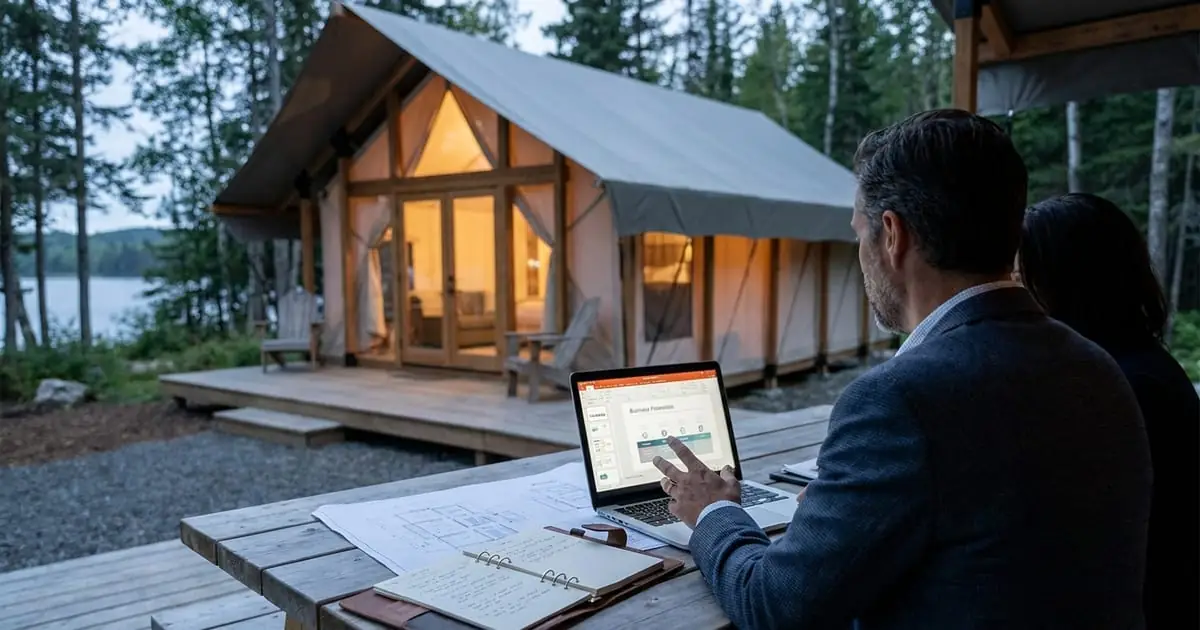
The allure of glamping, a portmanteau of "glamorous camping," continues to captivate travelers seeking unique outdoor experiences without sacrificing comfort. This burgeoning sector marries the tranquility of nature with the luxuries of boutique accommodation, creating a powerful magnet for discerning guests and savvy investors alike.
As the global glamping market experiences robust growth, attracting significant investment and new operators, the landscape for launching a successful venture is both exciting and competitive. For founders, business owners, consultants, and investors evaluating this opportunity, a comprehensive glamping feasibility study is not merely a recommendation—it is a non-negotiable foundation for success.
A well-executed feasibility study is your strategic compass, guiding you through market validation, risk mitigation, and informed financial decision-making. It helps you avoid common pitfalls, ensuring your glamping venture's feasibility is built on a solid foundation of data and strategic planning.
The market opportunity is substantial: the global glamping market was estimated at USD 3.79 billion in 2025 and is projected to reach USD 7.87 billion by 2033, growing at a compound annual growth rate (CAGR) of 9.5% from 2026 to 2033 (Grand View Research, March 2026).
1. Introduction: Why a Glamping Feasibility Study is Non-Negotiable for Success
The glamping industry is rapidly evolving, moving beyond a niche interest to a mainstream travel choice. This expansion signifies both immense potential and increased complexity.
Launching a glamping business without thorough due diligence is akin to setting sail without a map—you might reach your destination, but the journey will be fraught with unnecessary risks and potential setbacks. A detailed glamping feasibility study provides the critical insights needed to navigate this dynamic environment effectively.
Our team at SimpleFeasibility understands that the initial excitement of a new venture must be tempered with rigorous analysis. We've seen countless business plans, and the most successful ones are invariably those grounded in comprehensive research.
This guide will walk you through every essential component of a glamping feasibility study, from understanding market trends and crafting your concept to navigating regulatory hurdles and securing financing. By the end, you'll have a clear roadmap to evaluate and launch a profitable glamping business in 2026 and beyond.
2. Understanding the Glamping Market Landscape in 2026 for Your Feasibility Study
To build a successful glamping business, a deep understanding of the current market landscape is paramount. The industry is characterized by rapid growth, evolving consumer preferences, and increasing sophistication.
Market Growth & Projections
The glamping sector is experiencing an impressive surge. The US glamping market, for instance, reached approximately $738 million in 2024 and is on track to surpass $1.5 billion by 2030, growing at a robust 12-13% compound annual rate (MMCG Invest, April 2026).
This growth is fueled by a desire for unique travel experiences, a reconnection with nature, and a preference for comfortable, yet adventurous, accommodations. The global market projections further underscore this trajectory, indicating sustained expansion for the foreseeable future, making a glamping site feasibility assessment crucial.
Target Demographics & Preferences
Understanding who your guests are and what they seek is crucial for tailoring your offerings. The 18-32 age cohort, primarily Millennials and Gen Z, generates a significant portion of glamping revenue, accounting for 43.9% in 2025 (Grand View Research, January 2026).
This demographic is driven by a preference for unique, experience-based, and social media-friendly travel. They seek authenticity, sustainability, and opportunities for memorable moments that can be shared. Families, couples, and even corporate groups are also increasingly drawn to glamping for its blend of outdoor adventure and upscale amenities.
Accommodation Trends & Average Daily Rates (ADRs)
The variety of glamping units available allows for diverse offerings. Cabins and pods currently dominate accommodation types, accounting for 43-48% of market revenue in 2025 (Grand View Research, January 2026). Their year-round operability and durability make them a popular choice.
However, treehouses represent the fastest-growing segment, boasting an 11.4% CAGR and commanding the highest premiums, often ranging from $350 to $1,000+ per night (Grand View Research, January 2026).
The industry-wide average daily rate (ADR) reached $251 per night in 2025, a significant 21% increase from $207 in 2023 (Cairn Consulting Group's annual US Glamping Industry Report, 2025 data, cited April 2026). These rates rival those of boutique hotels, which typically range from $193-$440, and command a substantial 4-7x premium over traditional camping, priced at $35-$65 per night (Cairn Consulting Group, April 2026).
In terms of occupancy, well-performing sites often achieve 60-70% rates, while the national average hovers between 40-50%. Seasonal fluctuations are notable, with peak season (June-August) reaching 70-90% and off-season (November-March) dipping to 20-30% (Cairn Consulting Group, April 2026).
The Power of Ancillary Revenue
Beyond accommodation, ancillary revenue streams are vital for maximizing profitability. At well-run properties, these additional offerings can contribute 15-30% of total revenue (Cairn Consulting Group, April 2026).
This includes everything from food and beverage services (e.g., gourmet picnic baskets, on-site cafes, farm-to-table dining) to guided activities (hiking, stargazing tours, wildlife viewing), wellness services (yoga, massage), and event hosting (weddings, corporate retreats). Strategically cultivating these streams enhances the guest experience and significantly boosts your bottom line.
3. Crafting Your Glamping Concept: Vision, Location, and Unit Mix for Your Glamping Feasibility Study
The heart of any successful glamping venture lies in its concept. This involves defining your unique offering, selecting the ideal location, and curating a unit mix that maximizes both appeal and profitability. A robust glamping feasibility study will thoroughly explore these elements.
Defining Your Niche & Brand Identity
In an increasingly competitive market, a clear unique selling proposition (USP) is essential. What makes your glamping site stand out? Will you be a serene wellness retreat, an adrenaline-fueled adventure hub, a family-friendly escape with dedicated children's activities, or a romantic couples' getaway?
Your brand identity should resonate deeply with your target audience, from the aesthetics of your units to the types of experiences you offer. For example, a site focusing on eco-tourism might emphasize sustainable practices, local sourcing, and educational programs about the surrounding environment, attracting guests specifically seeking responsible travel, which is a key aspect of eco-glamping feasibility.
Strategic Site Selection (Proximity to Markets, Amenities)
Location is paramount. Prioritize sites within a 2-3 hour drive from major urban centers. This proximity makes your glamping site an ideal destination for weekend getaways and short breaks, tapping into a large, affluent market seeking convenient escapes.
Beyond drive time, assess the land suitability: topography (flat for easier construction, or varied for unique unit placement), access to existing utilities (water, septic, electrical, internet), natural attractions (lakes, forests, mountains, scenic views), and local regulations. Consider whether land ownership is necessary or if partnering with landowners who have suitable, unused acreage could be a viable alternative, significantly reducing initial capital expenditure.
Choosing Your Glamping Unit Types (ROI Considerations)
The selection of glamping unit types should balance investment costs, potential Average Daily Rates (ADRs), and year-round operability. Each unit type comes with its own set of advantages and considerations:
- Geodesic Domes: Often range from $15,000-$60,000 per unit for development costs. They offer a unique aesthetic, panoramic views, and can be insulated for year-round use.
- Safari Tents: Evoke a sense of adventure, typically more affordable than permanent structures, but may have limited year-round appeal in colder climates unless heavily insulated.
- Yurts: Traditional, durable, and offer a cozy, circular space. Good for various climates with proper insulation.
- Cabins/Pods: More permanent structures, offering superior insulation and amenities, making them excellent for year-round operation. Higher initial investment but also higher ADR potential.
- Treehouses: The most premium and fastest-growing segment, commanding ADRs of $350-$1,000+. Development costs are significantly higher, often $80,000-$250,000+ per unit, but they offer unparalleled uniqueness and guest appeal.
A balanced unit mix can cater to diverse guest preferences and maximize revenue potential. For instance, a site might feature a few high-end treehouses for couples seeking luxury, several family-friendly cabins, and a cluster of domes or yurts for a more rustic yet comfortable experience. This diversification allows you to tap into different market segments and optimize occupancy across various price points.
4. Capital Expenditure (CAPEX) for a Glamping Business (2026 Projections) in Your Feasibility Study
Understanding the initial capital outlay is a critical component of any glamping feasibility study. CAPEX encompasses all the one-time costs associated with setting up your glamping site. These figures can vary widely based on location, scale, and chosen unit types.
Typical development costs per unit range from $15,000-$60,000 for geodesic domes to $80,000-$250,000+ for treehouses (MMCG Invest, April 2026). For a typical 20-30 unit resort, the total development capital required can range from $2 million to $10 million (MMCG Invest, April 2026). Here’s a detailed breakdown of the key CAPEX categories:
Land Acquisition & Site Development
- Land Purchase: The most significant variable cost, depending on location, size, and existing infrastructure. As an alternative, land leasing or partnerships can significantly reduce this initial outlay.
- Land Clearing & Grading: Preparing the site for construction, including tree removal, excavation, and leveling.
- Roads & Paths: Creating access roads to units and common areas, and pedestrian pathways.
- Landscaping: Aesthetic enhancements, planting, and natural integration of units into the environment.
- Common Areas: Construction of reception buildings, communal kitchens, bathhouses, laundries, and recreational facilities.
- Parking: Designated guest and staff parking areas.
Glamping Unit Procurement & Installation
This includes the cost of purchasing the glamping structures themselves, along with their assembly and installation. As noted, these costs vary substantially:
| Glamping Unit Type | Typical Development Cost Per Unit (2026) |
|---|---|
| Geodesic Domes | $15,000 - $60,000 |
| Safari Tents / Yurts | $10,000 - $40,000 |
| Cabins / Pods | $40,000 - $150,000 |
| Treehouses | $80,000 - $250,000+ |
Infrastructure & Utilities (Water, Septic, Electrical, Internet)
Connecting your site to essential services is fundamental and can be a substantial cost:
- Water: Drilling new wells, connecting to municipal water lines, or establishing rainwater harvesting systems.
- Wastewater/Septic: Installing septic systems (per unit or communal), connecting to municipal sewer, or implementing advanced wastewater treatment solutions.
- Electrical: Bringing power to each unit and common areas, including trenching, wiring, and panel installation. Consider solar or other renewable energy sources for long-term savings and sustainability.
- Internet/Connectivity: Establishing reliable high-speed internet access, essential for guest satisfaction and operational needs.
Furnishings & Amenities (Interior/Exterior)
These costs cover everything that makes your units "glamorous" and comfortable for guests:
- Interior Decor: Beds, mattresses, linens, seating, tables, lighting, heating/cooling units, and decorative elements.
- Kitchenettes: Mini-fridges, microwaves, coffee makers, basic cookware, and utensils.
- Bathrooms: Toilets, showers, sinks, and fixtures (if units have private bathrooms).
- Outdoor Amenities: Private decks, outdoor seating, fire pits, BBQs, and hot tubs (a popular premium feature).
Pre-Opening Marketing & Working Capital
Don't overlook the costs associated with launching your business and covering initial operational expenses:
- Initial Marketing Campaigns: Website development, professional photography, social media setup, and initial advertising to generate bookings before opening.
- Permits & Licenses: Fees for zoning, building permits, business licenses, and environmental assessments.
- Professional Services: Legal fees, architectural design, engineering reports, and consulting services for your glamping feasibility study.
- Working Capital: A reserve of funds to cover operational expenses during the initial ramp-up phase before the business generates sufficient revenue to sustain itself. This typically covers 3-6 months of OPEX.
5. Operational Expenditure (OPEX) for Sustainable Glamping (2026 Projections) in Your Feasibility Study
Beyond the initial investment, understanding the ongoing operational costs is crucial for projecting profitability. OPEX forms the recurring expenses necessary to run your glamping business day-to-day. A detailed analysis of these costs within your glamping feasibility study will ensure your financial projections are realistic.
One of the appealing aspects of glamping is its potential for strong Net Operating Income (NOI) margins. Well-managed glamping sites can achieve NOI margins of 40-60%, significantly exceeding typical US hotels, which often see Gross Operating Profit (GOP) margins in the 30-39% range (Cairn Consulting Group, April 2026).
Staffing & Payroll (Management, Housekeeping, Maintenance)
Your team is the backbone of your guest experience. Staffing needs will vary based on the size and scale of your operation:
- Management: Site manager, general manager, or owner-operator.
- Guest Services: Reception, booking management, concierge services.
- Housekeeping: Cleaning and preparing units between guests, laundry services.
- Maintenance: General repairs, groundskeeping, utility checks, pool/hot tub maintenance.
- Activity/F&B Staff: If offering guided activities or food and beverage services.
Marketing & Sales (Online Listings, Social Media, SEO)
Ongoing efforts are needed to attract and retain guests:
- Digital Marketing: Website maintenance, search engine optimization (SEO), content creation, and social media advertising.
- Online Travel Agency (OTA) Commissions: Fees paid to platforms like Airbnb, Booking.com, and Glamping Hub. While useful for exposure, aim to reduce reliance on OTAs over time to maximize profit margins.
- Direct Booking Channels: Costs associated with maintaining your own booking engine and promoting direct bookings.
- Public Relations: Engaging with travel writers and influencers.
Utilities & Maintenance (Electricity, Water, Waste, Repairs)
These are essential, recurring costs that can fluctuate seasonally:
- Electricity: Powering units, common areas, and infrastructure. Consider energy-efficient appliances and renewable energy sources to manage costs.
- Water & Wastewater: Costs for municipal services or maintenance of private wells/septic systems.
- Waste Management: Regular trash collection and recycling services.
- Propane/Heating Fuel: For heating units and water.
- General Maintenance: Routine repairs, preventative maintenance schedules for units and infrastructure, and groundskeeping supplies.
Insurance & Permits (Liability, Property, Business Licenses)
Protecting your business and ensuring compliance is non-negotiable:
- Property Insurance: Covering your structures and assets against damage.
- Liability Insurance: Essential for any hospitality business, covering guest injuries or property damage.
- Business Licenses & Permits: Annual renewal fees for operating permits, health permits, and any specific recreational licenses.
Guest Supplies & Amenities (Linens, Toiletries, Welcome Packs)
Maintaining a high standard of comfort and service for your guests:
- Linens & Towels: Purchasing, cleaning, and replacing high-quality items.
- Toiletries: Eco-friendly soaps, shampoos, and conditioners.
- Welcome Packs: Small, thoughtful amenities like local snacks, coffee, or a guide to the area.
- Cleaning Supplies: For housekeeping operations.
Technology & Software (PMS, Booking Engine, CRM)
Investing in the right technology streamlines operations and enhances the guest experience:
- Property Management System (PMS): For managing bookings, check-ins/outs, and guest data.
- Booking Engine: Integrated into your website for direct reservations.
- Customer Relationship Management (CRM): For guest communication, loyalty programs, and marketing automation.
- Channel Manager: To synchronize availability across multiple booking platforms.
6. Revenue Model & Pricing Strategy: Maximizing Profitability in Your Glamping Feasibility Study
A well-defined revenue model and a dynamic pricing strategy are central to the financial success outlined in your glamping feasibility study. This section focuses on how to generate and maximize income from your glamping venture.
Dynamic Pricing & Seasonal Adjustments
Static pricing is a missed opportunity in the glamping industry. Implement dynamic pricing based on a range of factors:
- Demand: Increase rates during high-demand periods (holidays, long weekends, local events).
- Seasonality: Adjust ADRs for peak season (June-August, where occupancy can reach 70-90%) and off-season (November-March, with 20-30% occupancy) to optimize yield (Cairn Consulting Group, April 2026).
- Competitor Rates: Monitor what similar properties in your area are charging.
- Unit Type: Price premium units (like treehouses) higher than standard units.
- Length of Stay: Offer discounts for longer stays or implement minimum night requirements during peak times.
For example, a treehouse that commands $600/night in July might be offered at $350/night in November, perhaps bundled with a special off-season experience like a guided forest walk or a private hot tub session.
Optimizing Occupancy Rates
While dynamic pricing maximizes revenue per booking, achieving target occupancy rates is equally vital. Well-performing glamping sites aim for 60-70% occupancy, significantly higher than the national average of 40-50% (Cairn Consulting Group, April 2026). Strategies to optimize occupancy include:
- Promotional Packages: Offer themed packages (e.g., "Romantic Getaway," "Family Adventure") that include accommodation and ancillary activities.
- Loyalty Programs: Reward repeat guests with discounts or exclusive offers.
- Partnerships: Collaborate with local businesses (restaurants, tour operators) to offer curated experiences.
- Targeted Marketing: Use data to identify periods of low occupancy and run targeted campaigns to specific demographics.
Leveraging Direct Bookings vs. OTAs
Online Travel Agencies (OTAs) like Airbnb and Booking.com offer broad exposure, but they come with significant commission fees (typically 15-25%). Direct bookings, however, represent a substantial advantage for operators, accounting for 54.7% of the channel mix in 2025 (Cairn Consulting Group, April 2026). Prioritizing direct bookings is key to maximizing profit margins. Strategies include:
- User-Friendly Website: A professional, mobile-responsive website with an integrated, easy-to-use booking engine.
- Exclusive Offers: Provide incentives for direct bookings, such as a small discount, a complimentary welcome amenity, or early check-in/late check-out.
- Strong Social Media Presence: Engage with followers and drive them to your website.
- Email Marketing: Build an email list and send newsletters with direct booking promotions.
Cultivating Ancillary Revenue Streams
As mentioned, ancillary revenue can contribute 15-30% of total revenue at well-run properties (Cairn Consulting Group, April 2026). Think creatively about what experiences and services your guests might value:
- Food & Beverage: Offer pre-ordered meal kits, gourmet picnic baskets, a small on-site cafe, or even a farm-to-table dining experience.
- Guided Activities: Hiking, biking, kayaking, stargazing tours, wildlife photography workshops, or bushcraft lessons.
- Wellness Services: On-site yoga classes, meditation sessions, or partnerships with local massage therapists.
- Retail: Sell local crafts, branded merchandise, or essential camping supplies.
- Event Hosting: Leverage your beautiful natural setting for intimate weddings, corporate retreats, or family reunions.
Strategically bundling services and experiences can significantly increase the average transaction value per guest, transforming a simple stay into a memorable, high-value experience.
7. Breakeven Analysis & Realistic Ramp Curves: Your Path to Profitability with a Glamping Feasibility Study
Understanding when your glamping business will become profitable is a cornerstone of any robust glamping feasibility study. This involves a clear breakeven analysis and realistic projections for your occupancy ramp-up.
Calculating Fixed vs. Variable Costs
To determine your breakeven point, you must first distinguish between your fixed and variable costs:
- Fixed Costs: These expenses remain relatively constant regardless of occupancy levels. Examples include rent or mortgage payments, insurance premiums, management salaries, property taxes, and fixed utility charges.
- Variable Costs: These expenses fluctuate directly with the number of guests or units rented. Examples include cleaning supplies, guest amenities (linens, toiletries), utilities directly tied to usage (e.g., electricity per unit), and OTA commissions.
Accurately categorizing these costs is crucial for calculating your contribution margin per unit, which is the revenue per unit minus its variable costs.
Determining Breakeven Occupancy
The breakeven point is the level of sales (in this case, units rented or occupancy percentage) at which your total revenues equal your total costs, meaning you are neither making a profit nor incurring a loss. For well-structured glamping operations, breakeven occupancy typically runs 25-40% (MMCG Invest, April 2026). To calculate this:
- Calculate your total fixed costs for a given period (e.g., monthly or annually).
- Determine the average contribution margin per unit (Average ADR - Average Variable Cost per Unit).
- Divide total fixed costs by the average contribution margin per unit to find the number of units you need to rent to break even.
- Convert this to an occupancy percentage by dividing by your total available units.
This calculation provides a vital benchmark for your operational goals.
Projecting Realistic Occupancy Ramp-Up
It's unrealistic to expect full occupancy from day one. Developing realistic ramp-up projections for occupancy is essential, considering factors like initial marketing efforts, brand building, seasonal impacts, and the time it takes to generate positive reviews and word-of-mouth. Expect a gradual increase in occupancy over the first 1-3 years, not immediate full capacity.
- Year 1: Focus on building brand awareness, refining operations, and gathering initial guest feedback. Occupancy might start lower, perhaps in the 30-45% range, depending on your marketing intensity and market reception.
- Year 2: With established operations, growing online presence, and positive reviews, occupancy can climb to 50-65%.
- Year 3 Onwards: A mature glamping site should aim for its target 60-70% occupancy, leveraging repeat business and strong brand recognition.
These projections should be conservative to avoid over-optimistic financial forecasts.
Sensitivity Analysis for Key Variables
A robust feasibility study doesn't just present a single financial forecast; it explores various scenarios. Sensitivity analysis helps you understand how changes in key variables—such as Average Daily Rate (ADR), occupancy rates, or major operational costs—impact your profitability and breakeven point. For instance:
- What if your ADR is 10% lower than projected?
- What if your occupancy only reaches 50% instead of 65% in Year 2?
- What if utility costs increase by 15%?
By modeling these "what-if" scenarios, you can identify the most critical drivers of your business's financial performance and develop contingency plans, strengthening your overall business strategy.
8. Worked Financial Example: A Sample Glamping Business Feasibility Study (2026)
To illustrate the practical application of a glamping feasibility study, let's consider a hypothetical 15-unit glamping site. This example will demonstrate how the various financial components come together to assess the overall glamping business feasibility.
Please note that these figures are illustrative and will vary significantly based on location, specific unit choices, and market conditions.
Assumptions (Unit Mix, ADR, Occupancy Targets)
For our sample site, "Whispering Pines Glampground," we'll assume the following:
- Location: Rural area, 2 hours from a major metropolitan city.
- Unit Mix: 10 Geodesic Domes (mid-tier luxury), 5 Safari Tents (premium).
- Average Daily Rates (ADR):
- Domes: $220/night
- Safari Tents: $350/night
- Blended Average ADR: $260/night (weighted by unit count)
- Occupancy Targets (Ramp-Up):
- Year 1: 40%
- Year 2: 55%
- Year 3: 65%
- Ancillary Revenue: 15% of accommodation revenue (Year 1), growing to 20% (Year 2), 25% (Year 3) through F&B, activities.
Projected CAPEX Summary (Initial Investment)
Based on our unit mix and general market data:
- Land Lease/Acquisition: $150,000 (assuming a favorable long-term lease with some upfront payment)
- Site Development (clearing, roads, landscaping, common bathhouse/reception): $400,000
- 10 Geodesic Domes @ $40,000/unit (incl. installation, basic interior): $400,000
- 5 Safari Tents @ $50,000/unit (incl. installation, premium interior): $250,000
- Utilities & Infrastructure (water, septic, electrical, internet): $200,000
- Furnishings & Amenities (additional interior/exterior): $100,000
- Pre-Opening Marketing & Working Capital: $100,000
- Permits, Legal, Consulting: $50,000
- Total Estimated CAPEX: $1,650,000
Projected OPEX Summary (Annual Operating Costs)
For a 15-unit site, estimated annual operating costs:
- Staffing (1 manager, 2 part-time housekeepers, 1 part-time maintenance): $120,000
- Marketing & Sales (incl. OTA commissions): $45,000
- Utilities (electricity, water, waste, propane): $30,000
- Insurance & Permits: $15,000
- Guest Supplies & Amenities: $20,000
- Maintenance & Repairs (ongoing): $25,000
- Technology & Software: $10,000
- Miscellaneous/Contingency: $15,000
- Total Estimated Annual OPEX: $280,000
Revenue Projections (Year 1-3)
Total available nights: 15 units * 365 nights = 5,475 nights/year
- Year 1 (40% Occupancy):
- Nights Sold: 5,475 * 0.40 = 2,190 nights
- Accommodation Revenue: 2,190 nights * $260/night = $569,400
- Ancillary Revenue (15%): $569,400 * 0.15 = $85,410
- Total Revenue Year 1: $654,810
- Year 2 (55% Occupancy):
- Nights Sold: 5,475 * 0.55 = 3,011 nights
- Accommodation Revenue: 3,011 nights * $260/night = $782,860
- Ancillary Revenue (20%): $782,860 * 0.20 = $156,572
- Total Revenue Year 2: $939,432
- Year 3 (65% Occupancy):
- Nights Sold: 5,475 * 0.65 = 3,559 nights
- Accommodation Revenue: 3,559 nights * $260/night = $925,340
- Ancillary Revenue (25%): $925,340 * 0.25 = $231,335
- Total Revenue Year 3: $1,156,675
Breakeven Calculation & Analysis
Let's assume an average variable cost per night (cleaning, supplies, portion of utilities) of $40.
- Average Contribution Margin per Night: $260 (ADR) - $40 (Variable Cost) = $220
- Total Annual Fixed Costs: $280,000 (Total OPEX) - ($40 * 5,475 potential nights) = $280,000 - $219,000 (potential variable costs at 100% occupancy) = $61,000 (This is a simplified approach; a full model would break down OPEX into fixed/variable components explicitly). Let's use a more direct approach: assume 70% of OPEX is fixed, 30% variable. Fixed OPEX = $280,000 * 0.7 = $196,000.
- Breakeven Nights: $196,000 (Fixed OPEX) / $220 (Contribution Margin) = 891 nights
- Breakeven Occupancy: 891 nights / 5,475 total nights = 16.27%
This calculated breakeven occupancy of ~16% is very favorable and well within the industry's typical 25-40% range, suggesting a strong financial structure for "Whispering Pines Glampground."
Key Financial Metrics (ROI, Payback Period, NOI)
- Net Operating Income (NOI) Year 1: $654,810 (Total Revenue) - $280,000 (Total OPEX) = $374,810
- NOI Margin Year 1: ($374,810 / $654,810) * 100% = 57.2%
This 57.2% NOI margin in Year 1 demonstrates how glamping offers favorable unit economics and can achieve the projected 40-60% NOI margins with strategic management. Further analysis would include calculating Return on Investment (ROI) and Payback Period, which would require projecting cash flows over several years, but this snapshot shows strong initial profitability.
9. Navigating Regulatory & Licensing Requirements for Your Glamping Feasibility Study
One of the most complex yet critical sections of any glamping feasibility study involves understanding and complying with local, state, and national regulations. Ignoring these can lead to costly delays, fines, or even the forced closure of your business.
As a general rule, planning permission (or permits) is almost always required for commercial glamping sites, even for structures considered temporary or for a change of land use (Glampitect, November 2025).
Zoning & Land Use Approvals
This is often the first and most significant hurdle. You must confirm that your chosen land is zoned for commercial tourism, hospitality, or recreational use. Rural or agricultural zoning may require a special permit or a zoning variance.
Engaging with local planning departments early in your feasibility process is crucial. They can advise on specific requirements, potential restrictions, and the application process.
Building Permits & Inspections
While canvas glamping tents may be classified as temporary and not require full building permits in some jurisdictions, any permanent infrastructure typically does. This includes:
- Bathhouses and Restroom Facilities: Essential for most glamping sites.
- Reception Buildings & Common Areas: Any permanent structures for guest services.
- Electrical Systems: For power distribution to units and common areas.
- Water & Septic Systems: Installation of wells, septic tanks, or connections to municipal services.
- Decks & Foundations: Even for "temporary" units, permanent decks or foundations often require permits.
These structures will be subject to local building codes and inspections to ensure safety and compliance.
Environmental Impact Assessments (EIA)
Especially if your site is near sensitive ecological areas, water bodies, or protected lands, an Environmental Impact Assessment (EIA) may be required. This study evaluates the potential environmental effects of your project and proposes mitigation measures.
Compliance with waste management, energy solutions, and wastewater/greywater management regulations is critical. Sustainable practices are not just good for the environment; they are increasingly a regulatory and consumer expectation.
Business & Site Licensing
Beyond land use and building, you will need general business licenses to operate. These vary by jurisdiction:
- USA Specific: Requires obtaining a business license, registering for sales tax, and passing health and fire inspections (American Glamping Association, March 2026). Government-backed loans like SBA (Small Business Administration) and USDA (United States Department of Agriculture) loans offer better terms due to government guarantees, making them attractive funding options. State-specific grants, such as California's 'Explore the Coast Overnight Program' (October 2025) or Oregon's 'County Opportunity Grant Program' (August 2025), can provide incentives for certain types of accommodation or park developments.
- UK Specific: Planning permission is essential if operating more than 60 days a year in England (under new permitted development rights, effective July 2023). A Camping or Caravan Site Licence may also be required, depending on the number of units and duration of operation (Glampitect, November 2025).
Health & Safety Regulations
As a hospitality provider, you must adhere to health and safety standards to protect your guests and staff. This includes fire safety plans, emergency exits, first-aid provisions, and ensuring all facilities (especially kitchens and bathrooms) meet hygiene standards. Regular inspections by health and fire departments are common.
Our team strongly advises engaging local legal counsel and planning consultants early in the process to navigate these complexities effectively. Their expertise can save significant time and resources.
10. Key Operational Risks & Mitigation Strategies for Your Glamping Feasibility Study
No business venture is without risk, and a thorough glamping feasibility study must identify potential operational challenges and propose robust mitigation strategies. Proactive planning can turn potential threats into manageable hurdles.
Seasonality & Weather Dependence
Glamping, by its nature, is often tied to good weather and specific seasons. This can lead to significant revenue fluctuations.
Mitigation:
- Year-Round Units: Invest in well-insulated cabins, pods, or domes that can operate comfortably in colder months, extending your booking season.
- Shoulder-Season Promotions: Offer attractive packages, discounts, or unique experiences (e.g., fall foliage tours, winter stargazing) during off-peak times to stimulate demand.
- Diversified Revenue Streams: Develop indoor activities, wellness programs, or event spaces that are less weather-dependent.
Market Competition & Differentiation
As the glamping market grows, so does the competition. Standing out requires a clear strategy.
Mitigation:
- Strong Brand Identity: Cultivate a unique brand story, aesthetic, and guest experience that sets you apart.
- Niche Offerings: Specialize in a particular theme (e.g., pet-friendly, wellness, adventure, historical immersion) to attract a dedicated clientele.
- Exceptional Guest Service: Word-of-mouth and positive online reviews are powerful differentiators. Focus on personalized service and exceeding expectations.
Staffing & Guest Experience Management
The quality of your staff directly impacts guest satisfaction and your brand's reputation.
Mitigation:
- Robust Hiring Practices: Seek individuals who are passionate about hospitality, nature, and your brand values.
- Comprehensive Training: Provide thorough training on guest service protocols, safety procedures, and property-specific knowledge.
- Clear Communication: Implement systems for efficient internal communication and prompt resolution of guest issues.
- Technology: Utilize PMS and CRM systems to streamline operations and personalize guest interactions.
Infrastructure Wear & Tear
Outdoor accommodations are exposed to the elements and heavy guest use, leading to inevitable wear and tear.
Mitigation:
- Preventative Maintenance Schedules: Implement regular checks and maintenance for all units, utilities, and common areas.
- Budget for Repairs & Upgrades: Allocate a portion of your operational budget specifically for ongoing repairs and periodic upgrades to maintain quality.
- Durable Materials: Invest in high-quality, weather-resistant materials during initial construction.
Regulatory Changes & Compliance
Regulations can change, impacting your operations or requiring new permits.
Mitigation:
- Stay Informed: Regularly monitor local and national regulatory bodies for updates related to zoning, environmental protection, and hospitality.
- Professional Consultation: Maintain relationships with local legal counsel or planning consultants who can provide timely advice.
- Proactive Compliance: Address environmental concerns proactively; sustainability is a baseline expectation for modern travelers and increasingly codified in regulations.
11. What Investors & Bankers Seek in a Glamping Feasibility Study
Securing funding is often the most challenging step for a new glamping venture. Whether you're approaching traditional banks, private investors, or seeking government-backed loans, a compelling glamping feasibility study is your most powerful tool. Investors and bankers are looking for confidence, clarity, and a strong return on their capital.
Demonstrating Market Understanding & Competitive Advantage
Funders want to see that you've done your homework. This means a deep understanding of:
- Target Market: Who are your guests, what are their needs, and how large is this segment?
- Competitive Landscape: Who are your direct and indirect competitors? What are their strengths and weaknesses?
- Differentiation Strategy: What makes your glamping site unique and why will guests choose you over others? (e.g., "Our focus on immersive wellness retreats with bespoke organic dining sets us apart from the more adventure-focused sites in the region.") They want to see that you've done your homework, including a thorough glamping business feasibility study.
Robust Financial Projections & ROI
This is often the make-or-break section. Investors need to see clear, realistic, and attractive financial forecasts:
- Detailed CAPEX & OPEX: A transparent breakdown of all costs, demonstrating a thorough understanding of the financial requirements.
- Conservative Revenue Projections: Realistic occupancy ramp-up and ADRs, with clear justification for assumptions.
- Key Financial Metrics: Clear presentation of Net Operating Income (NOI), Return on Investment (ROI), Internal Rate of Return (IRR), and Payback Period. Glamping offers favorable unit economics with lower build-out costs compared to hotels, premium pricing, and strong profit margins, making these metrics often very attractive. NOI margins of 40-60% are achievable, significantly exceeding typical US hotels (30-39% GOP margin) (Cairn Consulting Group, April 2026).
- Sensitivity Analysis: Showing how the financials hold up under different scenarios demonstrates a prudent approach to risk.
Clear Management Team & Operational Plan
Investors fund people as much as ideas. They want to see an experienced and capable team:
- Management Expertise: Highlight the experience and qualifications of the key individuals involved, particularly in hospitality, operations, and business management.
- Detailed Operational Plan: Outline how the business will run day-to-day, including staffing, marketing, guest services, and maintenance.
Risk Mitigation & Exit Strategy
No project is risk-free. Funders want to know you've anticipated challenges and have plans to address them:
- Identified Risks: A comprehensive list of potential operational, market, financial, and regulatory risks.
- Mitigation Strategies: Concrete plans for how each identified risk will be managed or minimized.
- Exit Strategy: For equity investors, a clear understanding of how they will realize their return (e.g., sale of the business, refinancing, continued dividend distribution).
It's also worth noting that government-backed loans (like SBA and USDA in the USA) are particularly attractive to lenders because the government guarantees a portion of the loan, reducing the bank's risk and often leading to better terms for the borrower.
Sustainability & Community Engagement
Increasingly, funders are looking beyond purely financial returns. They value businesses that demonstrate a commitment to:
- Environmental Stewardship: Sustainable building practices, renewable energy, waste reduction, and conservation efforts.
- Positive Community Impact: Creating local jobs, sourcing from local businesses, and engaging positively with the surrounding community.
Highlighting these aspects can enhance your proposal's appeal to a broader range of investors, including those focused on ESG (Environmental, Social, Governance) criteria.
12. Expert Insights & Future Trends Shaping Glamping, According to Your Feasibility Study
The glamping industry is dynamic, constantly evolving to meet changing traveler preferences and technological advancements. Our team keeps a close watch on these shifts, and a forward-looking glamping feasibility study should consider these trends.
Professionalization & Institutional Investment
The glamping industry is maturing from a fragmented cottage industry to an institutional-grade asset class (Forbes, Romain Pison, CEO of NoviCarbon, March 2025). This professionalization is evidenced by major hospitality brands like Marriott, Hilton, and Hyatt entering the market, signaling confidence and drawing significant capital.
This trend means higher standards for operations, guest experience, and financial reporting, pushing independent operators to professionalize their own ventures.
The Experience Economy & Sustainability Mandate
Demand for glamping is increasingly driven by the "experience economy," where travelers prioritize unique, immersive, and nature-connected stays over traditional accommodations (Mordor Intelligence, January 2026). Guests seek authentic local experiences, opportunities for personal growth, and a deeper connection with their surroundings.
Simultaneously, sustainability is no longer a differentiator but a baseline expectation for modern travelers (Forbes, March 2025). Operators are pushed to adopt eco-friendly practices, low-impact infrastructure, renewable energy, and responsible waste management. Wellness and nature are deeply connected trends, with sites incorporating offerings like forest bathing, yoga, and farm-to-table dining.
Technology Integration & Smart Glamping
Technology is playing an increasingly crucial role, not just for bookings but for enhancing guest experiences and optimizing operations. This includes:
- Smart Cabins: Automated lighting, climate control, and entertainment systems.
- Personalized Recommendations: AI-driven suggestions for activities and local attractions based on guest preferences.
- Resource Management: AI-driven sustainability tools for optimizing energy and water consumption.
- Seamless Guest Journey: Mobile check-ins, keyless entry, and in-unit tablets for information and service requests.
Multi-Site Operations & Scalability
A significant trend is the growth of multi-site operations, with many existing operators planning to add more units or acquire additional properties (American Glamping Association, March 2026). This indicates strong confidence in the market's scalability and the potential for larger, more sophisticated glamping portfolios.
For new entrants, this highlights the importance of designing a concept that has the potential to be replicated or expanded in the future.
Key challenges for the industry remain access to financing, navigating complex and often outdated regulatory barriers (zoning, land-use approvals), and standing out in an increasingly crowded market. However, with careful planning and a robust glamping feasibility study, these challenges can be overcome, paving the way for a successful and sustainable luxury camping venture.
13. Common Misconceptions About Starting a Glamping Business
While the glamping industry offers exciting opportunities, it's also surrounded by several misconceptions that can lead aspiring entrepreneurs astray. A thorough glamping feasibility study helps to dispel these myths with data and realistic expectations.
"You don't need your own land"
While owning land provides full control, it's a misconception that it's the only path. Partnering with landowners who have suitable, unused space is a viable alternative, significantly reducing initial Capital Expenditure (CAPEX) (Glampitect, April 2025). This model allows you to focus resources on unit development and operations, making glamping more accessible for those with limited capital for land acquisition.
"You need a lot of money to start"
While capital is required for any commercial venture, glamping can often be started with considerably lower initial costs compared to traditional hotels. While a 20-30 unit resort might require $2-$10 million, smaller, more intimate operations can begin with a few units.
Crowdfunding platforms and government grants (like those offered by the SBA or USDA in the USA) are alternative funding sources that can help bootstrap a glamping business (American Glamping Association, March 2026).
"Go big or go home"
This couldn't be further from the truth in glamping. Small, intimate, and lifestyle-focused glamping businesses can be highly successful, offering personal connections with guests and avoiding the managerial complexities of large-scale operations.
A boutique site with 5-10 uniquely designed units, exceptional service, and a strong niche can generate significant profits and provide a fulfilling lifestyle for its owners.
"Running a glamping site is easy money"
Glamping is often a 24/7 lifestyle business. It requires significant focus on guest experience, continuous marketing efforts, property maintenance, and administrative tasks. While the financial returns can be attractive, it's far from passive income.
Owners often wear many hats, from reservation manager to landscaper, and from marketing specialist to guest relations expert.
"You don't need planning permission"
Almost all commercial glamping operations require some form of planning permission or permits, even for temporary setups or a change of land use (Glampitect, November 2025). This is a critical regulatory hurdle that must be addressed early in the planning process, highlighting the importance of a comprehensive glamping site feasibility assessment.
Ignoring it can lead to legal issues, fines, and the potential closure of your site.
"You'll get a return on investment in 12 months"
While some small-scale, temporary additions to existing businesses might see quick returns, a 12-month ROI for a full glamping setup from scratch is generally unrealistic. When considering infrastructure development, planning permissions, furnishing costs, and the time it takes to build brand awareness and achieve target occupancy, a more realistic timeline for significant ROI or breakeven is typically 1-3 years, with full maturity often taking longer. Patience and a well-capitalized ramp-up phase are crucial.
14. FAQ: Frequently Asked Questions About Glamping Feasibility
What is a glamping feasibility study?
A glamping feasibility study is a comprehensive analysis that evaluates the viability and potential success of a proposed glamping business. It covers market research, financial projections (CAPEX, OPEX, revenue), operational plans, regulatory compliance, and risk assessment to help entrepreneurs make informed decisions about their glamping venture.
How much does it cost to start a glamping business?
Initial Capital Expenditure (CAPEX) for a glamping business can vary significantly. Development costs per unit typically range from $15,000-$60,000 for geodesic domes to $80,000-$250,000+ for treehouses. A typical 20-30 unit glamping resort can require $2-$10 million in total development capital, including land, infrastructure, and amenities, as determined by a thorough glamping feasibility study.
What is a good occupancy rate for glamping?
Well-performing glamping sites often achieve occupancy rates of 60-70%. The national average typically ranges between 40-50%. Peak season (June-August) can see rates as high as 70-90%, while off-season (November-March) may dip to 20-30%. These targets are crucial for a successful glamping feasibility study.
How long does it take for a glamping business to break even?
Breakeven occupancy for well-structured glamping operations typically runs 25-40%. However, the time it takes to achieve this depends on factors like initial investment, marketing effectiveness, and the speed of occupancy ramp-up. A 12-month Return on Investment (ROI) for a full setup from scratch is generally unrealistic; expect a longer period (1-3 years) for infrastructure development and brand building, as highlighted in a comprehensive glamping feasibility study.
Is glamping a profitable business?
Yes, with proper planning and execution, glamping can be a highly profitable business. It offers favorable unit economics with lower build-out costs compared to traditional hotels, commands premium pricing, and can achieve strong Net Operating Income (NOI) margins of 40-60%, significantly exceeding typical hotel profitability. A robust glamping feasibility study is key to unlocking this potential.
In conclusion, the journey to launching a successful glamping business in 2026 is filled with exciting opportunities, but it demands meticulous planning and a deep understanding of the market. A comprehensive glamping feasibility study is not just a document; it's your strategic blueprint, empowering you to navigate complexities, mitigate risks, and build a profitable, sustainable venture that truly stands out. By leveraging data, understanding market trends, and planning meticulously, you can unlock the full potential of this booming industry.
Ready to turn your glamping vision into a profitable reality? Don't leave your success to chance. Invest in a professional glamping feasibility study from SimpleFeasibility today. Our experts provide the in-depth analysis and strategic guidance you need to build a thriving glamping business. Contact Us for a Consultation!
About the Author
The SimpleFeasibility Editorial Team comprises professionals with extensive backgrounds in corporate finance, venture investment, and small business advisory. Our articles are peer-reviewed for technical accuracy and practical applicability, drawing on real-world experience to provide actionable insights for founders, consultants, and investors worldwide.
Sources & References
- MMCG Invest. (April 2026). Glamping Market Report 2026.
- Market.us News. (January 2026). Glamping Market Size, Share, Analysis, Trends & Forecast Report 2026.
- Grand View Research. (March 2026). Glamping Market Size, Share & Trends Analysis Report.
- Grand View Research. (January 2026). Glamping Market Size, Share & Trends Analysis Report.
- Grand View Research. (July 2025). Glamping Market Size, Share & Trends Analysis Report.
- Mordor Intelligence. (January 2026). Glamping Market - Growth, Trends, COVID-19 Impact, and Forecasts (2026 - 2031).
- Cairn Consulting Group. (April 2026). Annual US Glamping Industry Report (2025 data).
- KOA. (April 2026). 2025 North American Camping Report.
- Pison, Romain (CEO of NoviCarbon). (March 2025). Forbes.
- American Glamping Association. (March 2026). Industry Insights.
- Glampitect. (November 2025). Planning Permission for Glamping Sites.
- Glampitect. (April 2025). Starting a Glamping Business: Land Ownership vs. Partnerships.
- Small Business Administration (SBA). (Accessed April 2026). SBA Loans & Grants.
- United States Department of Agriculture (USDA). (Accessed April 2026). Rural Development Programs.
- California State Parks. (October 2025). Explore the Coast Overnight Program.
- Oregon Parks and Recreation Department. (August 2025). County Opportunity Grant Program.