The Complete Cloud Kitchen Feasibility Study Guide for 2026: From Concept to Profitability
The culinary landscape is undergoing a profound transformation, with cloud kitchens leading the charge. These delivery-only establishments have reshaped how food is prepared, distributed, and consumed, offering entrepreneurs a compelling alternative to traditional brick-and-mortar restaurants. However, the allure of lower overheads and wider reach can sometimes overshadow the complexities involved.
To navigate this dynamic environment successfully, a comprehensive cloud kitchen feasibility study is not just recommended—it's absolutely non-negotiable in 2026. This guide will walk you through every critical aspect, ensuring your venture is built on a solid foundation.
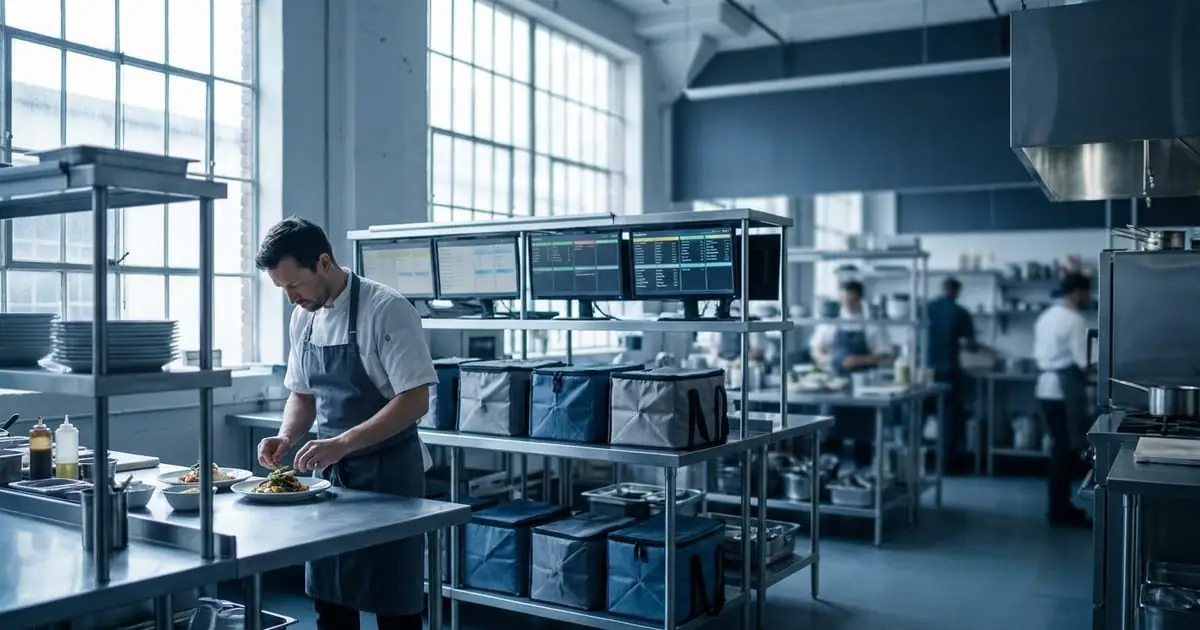
At SimpleFeasibility, our team, with backgrounds in corporate finance, venture investment, and small business advisory, understands that a robust feasibility study is the bedrock of any successful venture. It acts as your strategic compass, charting a course through market opportunities, financial realities, and operational hurdles for your cloud kitchen business plan.
1. Introduction: Why a Cloud Kitchen Feasibility Study is Non-Negotiable in 2026
The Exploding Cloud Kitchen Market: A 2026 Snapshot
The global cloud kitchen market is experiencing exponential growth, driven by shifting consumer preferences, technological advancements, and the permanent entrenchment of delivery culture. What began as a niche concept has rapidly matured into a significant segment of the food service industry. According to Market.us Scoop, the global cloud kitchen market was valued at approximately USD 63.9 billion in 2022 and is projected to reach USD 103.8 billion in 2026.
This represents a substantial Compound Annual Growth Rate (CAGR) of 12.1% from 2022, with some projections extending to USD 194.6 billion by 2032. Other authoritative sources echo this sentiment, with Research and Markets estimating the market to reach USD 80.52 billion in 2026, while Persistence Market Research projects USD 83.1 billion by 2026, growing to USD 156.3 billion by 2033.
These figures, while varying slightly, collectively paint a clear picture of a market ripe with opportunity. This impressive growth is underpinned by a permanent behavioral shift toward off-premise dining, reinforced by the proliferation of rapid delivery infrastructure, as noted by industry experts. Understanding these dynamics is crucial for any ghost kitchen feasibility assessment.
The Imperative of Due Diligence: De-risking Your Investment
Despite the rapid expansion, the cloud kitchen market is becoming increasingly competitive. The misconception that cloud kitchens are "easy to operate" or require minimal planning can lead to significant pitfalls. Without rigorous due diligence, entrepreneurs risk misallocating capital, underestimating operational complexities, and failing to secure a sustainable market position.
A thorough cloud kitchen feasibility study identifies potential challenges and opportunities before significant investment, providing a realistic roadmap for success. This guide provides a structured approach to evaluating the viability of your cloud kitchen venture, ensuring you possess the insights needed to make informed decisions and build a resilient business model for 2026 and beyond. It's the essential first step for any aspiring dark kitchen feasibility analysis.
2. Deconstructing the Feasibility Study: Core Components for Cloud Kitchen Success
Beyond the Business Plan: A Deep Dive into Viability
While a business plan outlines your strategic objectives and how you intend to achieve them, a feasibility study takes a critical step back. It rigorously assesses whether those objectives are actually achievable and sustainable given the market, technical, financial, operational, and legal realities. It's a diagnostic tool, designed to identify potential roadblocks and validate assumptions before resources are committed.
For a cloud kitchen, this means scrutinizing everything from the demand for your specific cuisine in a target delivery zone to the precise cost of equipping a commercial kitchen and navigating local health regulations. It's about asking, "Can this actually work?" and providing data-driven answers. This critical analysis forms the foundation of any robust cloud kitchen business plan.
Key Pillars of a Comprehensive Cloud Kitchen Feasibility Study
A robust cloud kitchen feasibility study encompasses several critical areas. Our team advises founders, consultants, and investors worldwide to focus on these pillars to ensure a holistic evaluation:
- Market Analysis: Understanding your target customers, competitive landscape, and strategic positioning. Learn more about market research.
- Technical Feasibility: Assessing the infrastructure, equipment, and technology required.
- Financial Projections: Detailing startup costs (CAPEX), ongoing expenses (OPEX), revenue models, and profitability. Explore our financial modeling services.
- Operational Plan: Outlining workflows, supply chain management, staffing, and delivery logistics. Read our guide to cloud kitchen operations.
- Legal & Regulatory Compliance: Identifying all necessary licenses, permits, and food safety standards. Understand food safety regulations.
- Risk Assessment: Pinpointing potential challenges and developing mitigation strategies. Discover effective risk management.
This comprehensive framework ensures that no critical aspect is overlooked, providing a solid foundation for your cloud kitchen venture. It's the blueprint for successful ghost kitchen feasibility.
3. Market Opportunity & Strategic Positioning for Your Cloud Kitchen
Understanding the Cloud Kitchen Landscape in 2026
The cloud kitchen market in 2026 is characterized by its diversity and rapid evolution. Data from Eats365 indicates that the independent cloud kitchen segment is projected to dominate the global market, holding a significant 65% share in 2026. Geographically, North America is expected to maintain a dominant position with a 39% market share, while Asia-Pacific continues to be the fastest-growing region, projected to hold a 41.2% share by 2035 (Future Market Insights).
This growth is fueled by the expansion of food delivery platforms, which offer cloud kitchens a virtual marketplace to reach a wider customer base without the need for a physical dining space. However, this also means intense competition, making strategic positioning paramount. A thorough cloud kitchen feasibility study will pinpoint the best market entry points.
Identifying Your Niche & Leveraging Virtual Brands
Success in a crowded market hinges on a clear value proposition. Identifying a specific niche—be it a unique cuisine, dietary focus (e.g., vegan, keto), or a particular price point—can differentiate your offering. Virtual brands are a powerful tool in this strategy; 40% of ghost kitchens utilize them (Gitnux). Learn more about virtual brand strategy.
These are delivery-only brands operated from the same physical kitchen, allowing operators to test new concepts, target different demographics, and expand market reach without additional real estate investment. For instance, a single kitchen could operate a "Gourmet Burger Bar" and a "Healthy Mediterranean Bowls" brand simultaneously. This approach is key to maximizing the potential identified in a virtual restaurant feasibility assessment.
Beyond aggregators, building proprietary ordering systems and direct-to-consumer channels can foster brand loyalty and reduce dependency on third-party platforms. This approach is crucial for enhancing customer lifetime value, a key metric for growth in the next phase of industry expansion, as highlighted by industry experts.
Navigating the Third-Party Delivery Platform Ecosystem
The reality for most cloud kitchens is a heavy reliance on third-party delivery platforms like DoorDash, Uber Eats, and Grubhub. Gitnux reports that 85% of ghost kitchens rely on these platforms. While they offer unparalleled reach and logistics infrastructure, they also come with significant costs—commission fees typically range from 15% to 30% of order value. This dependency can erode profit margins and limit direct customer engagement.
A strategic approach involves understanding the nuances of each platform, optimizing your menu for their algorithms, and leveraging their marketing tools. Simultaneously, developing strategies to mitigate platform dependency risks, such as building a strong social media presence, collecting customer data (where permitted), and exploring direct delivery models, is vital for long-term sustainability. This forms a critical part of your dark kitchen feasibility planning.
4. Capital Expenditure (CAPEX) for a 2026 Cloud Kitchen Launch (in 2026 Dollars)
Launching a cloud kitchen requires a significant initial investment, known as Capital Expenditure (CAPEX). Unlike traditional restaurants, this investment is concentrated on the kitchen itself, eliminating costs associated with dining areas, decor, and front-of-house amenities. Our detailed financial models for a 2026 ghost kitchen launch estimate a total CAPEX of approximately USD 493,000. This figure is a crucial output of any comprehensive cloud kitchen feasibility study.
Kitchen Build-Out & Renovation Costs
The cost of building out or renovating a commercial kitchen space can vary widely based on location, existing infrastructure, and desired specifications. This includes:
- Leasehold Improvements: Walls, flooring, plumbing, electrical upgrades, and ventilation systems.
- Permitting & Architectural Fees: Costs associated with securing necessary building permits and professional design services.
- Safety & Sanitation Infrastructure: Fire suppression systems, grease traps, handwashing stations, and pest control measures.
These foundational elements ensure compliance with health codes and create an efficient workspace, directly impacting your ghost kitchen feasibility.
Essential Cooking Equipment & Appliances
This category represents a substantial portion of the CAPEX. Investing in high-quality, durable, and energy-efficient equipment is crucial for operational efficiency and long-term cost savings. Key items include:
- Commercial Ovens: Convection, combi, or pizza ovens depending on cuisine.
- Refrigeration & Freezers: Walk-in coolers, reach-in refrigerators, and blast chillers.
- Ventilation Systems: Commercial range hoods and exhaust fans.
- Food Prep Stations: Stainless steel tables, sinks, and cutting equipment.
- Cooking Ranges & Grills: Burners, griddles, fryers.
- Smallware: Pots, pans, utensils, cutting boards.
- Safety Equipment: Fire extinguishers, first aid kits.
Considering energy-efficient equipment can also lead to potential tax incentives and reduced long-term Operational Expenditure (OPEX).
Technology Infrastructure: POS, Software & Connectivity
Technology is the backbone of a modern cloud kitchen. This includes:
- Point-of-Sale (POS) System: For order processing, payment, and basic reporting.
- Order Aggregation Software: To consolidate orders from multiple delivery platforms into a single interface.
- Inventory Management Software: For tracking stock, reducing waste, and optimizing purchasing.
- Kitchen Display Systems (KDS): To streamline order flow and kitchen communication.
- High-Speed Internet & Network Infrastructure: Reliable connectivity is paramount for seamless operations.
- Security Systems: Cameras and access control.
The global market for restaurant management software is projected to reach approximately USD 16.25 billion by 2032 (Precedence Research), underscoring its critical role in operational success and a key part of any cloud kitchen business plan.
Initial Inventory & Working Capital Requirements
Beyond fixed assets, sufficient funds must be allocated for:
- Initial Food Supplies: Stocking your pantry with ingredients for your launch menu.
- Packaging Materials: Delivery containers, bags, cutlery, and branding elements.
- Cleaning Supplies: Essential for maintaining hygiene standards.
- Working Capital Buffer: Funds to cover initial operational expenses before significant revenue generation. This buffer is critical for navigating the early months of operation and unforeseen contingencies.
A well-planned CAPEX ensures your cloud kitchen is equipped for efficiency, compliance, and growth from day one. This detailed breakdown is a core element of a robust cloud kitchen feasibility study.
5. Operational Expenditure (OPEX): The Ongoing Costs of Running a Cloud Kitchen (in 2026 Dollars)
Operational Expenditure (OPEX) refers to the ongoing costs of running your cloud kitchen. While CAPEX is a one-time investment, OPEX is a recurring expense that directly impacts your profitability. Gitnux reports that the average ghost kitchen monthly revenue in the US is USD 50,000, with profit margins averaging 15-20%, and top performers reaching 10-30%. Understanding and controlling OPEX is key to achieving these margins, and a critical part of your cloud kitchen feasibility study.
Typical startup costs, covering initial labor, supplies, insurance, and marketing, can range from USD 75,000 to USD 200,000 (Gitnux), but these are just the initial outlays. The ongoing monthly costs are what truly define long-term financial health for your virtual restaurant feasibility.
Labor Costs: Staffing Your Efficient Kitchen
Labor is often the largest variable cost in food service. Cloud kitchens, while lacking front-of-house staff, still require skilled kitchen personnel. This includes:
- Chefs & Cooks: For food preparation and cooking.
- Kitchen Assistants: For prep work, cleaning, and support.
- Packers & Dispatchers: For ensuring orders are correctly packaged and handed off to delivery drivers.
- Management: A kitchen manager or supervisor to oversee operations.
Focus on efficient labor scheduling, cross-training staff, and potentially leveraging automation to optimize headcount. Labor shortages are a persistent issue in the food service industry, making competitive wages and a positive work environment crucial for retention. This is a key consideration in any ghost kitchen feasibility assessment.
Food & Packaging Costs: Optimizing Supply Chains
These are direct variable costs tied to your sales volume. Strategies to control them include:
- Supplier Negotiations: Securing favorable pricing through bulk purchasing and long-term contracts.
- Menu Engineering: Designing menus that utilize common ingredients and minimize waste.
- Waste Reduction: Implementing strict inventory control, portioning, and 'first-in, first-out' (FIFO) practices.
- Packaging Efficiency: Sourcing cost-effective, durable, and environmentally friendly packaging that maintains food quality during transit.
AI-driven inventory and demand forecasting, expected to be integrated into about 45% of kitchens by 2025 (Eats365), will be crucial for reducing errors and waste. Optimizing these costs is vital for the profitability outlined in your cloud kitchen business plan.
Technology & Software Subscriptions
The initial investment in technology continues as ongoing subscription fees for:
- POS & Order Aggregation Software: Monthly or annual licenses.
- Inventory & CRM Software: Essential for data management and customer engagement.
- Marketing & Analytics Tools: For tracking campaign performance and customer behavior.
- Cloud Storage & Cybersecurity: For data backup and protection.
These subscriptions are vital for maintaining operational efficiency and leveraging data for strategic decision-making in your dark kitchen feasibility model.
Marketing & Sales: Beyond Delivery Platforms
While delivery platforms provide visibility, dedicated marketing efforts are essential to build brand awareness and drive direct orders. This includes:
- Digital Marketing: Social media advertising, search engine optimization (SEO), and email campaigns.
- Loyalty Programs: To encourage repeat business and build customer lifetime value.
- Promotions & Discounts: Strategic offers to attract new customers and drive sales during off-peak hours.
- Photography & Menu Design: High-quality visuals are critical for online appeal.
Customer acquisition is not easy in a crowded market, dispelling the misconception that it happens automatically through delivery apps. Your cloud kitchen feasibility study must account for these marketing expenses.
Rent, Utilities, & Maintenance
These are typically fixed or semi-fixed costs:
- Rent: For your commercial kitchen space.
- Utilities: Electricity, gas, water, and waste removal.
- Equipment Maintenance: Regular servicing to ensure appliances run efficiently and prevent costly breakdowns.
- Cleaning Services: Professional cleaning beyond daily staff duties.
Selecting an energy-efficient space and equipment can significantly impact utility costs.
Delivery Platform Commissions: A Major Variable Cost
As mentioned, high commission fees (15-30%) from third-party delivery platforms are a significant variable cost that directly impacts profitability. While indispensable for reach, these fees necessitate careful menu pricing and strategies to encourage direct orders. Diversifying sales channels and even considering proprietary delivery systems for high-volume zones can help mitigate this dependency and improve profit margins. This is a critical factor in determining cloud kitchen feasibility.
Effective management of these OPEX categories is paramount for a cloud kitchen to achieve and sustain profitability.
6. Crafting Your Revenue Model & Pricing Strategy
A well-defined revenue model and a strategic pricing strategy are fundamental to the financial success of your cloud kitchen. Without a physical storefront, your entire revenue generation is concentrated on online orders and delivery. This section is vital for your cloud kitchen feasibility study.
Identifying Core Revenue Streams: Aggregators vs. Direct
Your primary revenue stream will come from food sales. This typically flows through two main channels:
- Third-Party Aggregators: Sales generated via platforms like Uber Eats, DoorDash, Grubhub, Deliveroo, etc. These platforms offer broad reach but take a significant commission.
- Direct Online Orders: Sales generated through your own website, app, or proprietary ordering system. This channel typically yields higher profit margins as you avoid aggregator commissions, but requires dedicated marketing efforts to drive traffic.
A balanced approach, leveraging aggregators for reach while actively building a direct customer base, is often the most sustainable model. Focus on 'per-kitchen revenue density' and 'customer lifetime value' as key metrics for growth, as advised by industry experts. This dual strategy is essential for a robust virtual restaurant feasibility plan.
Pricing for Profitability, Competitiveness, and Perceived Value
Pricing your menu items is a delicate balance. It must:
- Cover Costs: Account for food costs, packaging, labor, rent, utilities, and crucially, aggregator commissions.
- Ensure Profitability: Build in a healthy profit margin to ensure business sustainability and growth.
- Remain Competitive: Be comparable to similar offerings from competitors in your delivery zone.
- Convey Perceived Value: Reflect the quality of your ingredients, preparation, and brand.
Consider dynamic pricing strategies, offering discounts during off-peak hours or special bundles to drive demand. Loyalty programs and subscription models can also enhance customer value and encourage repeat purchases. Accurate pricing is a cornerstone of your cloud kitchen business plan.
Menu Engineering & Optimization for Delivery
Your menu is not just about what you cook; it's about what travels well and is profitable. Menu engineering for a cloud kitchen involves:
- Travel Stability: Prioritizing dishes that maintain quality, temperature, and presentation during transit. Soups, salads, and certain entrees might fare better than delicate fried items.
- Preparation Efficiency: Designing a menu that allows for quick and consistent preparation, minimizing bottlenecks during peak hours. Batch cooking and modular ingredients are key.
- Profitability Analysis: Identifying high-margin dishes and promoting them strategically. This might involve pairing a low-cost, high-demand item with a higher-margin side.
- Ingredient Optimization: Using versatile ingredients across multiple menu items to reduce waste and simplify inventory management.
Over 30% of cloud kitchens are expected to implement AI-driven menu personalization by 2025 (Eats365), further enhancing profitability and customer satisfaction. This optimization is a key part of ensuring ghost kitchen feasibility.
7. Breakeven Analysis and Financial Projections: A Worked Example (in 2026 Dollars)
One of the most critical components of any cloud kitchen feasibility study is the financial projection, particularly a detailed breakeven analysis. This analysis determines the sales volume needed to cover all fixed and variable costs, revealing when your business will start generating a profit. Our financial models suggest that with a robust plan and sufficient capital, a cloud kitchen can project to break even within three months, as seen in some 2026 financial models (OysterLink).
Understanding Your Breakeven Point
The breakeven point is the level of sales (either in units or revenue) at which total costs equal total revenue, resulting in zero net loss or gain. For a cloud kitchen, understanding this threshold is vital for setting realistic sales targets and assessing financial viability.
The formula for breakeven point in units is: Fixed Costs / (Selling Price Per Unit - Variable Cost Per Unit)
And for breakeven revenue: Fixed Costs / ((Selling Price Per Unit - Variable Cost Per Unit) / Selling Price Per Unit)
Realistic Revenue Ramp-Up Curves
It's unrealistic to expect maximum sales from day one. Financial projections should include a realistic revenue ramp-up curve, accounting for initial marketing efforts, customer acquisition time, and operational fine-tuning. This curve illustrates how your revenue is expected to grow over the first few months or years, moving from initial losses towards profitability. This projection is a core output of your cloud kitchen business plan.
Worked Financial Example: Illustrative Cloud Kitchen Breakeven Analysis (in 2026 Dollars)
Let's consider an illustrative scenario for a cloud kitchen launch in 2026, using the CAPEX figure from earlier and typical operational costs:
- CAPEX: USD 493,000 (assumed funded through initial investment or loan)
Fixed Monthly Costs:
These costs do not change with the volume of orders.
- Rent & Utilities: $5,000
- Salaries (base kitchen staff, manager): $15,000
- Software Subscriptions (POS, inventory, aggregation): $1,000
- Insurance & Licenses: $500
- Base Marketing (website maintenance, minimal ads): $1,500
- Total Fixed Monthly Costs: $23,000
Variable Costs per Order (Illustrative):
These costs change directly with the number of orders.
- Average Order Value (AOV): $25
- Food Cost: 30% of AOV = $7.50
- Packaging Cost: 5% of AOV = $1.25
- Aggregator Commission: 25% of AOV = $6.25
- Total Variable Costs per Order: $7.50 + $1.25 + $6.25 = $15.00
Contribution Margin per Order: The revenue remaining after covering variable costs, contributing to fixed costs.
- $25 (AOV) - $15 (Variable Costs) = $10.00
Breakeven Orders per Month: The number of orders needed to cover fixed costs.
- $23,000 (Fixed Costs) / $10 (Contribution Margin per Order) = 2,300 orders
Breakeven Monthly Revenue: The total revenue needed to cover all costs.
- 2,300 orders * $25 (AOV) = $57,500
Illustrative Revenue Ramp-Up Projection:
- Month 1: 1,000 orders ($25,000 revenue) - Operating Loss
- Month 2: 1,800 orders ($45,000 revenue) - Reduced Operating Loss
- Month 3: 2,500 orders ($62,500 revenue) - Operating Profit (exceeds breakeven)
This example demonstrates how to calculate your specific breakeven point and project initial profitability. It highlights the importance of hitting sales targets to move quickly into profit territory. A comprehensive cloud kitchen feasibility study will refine these numbers with greater detail specific to your concept and market, making your ghost kitchen feasibility assessment robust.
8. Navigating Regulatory & Licensing Requirements for Cloud Kitchens
Operating a cloud kitchen, despite its virtual storefront, is still a food service business and is subject to the same stringent regulatory and licensing requirements as traditional restaurants. Neglecting these can lead to hefty fines, operational shutdowns, and reputational damage. Our team emphasizes that compliance is non-negotiable, and customers "taste your standards in every meal." This is a critical section of any cloud kitchen feasibility study.
Essential Business & Food Service Permits
Before even considering opening your doors, you'll need to secure several mandatory licenses and permits:
- Business License: A government-issued license, mandatory for legal operation, typically renewed annually. Costs vary by city and state, ranging from $25 to $500 for filing fees, plus a $50 registration fee.
- Food Service License/Health Permit: Issued by local health departments, ensuring compliance with food safety regulations. This involves facility audits, adherence to food prep, storage, and safety standards, and often requires routine health inspections.
- Food Handler's Permit: Required for all employees handling food, ensuring they complete a state-approved food handler's course. Costs range from $100 to $500, and permits typically expire in 3-5 years.
- Employee Identification Number (EIN): A federal tax ID number issued once by the IRS, compulsory for all business owners with employees.
- Fire and Safety Permits: Essential for kitchens using open flames or high-powered cooking equipment, ensuring compliance with local fire codes.
- Sales Tax Permit (Seller's Permit): Required to sell tangible goods, including packaged food. Rules and terminology vary by state.
Ensuring all these are in place is fundamental to the legal cloud kitchen feasibility of your operation.
Rigorous Food Safety & Hygiene Standards
Cloud kitchens are held to the same rigorous food safety and hygiene standards as full-service restaurants. There is a misconception that cloud kitchens are "not hygienic" due to the lack of customer interaction, but this is untrue. They undergo regular inspections and must adhere to strict protocols:
- Personal Hygiene: Strict rules for staff on handwashing, attire, and health.
- Temperature Control: Maintaining proper temperatures for storage, cooking, and holding to prevent bacterial growth.
- Cross-Contamination Prevention: Segregation of raw and cooked foods, proper cleaning of surfaces and equipment.
- Cleaning and Sanitization: Regular and thorough cleaning of all kitchen areas, equipment, and utensils.
- HACCP (Hazard Analysis and Critical Control Points): Cloud kitchens are increasingly regulated under local State Health Departments and the FDA's HACCP and Preventive Controls rules under the Food Safety Modernization Act (FSMA). This systematic approach identifies, evaluates, and controls food safety hazards.
- International Standards: In regions like India, the Food Safety and Standards Authority of India (FSSAI) mandates specific hygiene, labeling, and additive standards for all food businesses, including cloud kitchens.
Adherence to these standards is paramount for any ghost kitchen feasibility assessment.
Zoning Laws & Local Compliance
Compliance with local zoning laws is crucial and can significantly restrict site selection. Some areas may have specific zoning classifications that prohibit or limit food preparation for off-site consumption. It's essential to research local ordinances thoroughly before committing to a lease. Additionally, businesses may qualify for general tax incentives such as the Work Opportunity Tax Credit (WOTC) for hiring individuals from certain target groups, and energy rebates for investing in high-efficiency equipment. This due diligence is a must for your dark kitchen feasibility plan.
Packaging, Labeling, & Delivery Regulations
The final leg of the cloud kitchen operation—delivery—also comes with its own set of regulations:
- Tamper-Proof Packaging: Ensuring food arrives safely and securely, preventing any interference during transit.
- Temperature Maintenance: Using insulated bags and appropriate containers to keep hot food hot and cold food cold until it reaches the customer.
- Clear Labeling: Providing comprehensive information on allergens, ingredients, expiration dates, and reheating instructions.
Adherence to these regulations is not just about avoiding penalties; it's about building trust and ensuring customer safety and satisfaction. These details contribute to the overall virtual restaurant feasibility.
9. Key Operational Risks & Mitigation Strategies for Cloud Kitchens
While cloud kitchens offer numerous advantages, they are not without significant operational risks. A thorough cloud kitchen feasibility study must identify these challenges and propose robust mitigation strategies to ensure long-term success.
Intense Competition & Customer Acquisition Challenges
The cloud kitchen market is increasingly crowded. The misconception that "customer acquisition is easy" simply by being on delivery apps is dangerous. With numerous virtual brands and traditional restaurants vying for online orders, standing out is difficult. Acquiring and retaining customers requires significant marketing effort and investment.
- Mitigation: Develop a strong brand identity, invest in targeted digital marketing (social media, SEO), offer unique menu items, and implement loyalty programs to encourage repeat business. Focus on exceptional food quality and consistent service to build positive reviews. This is a key aspect of ensuring ghost kitchen feasibility.
Maintaining Food Quality & Consistency During Delivery
Ensuring food arrives hot, fresh, and visually appealing after transit is a major challenge. Factors like travel time, driver handling, and packaging can all impact the customer experience.
- Mitigation: Optimize menu items for travel stability, invest in high-quality, insulated, and tamper-proof packaging, and establish clear guidelines for delivery partners on food handling. Conduct regular quality checks on delivered orders.
Logistics, Delivery Management, & Driver Dependency
Managing the unpredictable nature of delivery logistics, especially during peak hours, is a critical operational hurdle. Reliance on third-party delivery drivers means less control over the final leg of the customer experience.
- Mitigation: Utilize robust order management and aggregation software, maintain strong relationships with delivery platforms, and consider multi-platform strategies. For high-volume areas or specific brands, explore developing a small, in-house delivery fleet for greater control. This is a vital part of your dark kitchen feasibility assessment.
Labor Shortages & Staffing Volatility
The food service industry consistently faces labor shortages. Cloud kitchens, while requiring fewer staff than full-service restaurants, still need skilled chefs, cooks, and kitchen support. High turnover can impact consistency and efficiency.
- Mitigation: Offer competitive wages and benefits, foster a positive work environment, invest in staff training and development, and explore automation for repetitive tasks (e.g., dishwashing, basic prep) to reduce reliance on manual labor. By 2024, 25% of cloud kitchens are expected to adopt robotics technology to reduce labor costs and streamline operations (Eats365).
High Commission Fees & Platform Dependency
The 15-30% commission fees charged by third-party delivery platforms significantly impact profit margins. Over-reliance on these platforms can make your business vulnerable to their policy changes or increased fees.
- Mitigation: Diversify sales channels by building a strong direct online ordering presence (website, app). Actively market your direct channels, offer incentives for direct orders (e.g., discounts, loyalty points), and negotiate commission rates where possible. This strategy is key to improving virtual restaurant feasibility.
Cloud kitchens are not "easy to operate" and demand significant planning and food service experience. Proactive risk management, informed by a detailed cloud kitchen feasibility study, is key to transforming these challenges into opportunities for growth.
10. What Bankers and Investors Look For in a Cloud Kitchen Business Plan
When seeking funding from bankers or investors, your cloud kitchen feasibility study and subsequent business plan must clearly articulate not only the opportunity but also the robustness and scalability of your venture. Our experience advising founders and investors globally highlights several key areas they scrutinize:
Demonstrated Financial Viability & Realistic Projections
Investors want to see a clear path to profitability. This means:
- Detailed Financial Models: Comprehensive CAPEX and OPEX breakdowns, realistic revenue forecasts, and sensitivity analyses.
- Clear Breakeven Point: A well-articulated breakeven analysis (like our worked example) that shows when the business will become self-sustaining.
- Strong Profit Margin Potential: Evidence that the business can achieve and sustain healthy profit margins (average 15-20%, with top performers reaching 10-30%).
- Cash Flow Projections: Positive cash flow is critical for operational liquidity and growth.
They look for projections that are ambitious yet grounded in market realities, not overly optimistic assumptions. This financial rigor is central to any successful cloud kitchen business plan.
Robust Market Understanding & Competitive Advantage
Lenders and investors need to be convinced that you understand your market inside out and have a sustainable competitive edge:
- Thorough Market Research: Evidence of understanding target demographics, cuisine preferences, and delivery zones.
- Well-Defined Niche: A clear value proposition and how you plan to differentiate your offering (e.g., unique virtual brands, specialized cuisine, premium quality).
- Competitive Analysis: A realistic assessment of competitors and strategies to capture market share.
- Scalability Potential: How the model can be replicated or expanded to multiple locations or brands.
A strong market understanding is a cornerstone of ghost kitchen feasibility.
Operational Excellence & Scalability Potential
Operational efficiency is paramount in a delivery-only model. Investors look for plans that demonstrate:
- Efficient Workflows: Optimized kitchen layouts, streamlined order processing, and efficient ingredient management.
- Technology Integration: Leveraging integrated restaurant management software, order aggregation, and potentially AI/automation to minimize errors and maximize output.
- Supply Chain Management: Robust plans for sourcing, inventory control, and waste reduction.
- Focus on 'Per-Kitchen Revenue Density': A strategy to maximize revenue generated from each kitchen unit.
These operational details are crucial for validating dark kitchen feasibility.
Experienced Team & Execution Capability
Ultimately, investors bet on people. A strong management team is crucial:
- Relevant Experience: A team with a proven track record in food service, culinary arts, operations, technology, and business management.
- Clear Roles & Responsibilities: A well-defined organizational structure.
- Advisory Board: Presence of experienced advisors can add significant credibility.
They want confidence that the team has the skills and dedication to execute the plan and navigate unforeseen challenges effectively. This human element is as important as the numbers in a cloud kitchen feasibility study.
11. The Future-Proof Cloud Kitchen: Leveraging Technology & Automation
The future of cloud kitchens, particularly in 2026 and beyond, will be defined by an 'arms race' in automation and AI-driven kitchen management, as noted by industry experts. Technology is not merely an add-on; it's a core strategic component for efficiency, profitability, and scalability, directly impacting cloud kitchen feasibility.
AI-Driven Operations & Demand Forecasting
Artificial Intelligence (AI) is transforming cloud kitchen operations by providing predictive insights and optimizing processes:
- Demand Forecasting: AI algorithms can analyze historical sales data, weather patterns, local events, and even social media trends to predict demand with high accuracy. This allows for optimized ingredient purchasing, reduced waste, and efficient staff scheduling.
- Menu Personalization: Over 30% of cloud kitchens are expected to implement AI-driven menu personalization by 2025 (Eats365). This allows for dynamic menu adjustments based on customer preferences, time of day, or ingredient availability.
- Inventory Optimization: AI can monitor inventory levels in real-time, trigger reorder alerts, and suggest optimal stock levels, significantly reducing spoilage and carrying costs.
Technology adoption, including order aggregation and AI-driven inventory/demand forecasting, is crucial to reduce errors and waste, with about 45% kitchen AI integration expected by 2025 (Eats365). These advancements enhance virtual restaurant feasibility.
Robotics & Automation in the Kitchen
While still emerging, robotics is poised to play a significant role in cloud kitchens, addressing labor shortages and ensuring consistency:
- Automated Food Prep: Robots can perform repetitive tasks like chopping vegetables, assembling salads, or even flipping burgers with precision and speed.
- Automated Cooking Stations: Robotic arms can manage cooking processes, ensuring consistent quality and freeing human chefs for more complex tasks.
- Dishwashing & Cleaning: Automated systems can handle the rigorous cleaning required in a commercial kitchen, improving hygiene and reducing labor.
By 2024, 25% of cloud kitchens are expected to adopt robotics technology to reduce labor costs and streamline operations (Eats365). This is a forward-looking aspect of ghost kitchen feasibility.
Integrated Restaurant Management Software
A comprehensive software suite that integrates all aspects of cloud kitchen operations is essential. This includes:
- Order Management: Aggregating orders from all platforms and direct channels into a single, unified system.
- Kitchen Display Systems (KDS): Digitizing order flow within the kitchen, improving communication and efficiency.
- Inventory & Supply Chain Management: Tracking ingredients from procurement to consumption.
- Customer Relationship Management (CRM): Managing customer data, loyalty programs, and personalized marketing.
- Reporting & Analytics: Providing real-time insights into sales, costs, and operational performance.
The global market for restaurant management software is expected to reach approximately USD 16.25 billion by 2032 (Precedence Research), indicating its critical role in streamlining operations, reducing errors, and enabling data-driven decision-making for cloud kitchen operators. This technology integration is a key factor in a successful cloud kitchen business plan.
12. Conclusion: Your Roadmap to a Successful Cloud Kitchen Launch
The cloud kitchen industry presents an exciting frontier for culinary entrepreneurs and investors, promising lower overheads and expansive market reach. However, as with any rapidly evolving sector, success is not guaranteed without meticulous planning and strategic execution. A comprehensive cloud kitchen feasibility study stands as the cornerstone of a successful venture, transforming a promising concept into a resilient and profitable reality.
By meticulously analyzing market dynamics, forecasting financial projections, navigating operational challenges, and adhering to the regulatory landscape, you equip yourself with the insights needed to make informed decisions. Leveraging cutting-edge technology, optimizing costs, and prioritizing unwavering food quality and customer satisfaction are not just best practices—they are the essential ingredients for thriving in this dynamic industry.
At SimpleFeasibility, we believe that thorough preparation is the greatest predictor of success. Embarking on your cloud kitchen journey with a robust cloud kitchen feasibility study ensures you are not just entering the market, but positioned to lead it.
Start Your Cloud Kitchen Feasibility Study Today!13. Frequently Asked Questions (FAQ) About Cloud Kitchen Feasibility
What is the average startup cost for a cloud kitchen?
Startup costs can vary significantly based on location, size, and equipment. While some models might require less, a more detailed financial model for a 2026 ghost kitchen launch estimates a total Capital Expenditure (CAPEX) of approximately USD 493,000. This covers kitchen build-out, essential equipment, technology, and initial inventory. Simpler setups might start from USD 75,000 to USD 200,000 (Gitnux). A precise figure is determined through a comprehensive cloud kitchen feasibility study.
Are cloud kitchens more profitable than traditional restaurants?
Yes, cloud kitchens generally have the potential for higher profit margins compared to traditional restaurants. This is primarily due to significantly lower overhead costs, as they eliminate expenses associated with dining areas, decor, and extensive front-of-house staff. Profit margins for ghost kitchens average 15-20%, with top performers reaching 10% to 30% (Gitnux). This potential for profitability is a key finding of a strong ghost kitchen feasibility analysis.
Do cloud kitchens need a business plan?
Absolutely. Like any business, a cloud kitchen requires a solid business plan. This plan should cover all aspects of your venture, including detailed financial projections (CAPEX, OPEX, revenue), market analysis, operational workflows, supply chain management, staffing plans, marketing strategies, packaging solutions, and delivery logistics. A comprehensive cloud kitchen feasibility study forms the backbone of this plan, providing the data and insights needed for a robust cloud kitchen business plan.
How long does it typically take for a cloud kitchen to break even?
With a robust business plan, sufficient initial capital, and effective execution, a cloud kitchen can project to break even relatively quickly. Our illustrative financial models for a 2026 launch suggest that a well-managed cloud kitchen can break even within three months, achieving sufficient sales volume to cover all fixed and variable costs. This timeline is a critical output of a detailed dark kitchen feasibility assessment.
What are the main risks of starting a cloud kitchen?
Key risks include intense competition in the online delivery market, challenges in maintaining food quality and consistency during delivery, managing complex logistics and dependency on third-party drivers, high commission fees from delivery platforms, and persistent labor shortages in the food service industry. Thorough planning and mitigation strategies, as outlined in a cloud kitchen feasibility study, are essential to navigate these challenges and ensure virtual restaurant feasibility.
Is a cloud kitchen a hygienic operation?
Yes, cloud kitchens are subject to the same rigorous food safety and hygiene certifications and regular health inspections as traditional restaurants. There is a common misconception that they are less hygienic due to a lack of customer-facing areas, but regulatory bodies like the FDA and local health departments enforce strict standards for food preparation, storage, and cleanliness to ensure public safety. This adherence to hygiene is a non-negotiable aspect of cloud kitchen feasibility.
About the Author
This article was prepared by the SimpleFeasibility Editorial Team. Our team comprises professionals with extensive experience in corporate finance, venture investment, and small business advisory, dedicated to providing accurate and actionable insights for entrepreneurs and investors. All content is peer-reviewed for technical accuracy and industry relevance.
Sources & References
- Market.us Scoop. (2023). Cloud Kitchen Statistics and Facts 2026.
- Research and Markets. (2023). Cloud Kitchen Market Report 2026.
- Persistence Market Research. (2023). Cloud Kitchen Market Size, Share & Industry Trends, 2033.
- Coherent Market Insights. (2023). Cloud Kitchen Market Analysis & Forecast: 2026-2033.
- Data Insights Market. (2023). Dark Kitchen and Virtual Kitchens 2026-2034 Overview.
- Future Market Insights. (2023). Cloud Kitchen Market Size, Share & Forecast to 2036.
- Eats365. (2023). Riding the Ghost Kitchen Trend 2026.
- Mordor Intelligence. (2023). Cloud Kitchen Market Size, Share & 2031 Growth Trends Report.
- Precedence Research. (2023). Cloud Kitchen Market Size to Hit USD 248.10 Billion by 2035.
- Gitnux. (2023). Ghost Kitchen Statistics: Market Data Report 2026.
- OysterLink. (2023). Ghost Kitchens Explained: Data, Costs and Industry Impact [2026].
- CloudKitchens. (n.d.). Ensuring compliance: health and safety regulations for ghost kitchens.
- Food Safety and Standards Authority of India (FSSAI). (n.d.). Official Website.
- U.S. Food and Drug Administration (FDA). (n.d.). Official Website.