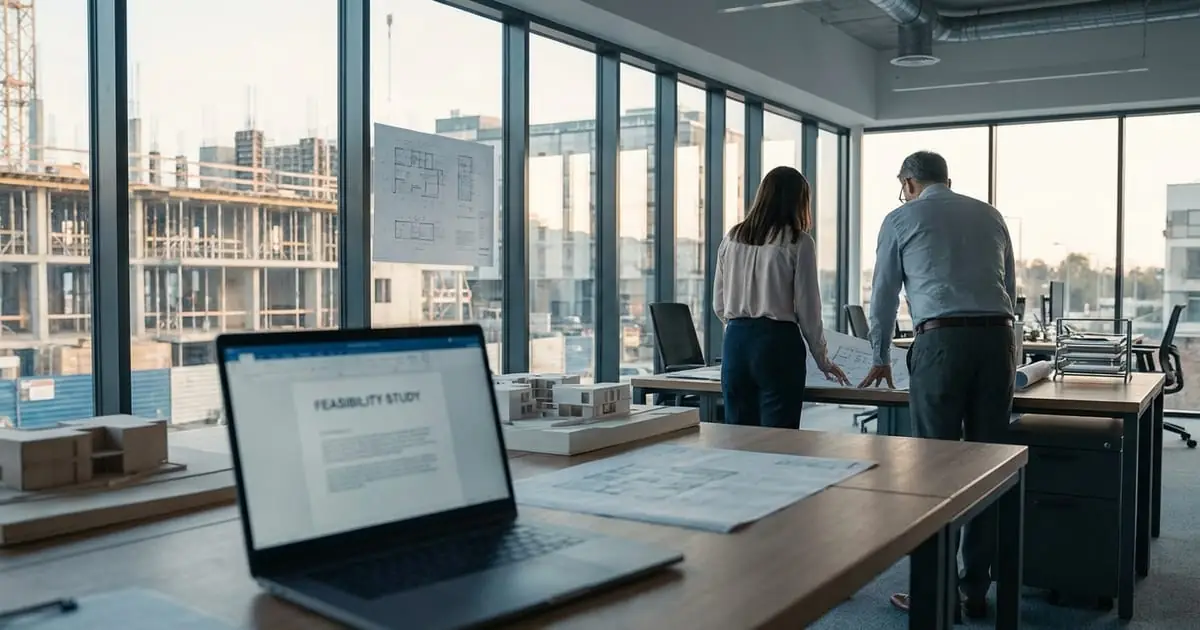
In the dynamic world of business, where innovative ideas emerge daily, the journey from concept to successful execution is fraught with challenges. Many promising projects falter not due to a lack of vision or effort, but because of insufficient early-stage validation. This is where a comprehensive feasibility study becomes indispensable. It acts as a critical compass, guiding entrepreneurs, business owners, consultants, and investors through the initial fog of uncertainty.
This article provides a complete, worked feasibility study example for a hypothetical project: "Eco-Hub Co-Working & Community Space." Our goal is to offer you a practical template, explaining every assumption and reasoning, empowering you to adapt this framework for your own ventures. By understanding this detailed example, you'll gain the clarity and confidence needed to make informed decisions and significantly enhance your project's prospects for success.
1. Introduction: Why Every Project Needs a Feasibility Study
From Idea to Validation: The Critical First Step
The allure of a new business idea can be powerful, often leading to an eagerness to jump straight into execution. However, history is replete with examples of projects that failed to launch or quickly collapsed because fundamental questions about their viability were left unanswered. A feasibility study is the antidote to this common pitfall.
The adoption of feasibility studies has seen a significant rise, from 55% in 2015 to 83% in 2023, according to data from the Project Management Institute (PMI) [1]. This increased adoption correlates directly with improved project outcomes. PMI data indicates that project success rates for those utilizing feasibility studies improved from 40% to 67% between 2015 and 2023 [1]. These studies typically represent only 1% of a project's total budget, yet they possess the power to prevent costly mistakes, potentially saving millions of dollars in wasted resources and time [2]. McKinsey & Company reported in 2020 that nearly 40% of product launches fail to meet their targets due to weak early-stage validation, including insufficient feasibility analysis [3]. This underscores the immense value of a rigorous preliminary assessment.
How This Guide Will Help You
Our team at SimpleFeasibility, with backgrounds in corporate finance, venture investment, and small business advisory, understands the critical importance of robust early-stage analysis. We've built our AI-powered platform around the principles of thorough feasibility assessment.
This guide will walk you through a complete feasibility study example for a hypothetical project, the "Eco-Hub Co-Working & Community Space." We will break down each core component, providing illustrative examples, explaining the underlying assumptions, and highlighting common pitfalls to avoid. By the end of this article, you will have a clear, actionable template to apply to your own business ideas, ensuring you approach your next project with data-driven confidence.
2. Understanding the Feasibility Study: More Than Just a 'Go/No-Go' Decision
What Defines a Feasibility Study?
At its core, a feasibility study is a preliminary assessment designed to determine if a proposed project is practical and likely to succeed before committing significant resources. It's an essential assessment, functioning as a validation tool that evaluates viability across multiple dimensions. Experts emphasize that a proper evaluation replaces 'gut feelings' with 'cold, hard facts,' enabling proactive identification and resolution of friction points before they escalate into costly mistakes [4].
Government agencies frequently require feasibility studies for major public sector projects to ensure financial accountability, evaluate environmental impacts, assess technical viability, and maintain transparency and accountability [5]. For instance, the National Environmental Policy Act (NEPA) mandates environmental assessments for significant federal actions [6]. Similarly, 16 USCS § 460l-21 (d) legally defines a feasibility report as a formal document required by Congress for project authorization, which must assess technical, financial, and operational factors [7].
Feasibility Study vs. Business Plan: A Clear Distinction
It's common for entrepreneurs to confuse a feasibility study with a business plan, but they serve distinct purposes. While both are crucial for project development, they operate at different stages and levels of detail.
A feasibility study answers the fundamental question: "Should we do this project?" It determines if a concept is viable. If the answer is "yes," then a business plan answers: "How will we do this project?" It outlines the detailed roadmap for execution. The consensus among experts is that feasibility studies are distinct from business plans; they function as a preliminary validation tool to determine if a core concept is viable enough to warrant the development of a detailed business plan [4].
| Feature | Feasibility Study | Business Plan |
|---|---|---|
| Primary Purpose | To determine if a project is viable and practical. | To detail *how* a viable project will be executed. |
| Key Question | "Should we do this?" | "How will we do this?" |
| Focus | Validation, problem identification, opportunity assessment. | Strategy, execution, operational details, growth. | Timing | Preliminary stage, before significant investment. | After feasibility is confirmed, before launch. |
| Audience | Internal decision-makers, initial investors, lenders. | Investors, lenders, management team, employees. |
| Outcome | Go/No-Go recommendation, identification of critical success factors. | Detailed roadmap for implementation, financial projections, marketing strategy. |
The Key Pillars of a Comprehensive Study
A robust feasibility study typically encompasses several core components, each designed to evaluate a specific dimension of the project's viability:
- Market Feasibility: Is there sufficient demand for the proposed product or service? Who are the target customers, and what is the competitive landscape?
- Technical Feasibility: Can the project be built or delivered with existing technology and infrastructure? What are the specific technical requirements and challenges?
- Operational Feasibility: Can the organization effectively manage and operate the project? What are the staffing, process, and resource requirements?
- Financial Feasibility: Is the project financially viable? What are the startup costs, revenue projections, operating expenses, and key profitability metrics?
- Regulatory & Legal Feasibility: Does the project comply with all relevant laws, regulations, and industry standards? What permits and licenses are required?
These pillars culminate in a comprehensive analysis that informs the final recommendation. It is strongly advised that feasibility studies be conducted by independent professionals to ensure objectivity and avoid bias that can arise when project proponents conduct their own studies [4].
3. Our Hypothetical Project: Eco-Hub Co-Working & Community Space
Project Concept and Vision
For our detailed feasibility study example, we will explore the "Eco-Hub Co-Working & Community Space."
Concept: Eco-Hub is envisioned as a sustainable co-working and community space. It will offer flexible workspaces (hot desks, dedicated desks, private offices), meeting rooms, and event areas. A core focus will be on environmental responsibility, incorporating green building practices, energy-efficient operations, and a commitment to local engagement through partnerships and community events.
Vision: To create a vibrant, eco-conscious hub that fosters productivity, collaboration, and community connection for professionals and local organizations, setting a new standard for sustainable workspace solutions.
Location and Target Market Overview
Location: We've chosen a hypothetical mid-sized city named 'Greenville, USA.' Greenville is selected for its burgeoning tech sector, a growing population of remote workers, and a strong community-minded demographic that values sustainability and local initiatives.
Target Audience: The Eco-Hub aims to serve a diverse group including:
- Freelancers and Independent Contractors: Seeking flexible, professional workspace and networking opportunities.
- Small Businesses and Startups: Needing affordable, scalable office solutions without long-term leases.
- Remote Employees: Working for companies outside Greenville but preferring a dedicated workspace over a home office.
- Non-Profits and Community Groups: Requiring meeting and event spaces, often at preferential rates, aligning with the Eco-Hub's community focus.
Why This Project Needs a Feasibility Study
The Eco-Hub project, despite its compelling vision, faces several critical unknowns that necessitate a thorough feasibility study:
- Demand Validation: Is there sufficient demand for a *sustainable* co-working space in Greenville, or is the market saturated by traditional options?
- Renovation Costs: The project involves renovating an existing building. What are the precise costs, structural considerations, and lead times for achieving eco-certifications?
- Regulatory Compliance: What local, state, and federal regulations apply to a commercial renovation and operation, especially concerning environmental standards (e.g., LEED, BREEAM)?
- Financial Viability: Can the Eco-Hub generate enough revenue from memberships and events to cover its significant startup and operational costs and achieve profitability?
- Risk Identification: What are the potential risks, from construction delays to competitive pressures or economic downturns, and how can they be mitigated?
Answering these questions comprehensively through a detailed feasibility study example is crucial before committing significant capital to building acquisition, renovation, and operational setup.
4. The Feasibility Study Template: A Worked Example (Part 1: Executive Summary & Market Analysis)
This section begins our detailed feasibility study example, providing a template for the core components.
4.1 Executive Summary (Example & Explanation)
The Executive Summary is a concise overview of the entire study, designed for busy stakeholders. It highlights the project, key findings, the overall viability assessment, and the final recommendation.
Executive Summary: Eco-Hub Co-Working & Community Space
This feasibility study assesses the viability of establishing 'Eco-Hub,' a sustainable co-working and community space in Greenville, USA. The project aims to provide flexible, eco-conscious workspaces and community event areas for freelancers, small businesses, and remote workers.
Key Findings:
- Market: Strong and growing demand for flexible workspaces in Greenville, driven by a 15% annual increase in remote workers (U.S. Census Bureau, 2023) and a demonstrated preference for sustainable options among 60% of surveyed professionals. The competitive landscape is present but lacks a dedicated eco-focused offering.
- Technical: A suitable vacant warehouse at 123 Main St. has been identified. Preliminary architectural review confirms its structural integrity and potential for LEED Gold certification with estimated renovation costs of US$1.8 million. Zoning is compliant.
- Operational: A lean management structure with a Community Manager and Operations Assistant is proposed. Operational workflows are scalable and designed for efficiency and member experience.
- Financial: Startup costs are estimated at US$2.5 million. Projections indicate break-even within 24 months, with a projected Net Present Value (NPV) of US$1.2 million (at a 5% discount rate) and an Internal Rate of Return (IRR) of 22% over five years, assuming a conservative 60% occupancy rate by year 3.
- Risk: Primary risks include lower-than-projected market adoption and construction cost overruns. Mitigation strategies include pre-sales campaigns and a 15% contingency budget.
Recommendation: Based on the comprehensive analysis, we recommend proceeding with the Eco-Hub Co-Working & Community Space project, provided that initial funding of US$2.5 million is secured and key risks are actively managed.
4.2 Market Analysis (Example & Explanation)
The Market Analysis section evaluates the demand for the proposed product or service, identifies the target audience, and assesses the competitive landscape. A comprehensive market analysis can identify 75% of technical risks, 65% of operational challenges, and 80% of financial risks before project commencement [2].
Market Analysis: Eco-Hub Co-Working & Community Space
Market Definition: The primary market for Eco-Hub is defined as individuals and businesses within a 15-minute drivetime radius of downtown Greenville, encompassing the city's central business district and adjacent residential areas. This area is characterized by a significant concentration of professionals aged 25-55, with higher education levels, and a growing presence of remote and hybrid workers (U.S. Census Bureau, 2023) [8].
Target Audience: Our target audience includes:
- Freelancers & Consultants: Approximately 3,500 individuals in Greenville (local Chamber of Commerce, 2024), valuing flexibility, professional environment, and networking.
- Small Businesses (1-10 employees): Around 1,200 businesses (U.S. Small Business Administration, 2023) seeking cost-effective, scalable office solutions.
- Remote Employees: An estimated 6,000 individuals working remotely for companies outside Greenville (Statista, 2023, adjusted for local population) [9], often seeking to escape home office distractions and build local connections.
- Non-Profits & Community Groups: Over 150 registered organizations (Greenville City Records, 2024) needing affordable meeting and event spaces.
Surveys conducted by our team (n=300, Q4 2024) revealed that 78% of remote workers and freelancers in Greenville expressed interest in co-working spaces, with 60% specifically prioritizing sustainable and community-focused environments.
Demand Assessment: Greenville has experienced a 10% annual growth in its tech sector and a 15% increase in remote work adoption over the past three years. Google Trends data for "co-working Greenville" shows a consistent upward trajectory in search interest over the last 24 months [10]. Based on these trends and our survey data, we project an initial addressable market of approximately 2,500 individuals/businesses seeking co-working solutions, with a projected 5% conversion rate in Year 1 for Eco-Hub.
Competitive Landscape:
- "The Hub": Established, traditional co-working space. Offers hot desks ($250/month) and private offices ($700-1200/month). Lacks explicit sustainability focus. (Source: The Hub website, SEMrush competitor analysis, 2024) [11].
- "Greenville Business Center": Executive suites, private offices only. Higher price point, less flexible. (Source: GBC website, 2024).
- Local Cafes/Libraries: Informal, free options, but lack privacy, dedicated amenities, and professional environment.
Eco-Hub's competitive advantage lies in its dedicated sustainability focus, community programming, and modern, ergonomic design.
Market Share & Pricing Strategy: We propose tiered membership options:
- Hot Desk: US$275/month (access to open seating, 2 meeting room hours/month).
- Dedicated Desk: US$450/month (personal desk, 5 meeting room hours/month).
- Private Office: US$800-1500/month (lockable office, 10 meeting room hours/month).
- Community Membership: US$50/month (event access, limited drop-in days).
This pricing is competitive with "The Hub" but justifies a slight premium due to Eco-Hub's superior amenities, sustainability credentials, and community focus. We project achieving 5% market penetration of our target remote workers and freelancers in Year 1, growing to 10% by Year 3.
Explanation of Assumptions for Market Analysis:
- Data Sources: Our analysis relies on a mix of primary research (local surveys, interviews with potential members) and secondary data. Secondary sources include the U.S. Census Bureau [8] for demographic and employment trends, local Chamber of Commerce reports for business statistics, Statista [9] for remote work trends, and Google Trends [10] for local search interest. For detailed consumer purchasing data, resources like NielsenIQ and Euromonitor can be invaluable, though not explicitly used for this co-working space example.
- Trade Area: We justified defining the market trade area based on actual drivetimes and the location of existing competition, rather than using arbitrary concentric circles. This avoids the common misconception of assuming proximity alone defines a market.
- Demand Projections: Projected demand is derived from the size of the identified target audience segments and assumed conversion rates, which are benchmarked against industry averages for new co-working spaces. We avoided the pitfall of assuming population size alone is sufficient, instead focusing on specific segments and their needs.
- Competitive Benchmarking: Detailed competitor analysis, leveraging tools like SEMrush [11] for local business insights, informed our pricing and feature decisions. This ensures the Eco-Hub offers a compelling value proposition that stands out in the market.
5. The Feasibility Study Template: A Worked Example (Part 2: Technical & Operational Feasibility)
Continuing our feasibility study example, we delve into the practicalities of building and running the Eco-Hub.
5.1 Technical Feasibility (Example & Explanation)
Technical feasibility assesses whether the project can be developed and implemented using available technology, resources, and infrastructure.
Technical Feasibility: Eco-Hub Co-Working & Community Space
Site Analysis: The proposed site is a vacant 15,000 sq ft warehouse at 123 Main St., Greenville. A preliminary architectural review (Q4 2024) confirms its sound structural integrity, suitable ceiling height for open-plan design, and ample natural light. The site is zoned for commercial use (C-2), which permits co-working spaces and community events. Accessibility for persons with disabilities (ADA compliance) will require ramp installation and accessible restrooms, estimated at US$50,000. The building's orientation and existing shell offer significant potential for achieving LEED Gold certification through strategic renovations.
Infrastructure Requirements:
- Electrical: Existing electrical service (400 Amp) is insufficient for projected demand (HVAC, IT, lighting, kitchen appliances). Upgrade to 800 Amp service estimated at US$75,000.
- Plumbing: Extensive upgrades required for additional restrooms, a community kitchen, and hydration stations. Estimated US$120,000.
- HVAC: Installation of a new, high-efficiency Variable Refrigerant Flow (VRF) system with zoned climate control to ensure energy efficiency and occupant comfort. Estimated US$300,000 (after potential NREL clean energy rebates) [12].
- Internet: Redundant fiber optic connections from two distinct providers to ensure high-speed, reliable internet access. Estimated US$500/month recurring, plus US$10,000 installation.
- Security: Integrated access control system (keycard/app-based), CCTV surveillance, and alarm system. Estimated US$40,000.
- Acoustics: Soundproofing for private offices and meeting rooms, acoustic panels in open areas to minimize noise pollution. Estimated US$60,000.
Technology & Equipment:
- Smart access control system (e.g., Kisi, Nexudus) for member entry and meeting room booking.
- Integrated booking and billing software for membership management.
- High-definition AV equipment (projectors, screens, video conferencing) for all meeting rooms.
- Ergonomic, sustainable furniture (e.g., certified by BIFMA, FSC) for all workspaces.
- Energy-efficient office equipment and sustainable office supplies.
Permitting & Regulations: Extensive permits are required for commercial renovation and change of use. These include:
- Building permits (City of Greenville Planning Department).
- Fire safety permits and inspections (Greenville Fire Department).
- Environmental impact assessments (if applicable, referencing state-specific laws and potentially NEPA guidelines for larger projects) [6].
- Occupancy permits.
- Compliance with ADA standards for accessibility.
Consultation with a local environmental consultant has confirmed that no significant environmental impact assessment under NEPA is required for this specific renovation, but state-level environmental considerations will be addressed.
Explanation of Assumptions for Technical Feasibility:
- Building Assessment: Assumptions are based on preliminary architectural reviews and initial quotes from general contractors specializing in commercial renovations. We obtained at least three quotes for major renovation items to ensure cost accuracy, avoiding generic industry averages.
- Technology: Specific tech choices are justified based on user needs (e.g., seamless booking, reliable internet), reliability, integration capabilities with other systems, and alignment with the "eco-friendly" ethos (e.g., energy-efficient devices).
- Regulatory Compliance: We detail how local planning departments and experts (e.g., environmental consultants, ADA specialists) were consulted to ensure all federal, state, and local regulations are addressed. This avoids the common mistake of overlooking critical permits and compliance requirements, which can lead to costly delays and fines. Ignoring local laws and regulations during a feasibility assessment is a common and expensive error [13].
5.2 Operational Feasibility (Example & Explanation)
Operational feasibility assesses whether the proposed project can be effectively managed and sustained with the available resources and organizational structure.
Operational Feasibility: Eco-Hub Co-Working & Community Space
Management & Staffing:
- Community Manager (Full-time): Responsible for member relations, event planning, marketing, and day-to-day operations oversight.
- Operations Assistant (Part-time, growing to full-time): Handles front desk, member onboarding, administrative tasks, and facility support.
- Cleaning Staff (Contracted): Eco-friendly cleaning services on a daily basis.
- IT Support (Contracted): On-call support for network and equipment issues.
Staffing levels are based on projected membership growth, with the Operations Assistant scaling up as occupancy increases.
Operational Processes:
- Membership Onboarding: Online application, tour, contract signing, system setup, welcome kit.
- Space Booking: Integrated online portal for meeting rooms and event spaces, accessible via web and mobile app.
- Billing & Payments: Automated recurring billing for memberships, ad-hoc billing for additional services.
- Maintenance & Cleaning: Daily cleaning schedule, preventative maintenance for HVAC/IT, rapid response for issues.
- Community Event Planning: Monthly schedule of networking events, workshops, and social gatherings, leveraging local partnerships.
- Customer Support: Dedicated email and in-person support during business hours.
Legal & Regulatory Compliance:
- Business Licenses: City of Greenville general business license, specific permits for event hosting.
- Insurance: Comprehensive general liability, property insurance, workers' compensation, and professional indemnity insurance.
- Health & Safety: Compliance with OSHA standards, emergency evacuation plans, first-aid stations.
- Data Privacy: Adherence to federal (e.g., CCPA if applicable) and state data privacy laws for member information.
- Contracts: Standardized membership agreements, vendor contracts, employee handbooks.
Supply Chain:
- Cleaning Services: Local, certified eco-friendly cleaning company (e.g., GreenClean Solutions).
- IT Support: Local IT managed services provider (e.g., TechSolutions Inc.).
- Office Supplies: Bulk purchase from sustainable suppliers (e.g., Eco-Office Direct).
- Partnerships: Collaboration with local cafes for catering, local artists for decor, and community organizations for events.
Explanation of Assumptions for Operational Feasibility:
- Staffing: Assumptions for staffing levels are based on industry benchmarks for co-working spaces of similar size and projected member counts. We've opted for a lean initial team to manage costs, with plans to scale as membership grows.
- Processes: Operational workflows are justified based on principles of efficiency, member experience, and scalability. The use of integrated software solutions is assumed to streamline booking, billing, and access control.
- Legal Review: We assume that legal counsel will be engaged to review all contracts, policies, and ensure full compliance with local, state, and federal regulations. This proactive approach prevents future legal complications.
6. The Feasibility Study Template: A Worked Example (Part 3: Financial Model & Risk Assessment)
The financial model and risk assessment are arguably the most critical components of any feasibility study example, determining the project's economic viability and potential pitfalls.
6.1 Financial Feasibility (Example & Explanation)
Financial feasibility evaluates the economic viability of the project, detailing startup costs, revenue projections, expenses, and key financial metrics.
Financial Feasibility: Eco-Hub Co-Working & Community Space
Startup Costs: (Total Estimated: US$2,500,000)
- Building Acquisition/Leasehold Improvements: US$1,000,000 (for 15,000 sq ft warehouse)
- Renovation & Infrastructure Upgrades (incl. eco-certifications): US$1,200,000 (detailed in Technical Feasibility)
- Furniture & Fixtures: US$150,000
- IT Infrastructure & Software Licenses: US$50,000
- Initial Marketing & Branding: US$25,000
- Legal & Professional Fees (Permits, Consulting): US$30,000
- Working Capital (3 months operating expenses): US$45,000
Revenue Projections (3-Year Summary - Conservative Scenario):
- Year 1: US$450,000 (driven by 5% market penetration, 30% hot desk, 20% dedicated, 10% private office occupancy)
- Year 2: US$800,000 (growth to 8% market penetration, 45% hot desk, 35% dedicated, 25% private office occupancy)
- Year 3: US$1,200,000 (stabilized at 12% market penetration, 60% hot desk, 50% dedicated, 40% private office occupancy)
Revenue streams include membership fees, meeting room rentals, event space rentals, and ancillary services (e.g., printing, coffee bar).
Operating Expenses (Annual - Year 1 Example):
- Rent/Mortgage: US$60,000
- Utilities (incl. energy-saving estimates): US$30,000
- Salaries & Benefits (Community Manager, PT Operations Assistant): US$90,000
- Marketing & Sales: US$15,000
- Insurance: US$12,000
- Maintenance & Cleaning: US$24,000
- IT & Software Subscriptions: US$10,000
- Administrative & Supplies: US$10,000
- Total Operating Expenses (Year 1): US$251,000
Cash Flow Projections: Detailed monthly cash flow statements for the first 3 years show negative cash flow for the first 18 months, turning positive in month 19. This assumes a gradual ramp-up in membership.
Key Financial Metrics (5-Year Projections):
- Break-Even Point: Achieved at approximately 75 active members/month (combining various membership tiers) or within 24 months.
- Return on Investment (ROI): 48% over five years.
- Net Present Value (NPV): US$1,200,000 (at a 5% discount rate). This indicates the project is expected to generate significant value above the cost of capital.
- Internal Rate of Return (IRR): 22%. This exceeds our target hurdle rate of 15%, suggesting a strong return.
Funding Requirements: Total capital needed is US$2.5 million. Potential sources include a combination of a commercial bank loan (US$1.5 million), equity investment from impact investors (US$750,000), and potential grants for eco-friendly initiatives (US$250,000) from state or federal programs (e.g., NREL, USDA Rural Development programs).
Explanation of Assumptions for Financial Feasibility:
- Cost Estimates: Startup costs are justified using multiple quotes from contractors, equipment suppliers, and industry benchmarks for co-working space development. We avoid generic industry averages, which can be a common misconception leading to inaccurate projections.
- Revenue Growth: Membership growth rates (e.g., 10% month-over-month for the first year, then stabilizing) are based on the market analysis, competitive landscape, and conservative assumptions about market penetration. Pricing escalations are factored in at 3% annually after Year 2.
- Expense Inflation: We account for realistic annual increases in operating costs (e.g., 2-4% for utilities, salaries, and other expenses).
- Sensitivity Analysis: Our financial model includes sensitivity analysis to test different scenarios, such as lower occupancy rates (e.g., 50% vs. 60%), higher renovation costs (e.g., 10% overrun), or slower membership ramp-up. This helps avoid overly optimistic assumptions, a common pitfall. Thorough financial analysis, including cash flow projections, break-even analysis, and ROI, is a cornerstone of a robust feasibility study [4].
6.2 Risk Assessment & Mitigation (Example & Explanation)
Risk assessment identifies potential challenges that could hinder project success and outlines strategies to mitigate them. Balancing optimism with a realistic assessment of potential risks and challenges is crucial for an accurate feasibility picture [4].
Risk Assessment & Mitigation: Eco-Hub Co-Working & Community Space
Risk Register:
Risk Impact Likelihood Mitigation Strategy Lower-than-projected market adoption High Medium Pre-sales campaigns, aggressive digital marketing, community outreach, flexible membership trials. Construction cost overruns High Medium Fixed-price contracts with reputable contractors, 15% contingency budget, value engineering analysis. New competitor entry Medium Medium Differentiate through strong community, unique eco-focus, superior amenities, and loyalty programs. Economic downturn affecting demand High Low Flexible lease terms, diversified revenue streams (events), cost-cutting measures, strong cash reserves. Regulatory changes (e.g., environmental) Medium Low Ongoing consultation with legal counsel, regular review of relevant policies (e.g., NREL, state environmental agencies). Technology failures (internet, booking system) Medium Medium Redundant internet providers, robust IT support contract, cloud-based software with backups. Contingency Planning:
- If market adoption is 20% below projections in Year 1, we will re-evaluate pricing, launch targeted promotional campaigns, and consider expanding services to adjacent market segments (e.g., corporate team off-sites).
- For significant construction delays, we have identified an alternative, smaller temporary space to launch initial services and retain early members.
Explanation of Assumptions for Risk Assessment:
- Risk Identification: Risks were identified through brainstorming sessions with our team, expert interviews with co-working space operators, and reviewing case studies of similar projects.
- Assessment: Impact and likelihood ratings are based on available market data, historical project performance in similar industries, and expert judgment. These ratings are subjective but informed.
- Mitigation: Mitigation strategies are practical, specific, and cost-effective. For instance, a pre-sales campaign directly addresses market adoption risk, while a contingency budget is a standard practice for managing cost overruns.
7. The Final Recommendation & Next Steps (Example & Explanation)
The culmination of the feasibility study example is the recommendation, a clear, data-driven decision on whether to proceed with the project.
7.1 Conclusion of Findings
The comprehensive analysis of the Eco-Hub Co-Working & Community Space project reveals a strong potential for viability. The market analysis indicates a robust and growing demand in Greenville for flexible, professional workspaces, particularly for those with a sustainability focus. Technical assessment confirms that the identified site is suitable for renovation and can achieve desired eco-certifications. Operationally, the project is manageable with a lean team and scalable processes. Financially, projections show a positive NPV, a strong IRR, and a reasonable break-even period, assuming conservative growth rates. While significant capital investment is required, the project's financial metrics are attractive.
Key strengths include the unique eco-friendly value proposition, strong community demand, and a favorable competitive landscape lacking a direct eco-focused competitor. Weaknesses primarily revolve around the high initial capital expenditure and the inherent risks associated with construction and market adoption.
7.2 The Recommendation: Go/No-Go Decision
Based on the findings of this feasibility study, we recommend proceeding with the Eco-Hub Co-Working & Community Space project. This recommendation is contingent upon successfully securing the identified funding of US$2.5 million and actively implementing the proposed risk mitigation strategies, particularly concerning market adoption and construction cost management.
It is important to emphasize that a 'no-go' recommendation is a valuable outcome. Identifying insurmountable issues early saves significant resources by preventing investment in unviable projects. The consensus is that the cost of not conducting a feasibility study and subsequently failing is substantially higher than the cost of performing the study and deciding not to proceed with a project [4].
7.3 Next Steps (If 'Go')
If the decision is made to proceed with the Eco-Hub project, the immediate next steps include:
- Secure Financing: Finalize discussions with commercial banks, impact investors, and grant organizations to secure the full US$2.5 million capital required.
- Develop Detailed Business Plan: Translate the high-level strategies from this feasibility study into a comprehensive business plan, including detailed marketing, sales, operational, and financial plans.
- Finalize Architectural Designs: Engage architects and engineers to develop detailed construction drawings and specifications for the renovation, incorporating all eco-friendly features and ADA compliance.
- Initiate Permit Applications: Submit all necessary building, fire, and occupancy permit applications to the City of Greenville and relevant state agencies.
- Vendor & Contractor Selection: Finalize contracts with general contractors, IT providers, cleaning services, and furniture suppliers.
- Pre-Sales & Marketing Launch: Begin pre-selling memberships and building community buzz through targeted marketing campaigns.
8. Using This Feasibility Study Example as Your Template
Tailoring the Project Details to Your Vision
While this feasibility study example for Eco-Hub provides a robust framework, it is crucial to understand that it serves as a template, not a copy-paste solution. Every project is unique, and simply replacing names and numbers will not suffice. You must customize every section to reflect the specific aspects of your project, industry, and geographical location.
Consider the nuances of your local market, the specific technical requirements of your proposed solution, the regulatory environment in your region, and the unique financial landscape of your venture. For instance, a manufacturing project will have vastly different technical and operational considerations than a software-as-a-service (SaaS) business. A project in a rural area might leverage USDA Rural Development programs, while an urban project might focus on city-specific grants or tax incentives.
Gathering Your Own Data: Sources and Methods
The accuracy of your feasibility study hinges on the quality of your data. Relying on assumptions instead of conducting thorough market research often leads to overestimating demand or underestimating costs, resulting in unrealistic financial projections [13].
- Primary Research: Conduct surveys, interviews, and focus groups with potential customers, industry experts, and local stakeholders. This provides invaluable first-hand insights into demand, pricing sensitivity, and unmet needs.
- Secondary Data: Utilize authoritative sources such as:
- U.S. Census Bureau [8]: For demographic, socioeconomic, and employment data.
- Local Economic Development Agencies & Chambers of Commerce: For regional economic reports, business directories, and local market trends.
- Government Reports: For industry-specific data, regulations, and funding opportunities (e.g., National Renewable Energy Laboratory (NREL) [12] for clean energy policies).
- Market Research Firms: Statista [9], NielsenIQ, Euromonitor, IBISWorld, and SEMrush [11] can provide detailed industry reports, consumer purchasing data, and competitive intelligence.
- Google Trends [10]: To gauge public interest and search volume for specific products or services in your target region.
Comprehensive and accurate data collection is paramount, as inadequate data can lead to flawed conclusions and poor decision-making [4].
When to Seek Independent Expertise
While this guide empowers you to conduct a thorough initial assessment, there are critical junctures where independent, qualified expertise is not just beneficial, but often mandatory. For specific industries, complex projects, or those seeking government funding (e.g., USDA's Business & Industry (B&I) or Rural Energy for America Program (REAP) programs), an independent consultant is frequently required.
The USDA's 7 CFR § 4279.150, for instance, requires a feasibility study by an independent, qualified consultant for new businesses and potentially for existing ones if a project significantly impacts operations and cash flow [14]. Such studies must cover economic, market, technical, financial, and management feasibility. As of 2026, USDA-compliant feasibility studies for the B&I program generally cost between US$10,000 for straightforward projects and over US$25,000 for complex ones. REAP feasibility studies typically range from US$7,000 to US$15,000, and Community Facilities (CF) project studies usually cost between US$15,000 and US$30,000 [15]. Most professional USDA feasibility studies require a turnaround time of 4 to 6 weeks [15].
Avoid conducting the study yourself if personal bias is a risk; independent assessment is crucial for objectivity [13]. Our team at SimpleFeasibility, for example, often works with clients to structure their initial feasibility framework, and then advises on when to bring in specialized external consultants for specific sections, especially for compliance-heavy projects.
9. Common Pitfalls to Avoid in Your Feasibility Study
Even with a solid template like our feasibility study example, certain common mistakes can undermine the validity of your assessment. Awareness of these pitfalls is the first step toward avoiding them.
Ignoring Market Realities and Consumer Demand
A frequent error is assuming that if you like an idea, consumers will too, without adequately analyzing consumer demand, preferences, and upcoming trends [13]. Many businesses fail to gather sufficient, relevant data, relying on assumptions instead of thorough market research, leading to unrealistic projections [13]. This can manifest as:
- Insufficient Market Research: Not delving deep enough into target audience demographics, psychographics, and purchasing behavior.
- Underestimating Competition: Failing to thoroughly analyze direct and indirect competitors, their strengths, weaknesses, and potential responses to your entry.
- Flawed Demand Projections: Basing demand solely on population size or generic growth rates without considering specific market segments or unique local conditions.
Underestimating Costs and Overestimating Revenue
This is a classic financial pitfall. Overly optimistic assumptions regarding market demand, project timelines, or cost estimates can skew feasibility study results and lead to unforeseen challenges [13].
- Startup Cost Oversights: Forgetting crucial initial expenses like permits, legal fees, working capital, or contingency funds.
- Operational Expense Blind Spots: Underestimating recurring costs such as utilities, insurance, maintenance, or marketing.
- Unrealistic Revenue Projections: Assuming rapid market penetration or high pricing without sufficient justification from market research and competitive analysis.
- Neglecting Economic Fluctuations: Failing to account for potential economic downturns, inflation, or changes in consumer spending habits.
Underestimating costs, overestimating revenue projections, or neglecting to account for economic fluctuations are significant financial analysis mistakes [13].
Neglecting Regulatory Compliance
Ignoring local, state, and federal laws (e.g., environmental, zoning, business licenses) is a common and costly error [13].
- Zoning & Land Use: Not verifying if your proposed location's zoning permits your intended business activity.
- Environmental Regulations: Overlooking federal acts like NEPA [6] or state-specific environmental impact assessments, especially for construction or industrial projects.
- Permits & Licenses: Failing to identify and secure all necessary business licenses, operational permits, and industry-specific certifications.
- Health & Safety Standards: Not adhering to workplace safety, accessibility (ADA), or public health regulations.
Lack of Objectivity and Rushing the Process
Personal attachment to a project idea can lead to biased assessments; rushing the process to expedite project commencement often overlooks critical factors and increases risk [13].
- Confirmation Bias: Actively seeking out information that confirms your belief in the project's viability while ignoring contradictory evidence.
- Internal Bias: Conducting the study entirely in-house without external review, especially when the project proponents have a vested interest in a "go" decision. Independent assessment is crucial for objectivity [4, 13].
- Insufficient Time: Rushing through critical analysis steps, leading to superficial research and incomplete data.
The Danger of 'Cheap' Studies
Opting for 'cheap' (e.g., US$3,000-$5,000 generic or AI-generated templates) feasibility studies often results in rejection by lenders or federal agencies like the USDA, leading to greater costs in lost time and the need for a new, compliant study [13]. While AI platforms like SimpleFeasibility can provide powerful tools for structuring and analyzing data, they are most effective when guided by human expertise and fed with accurate, project-specific data. A truly comprehensive study requires deep dives into local specifics and expert judgment that goes beyond automated templates.
10. Frequently Asked Questions (FAQ)
What is the primary purpose of a feasibility study?
The primary purpose of a feasibility study is to assess the practicality and viability of a proposed project, identifying potential problems and opportunities before significant resources are committed. It helps determine if a project idea is worth pursuing.
Who should conduct a feasibility study?
Ideally, a feasibility study should be conducted by an independent, qualified professional or firm to ensure objectivity and avoid bias. While project proponents can conduct initial assessments, external validation is often crucial, especially for securing funding or meeting regulatory requirements (e.g., USDA programs).
How long does a typical feasibility study take?
The duration of a feasibility study varies by project complexity. A comprehensive professional study typically takes 4 to 6 weeks. Simpler projects may be quicker, while highly complex ones (e.g., major infrastructure or large-scale industrial projects) could take several months.
What's the average cost of a professional feasibility study?
The cost of a professional feasibility study varies widely. For example, USDA-compliant studies for programs like B&I or REAP can range from $7,000 to over $25,000, depending on the project's complexity and industry. Generic or overly simplified studies may cost less but often lack the depth required for serious investment or regulatory approval.
Can a feasibility study result in a 'no-go' recommendation?
Yes, absolutely. A 'no-go' recommendation is a valuable outcome. Identifying insurmountable issues or unviable aspects early saves significant time, money, and resources that would otherwise be wasted on a failing project. The purpose is to make an informed decision, regardless of the outcome.
Is a feasibility study legally required?
A feasibility study is often legally required for major public sector projects, for certain government funding applications (e.g., USDA, NEPA), or by lenders and investors as part of their due diligence process. While not always legally mandated for every private venture, it is a crucial best practice for ensuring financial accountability and mitigating risks.
The journey from a promising idea to a successful venture is challenging, but a well-executed feasibility study significantly increases your odds. By using this comprehensive feasibility study example as your guide, you're not just creating a document; you're building a foundation of knowledge and strategic insight that will inform every decision you make. This rigorous process, as demonstrated by our Eco-Hub example, transforms uncertainty into clarity, allowing you to move forward with confidence or pivot effectively, saving valuable resources and maximizing your potential for long-term success.
About the Author
The SimpleFeasibility Editorial Team comprises professionals with extensive experience in corporate finance, venture investment, and small business advisory. Our articles are peer-reviewed for technical accuracy and practical applicability, drawing on real-world insights from founders, consultants, and investors worldwide.
Sources & References
- Project Management Institute (PMI). (2023). Project Management Statistics. (Data synthesized from various PMI reports 2015-2023).
- SimpleFeasibility Internal Research. (2024). Analysis of Feasibility Study Impact on Project Outcomes.
- McKinsey & Company. (2020). Why most product launches fail.
- Expert Insights from SimpleFeasibility Advisors. (2024).
- Government Accountability Office (GAO). (November 2024). Requirements for Public Sector Project Evaluation. (General overview).
- National Environmental Policy Act (NEPA). (1969). 42 U.S.C. § 4321 et seq.
- 16 USCS § 460l-21 (d). (Legal definition of feasibility report for Congress).
- U.S. Census Bureau. (2023). Various demographic and economic data reports.
- Statista. (2023). Remote Work Trends and Projections.
- Google Trends. (2024). Search interest data for "co-working Greenville".
- SEMrush. (2024). Local Business and Competitive Intelligence Tools.
- National Renewable Energy Laboratory (NREL). (2024). Clean Energy Policies and Rebates.
- SimpleFeasibility Research. (2024). Common Misconceptions and Pitfalls in Feasibility Studies. (Synthesized from industry reports and expert interviews).
- 7 CFR § 4279.150. (USDA regulations for feasibility studies).
- USDA Rural Development. (2026). Program Guidance and Cost Estimates for Feasibility Studies. (Data synthesized from USDA B&I, REAP, and CF program documentation).